
Neapolitan Mastiff
Updated May 24, 2026
Neapolitan Mastiff
Updated May 24, 2026
The Neapolitan Mastiff is the ultimate homebody—sure, they need exercise, but not as much as they need the attention of their pet parent and a sturdy couch. If you’re in need of a 150-pound shadow (and don’t mind a bit of slobber), this could be your dream pup.
Affectionate, Gentle, Sidekick
Male: 150 pounds
Female: 110 pounds
Male: 26-31 inches
Female: 24-29 inches
7-9 years
Blue, Black, Mahogany, Tawny
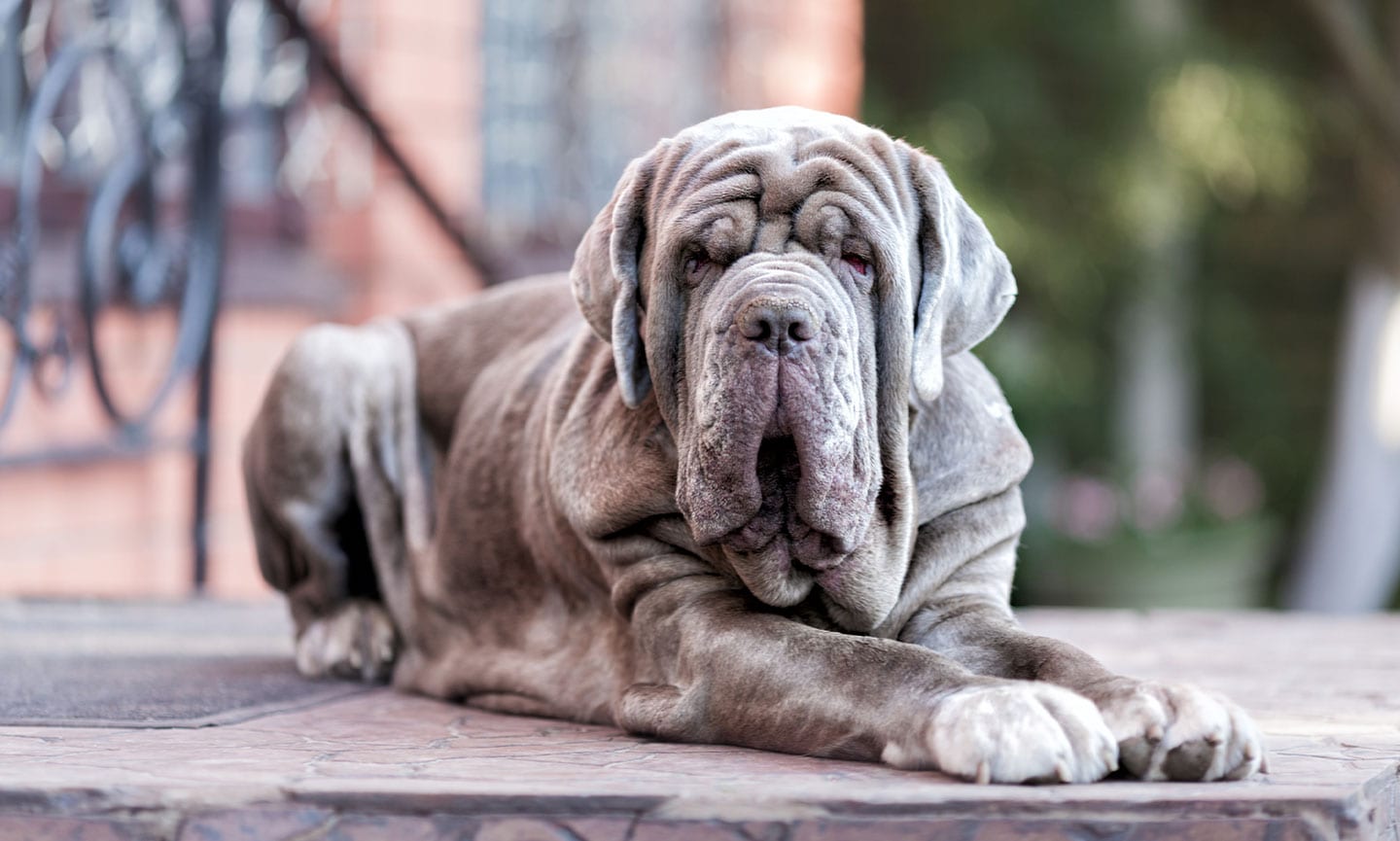
With their adorably wrinkly skin, often-gray coloring, and huge size, the Neapolitan Mastiff might look like a gloomy Disney donkey. But their personality is anything but.
You’re now the parent of a friendly, kind giant dog who adores you so much, they just might try to crawl into your lap to get closer. (Shhh, don’t tell them they’re literally the size of a mini pony!)
The Neapolitan Mastiff will follow you everywhere—even to the bathroom—and bark to let you know when someone’s at the door … even when it’s just your mother.
Neapolitan Mastiff Characteristics
Neapolitan Mastiff Appearance
The Neapolitan Mastiff is known for their giant size and giant wrinkles. Their color—plus all their adorable skin folds—lend them a sweet Eeyore quality.
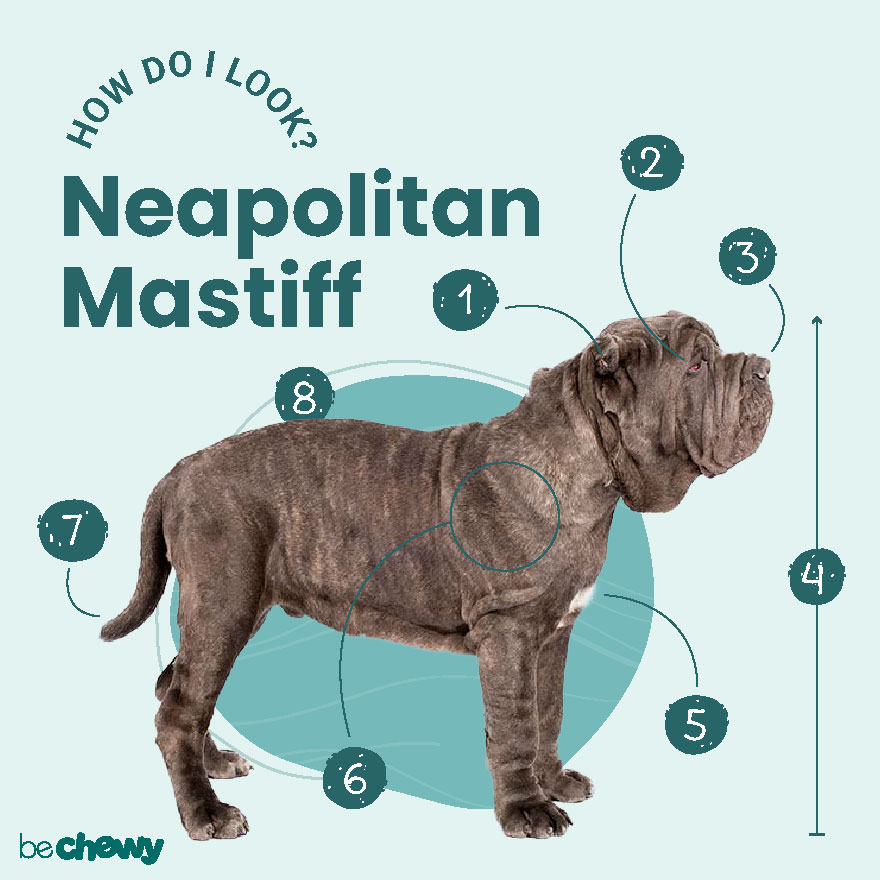
- Ears
While it was once common to crop the breed’s ears, nowadays you’ll often see Neapolitan Mastiffs with their natural floppy ears. Many groups, including the American Veterinary Medical Association, oppose ear cropping, and many countries and U.S. states have banned the practice.
- Eyes
Their eyes are deeply set, with drooping upper and lower eyelids. They’re amber or brown depending on their coat color.
- Nose
Their large noses match their coat color.
- Coat Length
Neapolitan Mastiffs are short-coated dogs with loose skin and dense hair.
- Coat Color
It’s common to see a blue Neapolitan Mastiff, but coat colors also include black, tawny, mahogany, and brindle.
- Tail
Like with their ears, it was once common to dock a Neapolitan Mastiff tail. But nowadays many of these pups have their tails intact, and groups including the American Veterinary Medical Association oppose tail docking.
Neapolitan Mastiff Temperament
It’s hard to overstate it, but Neapolitan Mastiff dogs (commonly called Mastinos or Neos) love their families. A lot. And they’d like to let you know by being with you all the time.
They’re also the home’s self-appointed sentry and will bark to let you know if anything is amiss, even if it’s just a squirrel in the yard.
These larger-than-life pups are huge sweeties who have no idea how big they are. Be kind when they try to climb into your lap—they’re unaware that even fitting half of their body would be a stretch.
Mastiff puppies tend to be energetic and playful, but they significantly mellow out as adults and tend to prefer lounging with you instead of long, active sprints. D make sure they get their minimum amount of daily exercise, though—they need 30 to 40 minutes a day to stay healthy.
Related Breeds




How to Care for a Neapolitan Mastiff
This chill dog doesn’t need a lot of exercise or grooming. But they will need training time, which is a great opportunity to bond.
Grooming
Training
Diet
Exercise
Environment
Neapolitan Mastiff Health
Neapolitan Mastiff life expectancy is 7–9 years. Here are some health issues to be aware of.
- Bloat and gastric dilatation-volvulus (GDV): Neapolitan Mastiffs, like many large, deep-chested breeds, are prone to a life-threatening condition called bloat, where the stomach becomes distended with air and/or food. A serious complication of bloat is when the stomach twists on itself, cutting off blood supply to the organs. This is gastric dilatation-volvulus, and symptoms include abdominal distension, restlessness, and dry heaving. If you notice these signs, go to the vet immediately.
- Cherry eye: Cherry eye is not uncommon with the Mastiff. It’s when the pink, fleshy part of the eye’s corner (the third eyelid) becomes swollen and bulges out of its pocket. Discharge, squinting, cloudiness, pink swelling, and redness are all reasons to see your vet right away. Surgery and post-surgery meds are often the treatment.
- Dilated cardiomyopathy (DCM): Dilated cardiomyopathy is a genetic condition where the heart enlarges and doesn’t pump blood normally; it results in heart failure if not treated early. Diagnosis is based on an echocardiogram, and treatment is often daily medication. (Avoid grain-free diets, as these have been associated with dilated cardiomyopathy in large dogs.)
- Elbow and hip dysplasia: Elbow and hip dysplasia are genetic conditions that develop during puppyhood when the joints don’t align well and become looser than normal. Signs include limping, and treatment might involve weight loss, reduced activity, joint supplements, physical therapy, pain meds—or, in severe cases, surgery.
- Skin infections: Those charming face wrinkles can trap bits of food and moisture. Bacteria and yeast can multiply there, leading to skin infections. Keep them at bay by cleaning your dog’s folds every day, and monitor for signs of infection like itchiness, bumps, scabs, irritation, redness, or swollen skin.
Neapolitan Mastiff History
The Neapolitan Mastiff’s ancestors date back to Ancient Rome, where they were guardian dogs for homes and even gladiator dogs.
These original pups were later mixed with other breeds, and the Neapolitan Mastiff came to be; they were named for Naples, where they originated.
By the 1940s, Neapolitan Mastiffs were nearly extinct, but thanks to a concerted effort by Italian breeders, they became popular again. Neapolitan Mastiffs were recognized by the American Kennel Club in 2004, and they’ve been known to work as search-and-rescue dogs.
Neapolitan Mastiff breeders tend to charge thousands of dollars. If you choose this route, pick a responsible breeder.
Neapolitan Mastiff adoption is also a great choice. Look for a Mastiff rescue like Happy Go Lucky Mastiff Rescue; keep an eye out at your local shelter; or search Chewy’s database of adoptable dogs in your area.