Munchkin Cat
Updated March 26, 2026
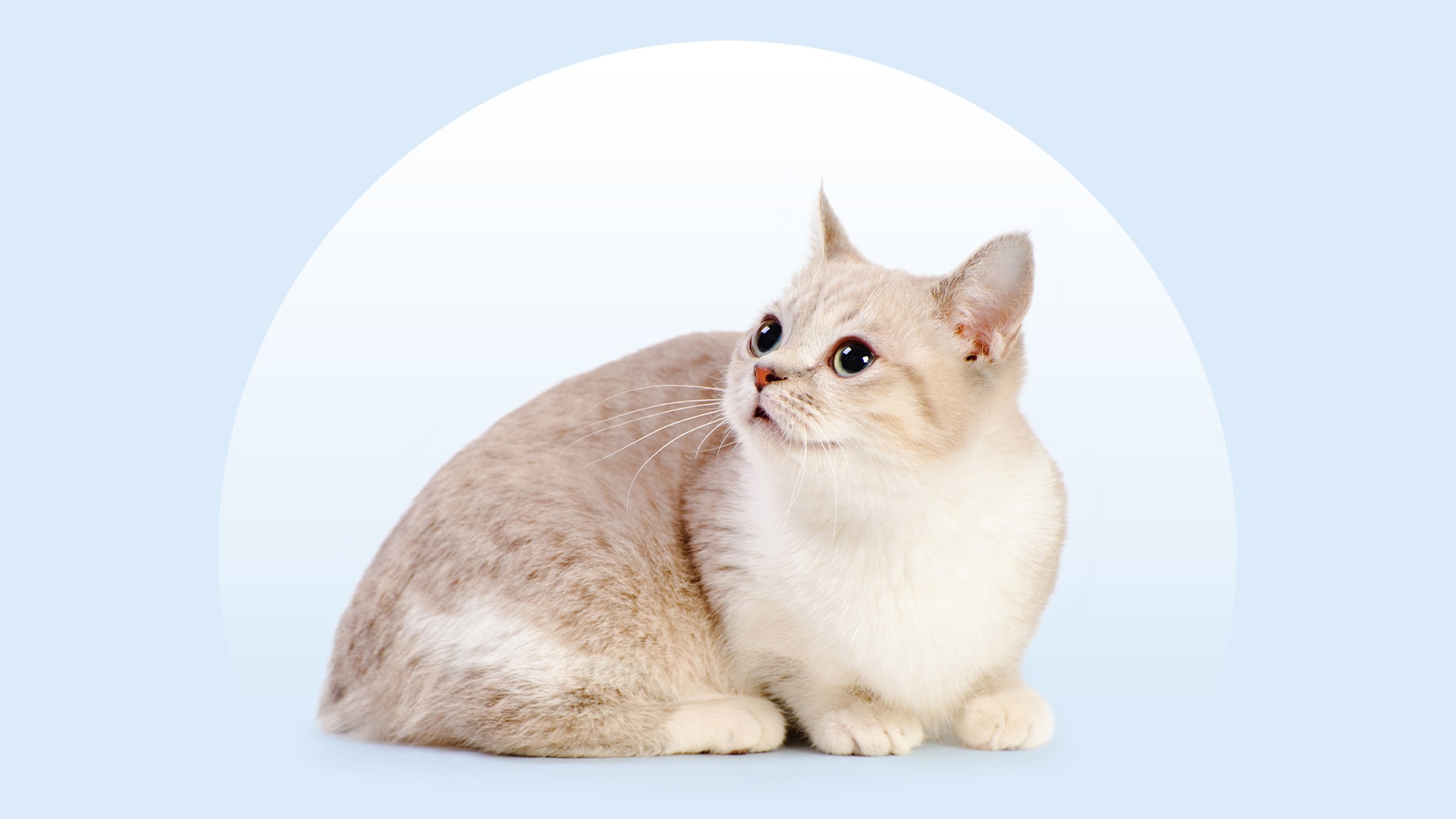
Munchkin Cat
Updated March 26, 2026
Cheeky, playful, and forever youthful, Munchkin cats thrive in homes with plenty of interaction, toys, and affection. Low to the ground but full of spirit, these short-legged cats can make a wonderful choice for first-time cat parents, families with kids, or households with other pets.
Affectionate, Cheeky, Loyal Sidekick
5–10 pounds
15–18 years
Oh, the places these little legs will go! Nowhere is off-limits for the Munchkin, a cat with legs roughly one-quarter the length of other breeds, but with the full-sized heart (and torso) of a standard feline.
Don’t let their short stature fool you: Being low to the ground doesn’t mean they’re low-energy. From scaling cat trees and shelves to standing tall on their hind legs to survey their kingdom, the Munchkin is proof that big cat energy can come in very short packages.
The life expectancy of Munchkin cats is 15–18 years. They thrive in homes rich with engagement—and a little extra consideration for their joints. Because the breed may be prone to early-onset arthritis, maintaining a healthy weight is essential for keeping these spirited explorers comfortable.
Recommended Products
Munchkin Cat Characteristics
Munchkin Cat Appearance
Take a cat and shrink their legs down—yes, just their legs—and you’ve got a Munchkin. Their spine, head, and torso remain the same size as a standard cat.
According to April Arguin, a Munchkin cat breeder and founder of LiLNudists Cattery, this distinctive look comes from a dominant genetic trait called pseudoachondroplasia, which shortens the bones in the front and rear legs without affecting the spine or head.
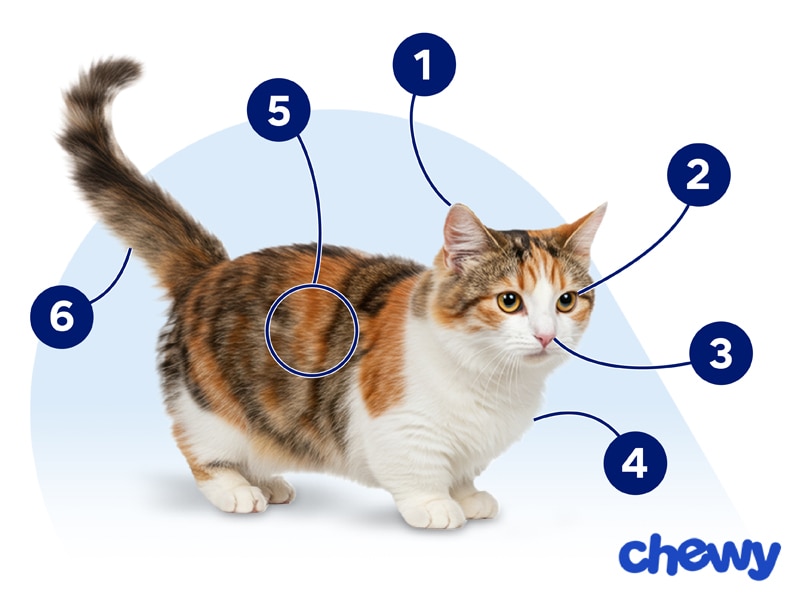
- Ears
A Munchkin’s ears are alert and proportional to the head. Long-haired Munchkins may sport "lynx tips"—tufts of long fur growing from the tips of the ears.
- Eyes
Munchkin cats have large, walnut-shaped eyes that are angled slightly upward toward the base of the ears. They can be any color, including shades of green, copper, amber, or blue.
- Nose
A Munchkin’s nose color usually matches their coat. They may have prominent whisker pads on their muzzles, which can give them a sweet, slightly chubby-cheeked appearance.
- Coat Length
Munchkins have a semiplush coat that can be short, medium, or long.
- Coat Color
Munchkins come in all patterns and coat colors, including black, blue, white, tabby, bicolor, tortoiseshell, and calico.
- Tail
A Munchkin’s tail is as long as their body and rounded at the tip.
Munchkin Cat Temperament
The personality of a Munchkin is a delightful—if not quirky—animal mashup. In many ways, they’re like a devoted puppy. They thrive on attention and happily trail their people from room to room.
At heart, Munchkin cats are also forever kittens, staying playful and curious well into adulthood. While their legs remain short, their bodies grow to the size of a standard cat, so don’t confuse their kittenlike energy with being kitten-sized.
Like a sneaky magpie, Munchkins are also known for their love of “borrowing” and hoarding small belongings. If socks or hair scrunchies go missing, you’ll likely find them tucked away in a secret stash.
And when they’re feeling curious—or scouting for their next treasure—you may catch them striking their signature meerkat pose: sitting upright on their haunches to get a better view.
Despite their short stature, counters, shelves, and high-up hideaways are still fair game, as are your bed and lap, which Munchkins are more than happy to cozy up in after a full day of play.
What’s more, these social butterflies tend to get along well with strangers, other cats, and even dogs, as long as everyone is introduced properly.
Related Breeds


How to Care for a Munchkin Cat
Grooming a Munchkin doesn’t take too much time, but these cats still need regular care. Helping this kitty thrive in your home will take lifelong play, consistent grooming, and an enriching environment.
Grooming
Diet
Exercise
Environment
Munchkin Cat Health
The average Munchkin cat lifespan is 15–18 years, which is on par with most domestic cats.
Their short legs don’t necessarily mean a shorter life. Still, the Munchkin cat breed is controversial, largely due to questions surrounding how their short legs affect long-term mobility and joint health.
“The foreshortened limbs of the Munchkin are not cosmetic, but structural,” says Teresa Keiger, a Cat Fanciers’ Association (CFA) all-breed judge, noting that the curled coat of a Rex cat is an example of a cosmetic trait. “It’s a result of a gene which causes dwarfism. Cats with dwarfism have a very increased chance of developing arthritis, spinal issues, and chest issues.”
The official stance on Munchkin long-term health can vary depending on whom you ask. The International Cat Association (TICA) maintains that Munchkins are not more prone to arthritis or mobility issues than any other breed.
However, some research suggests that more studies are needed to fully understand bone and cartilage growth in Munchkin cats, while findings from human studies on pseudoachondroplasia show links to abnormal joint development and early-onset osteoarthritis.
What is well established is that Munchkin kittens cannot survive if they inherit two copies of the gene, which is why responsible breeding practices are especially important for this breed.
As with any cat, the best way to keep a Munchkin healthy and comfortable is through responsible breeding, regular vet checkups, daily exercise, and maintaining a healthy weight.
Munchkin Cat History
“The word ‘breed’ means something very different in cats than it does in dogs,” says Dean Vicksman, DVM, CVJ, of the EveryCat Health Foundation. “Dogs were bred for jobs hundreds or even thousands of years ago—herding sheep, guarding homes, or hunting. Cats were never bred for work like that. People only started breeding cats about 150 years ago, and they focused on looks.”
In the case of Munchkin cats, it was the look of those short legs that breeders wanted to preserve—and that’s how the Munchkin breed was born in 1983.
According to TICA, short-legged cats themselves aren’t new. They were first described in a British veterinary report in 1944, and although that early line of short-legged cats disappeared during World War II, the trait continued to spontaneously appear in pet cat populations for decades. Short-legged cats were documented in Stalingrad in the 1950s, New England in the 1970s, and Louisiana in the 1980s.
And in 1983, Sandra Hochenedel found a cat with short legs and chose to intentionally breed them to preserve that look.
Breeding cats for distinctive looks, however, comes with responsibility. Some genetic mutations can affect the health and well-being of the cats, and the short-leg mutation is no exception. To address those concerns, cats used in the breeding program were closely monitored by TICA’s Genetics Committee.
After years of evaluation, the Munchkin was officially granted TICA Championship status in 2003.