Dog Poop Color Chart: What’s Your Dog’s Poo Telling You?

Photo by Chewy
Our handy dog poop color chart was designed as a quick reference guide you can use whenever you’re asking yourself the question, “Why is my dog’s poop [insert color here]?”
Normal dog poop is chocolate brown, and a bit squishy (although it comes out in solid, log-like pieces). If you’re seeing any other colors, it may be time to pay closer attention to what your dog’s bowel movements are trying to tell you.
Your dog’s poop color and consistency says a lot about your pooch’s overall health. We’ve rounded up some of the most common colors you may see in your dog’s feces, and what they mean.
Key Takeaways
- A dog’s poop color and consistency can reveal important clues about their digestive health.
- Normal, healthy dog poop is usually chocolate brown, moist and formed into solid, log-like pieces.
- Black or tarry poop suggests bleeding from the upper digestive tract, while red poop points to lower GI bleeding.
- Colors like green, orange, yellow, or gray may hint at dietary issues, gallbladder problems, or malabsorption.
- If you notice your dog’s poop is an unusual color, save a stool sample and consult your vet.
Dog Poop Color Chart
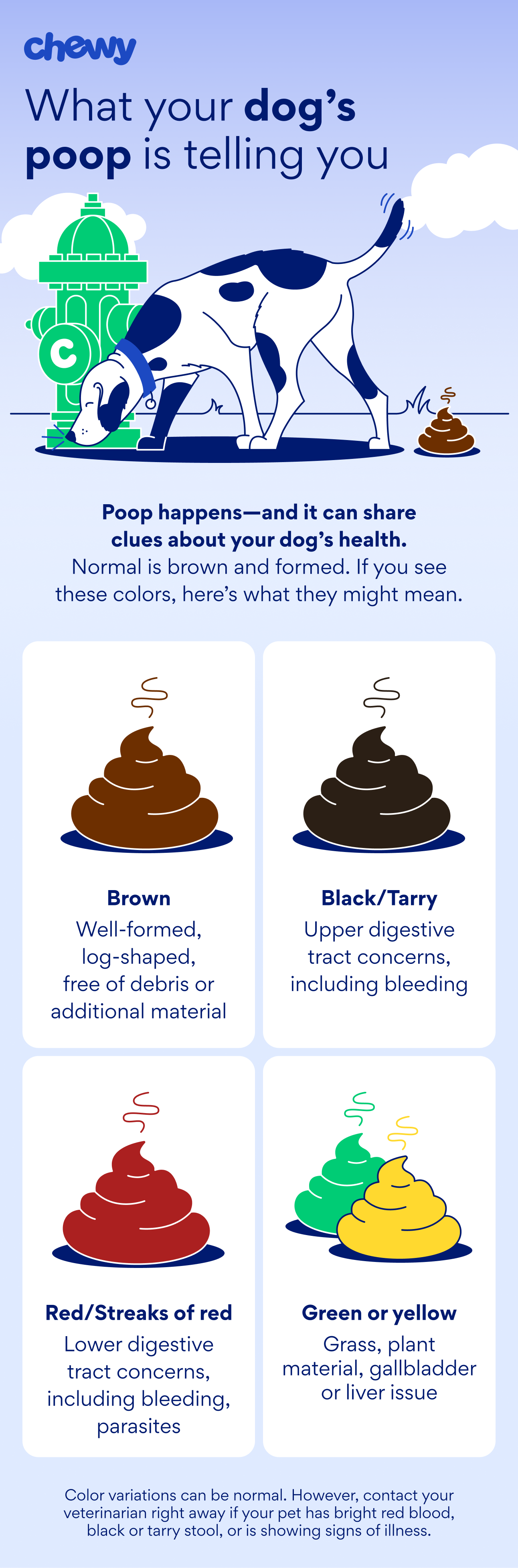
This dog poop color chart is a quick reference sheet to help you figure out what your dog’s stool color means. Keep scrolling for deeper dives on what each color may mean and what to do if you spot certain hues in your dog’s poo.
Infographic by Chewy
What’s Your Dog’s Poo Telling You?
Normal dog poop is chocolate brown, moise, and a bit squishy and comes out in solid, log-like pieces. If you’re seeing any other colors, it may be time to pay closer attention to what your dog’s bowel movements are trying to tell you.
- Brown: Normal
- Black/tarry-looking: Intestinal bleeding (usually higher in the digestive tract); parasites or other microbes; cancer
- Red: Bleeding in the lower digestive tract; inflammatory bowel disease; acute trauma; straining to defecate with constipation; colitis; intestinal parasites
- Green: Excessive grass eaten; gallbladder issue; potential rodenticide exposure
- Orange or yellow: Digestive issues; food intolerance; liver problem
- Gray: Malabsorption; too much fat in the diet; pancreatic or bile issues
- White specks: Malabsorption; too much calcium; worms (if moving); parasitic infection
- Purple: Hemorrhagic gastroenteritis (HE) or viral diarrheas
What Healthy Dog Poop Looks Like
Healthy dog poop is generally chocolate brown, moist, and firm enough to hold its shape.
It usually comes out in solid, log-like pieces rather than liquid, crumbly or unusually hard stool.
Because color is only one clue, pet parents should consider the shade alongside the stool’s consistency and any recent changes in your dog’s food, treats or outdoor snacking.
Dog Poop Color Meanings
Instead of scooping your dog’s poop and throwing it away, take a quick peek to check on the color and consistency each time your pup goes. Here’s what the most common poop colors can tell you.
Brown Dog Poop
“Healthy dog poop should generally have a moist and firm texture (enough for you to pick it up easily), a chocolate brown color, and be proportional to your dog’s body size,” says Sabrina Kong, DVM, a dog trainer based in California and veterinary consultant at WeLoveDoodles.
Black/Tarry-Looking Dog Poop
Black dog poop often means there’s digested blood coming from the GI tract—aka some type of internal bleeding, according to Alejandro Caos, DVM, a veterinarian with The Vets in Denver. In this case, the stool will also look tarry and sticky.
Some common causes of internal bleeding are:
- Ulcers
- Bleeding or clotting disorders
- Foreign bodies or objects stuck in the digestive tract
- Acute trauma (being hit by a car, for example)
Black stools can also be a side effect of certain medications, like steroids or non-steroidal anti-inflammatory drugs (NSAIDs).
What Should You Do?
Dr. Caos recommends seeking immediate veterinary attention if you see black/tarry-looking stool, as it could be a serious condition requiring prompt diagnosis and treatment.
Red Dog Poop
Bright red dog poop or red streaks typically indicate bleeding in the lower part of the gastrointestinal tract, like the large intestine or anus.
According to Dr. Caos, some of the most common health issues associated with red stool are:
- Inflammatory bowel disease
- Colitis (inflammation of the colon)
- Parasites, such as hookworms or whipworms
- Infections or impactions in the anal glands
- Ulcers
- Acute trauma
- Ingestion of foreign objects
In some cases, red stool can point to more serious health problems, like viral and bacterial infections; parvovirus; colorectal or anal cancer; and hemorrhagic gastroenteritis (HGE).
Hemorrhagic gastroenteritis (HGE) is a sudden onset of diarrhea that can affect all dog breeds and have various causes. Some of these causes include:
- An allergic reaction
- A sudden change in your dog’s diet
- Eating extra-fatty food
- Stomach or intestinal ulcers
- Blockage or foreign body in the digestive tract
- Tumors
- Intestinal parasites or bacteria
- Blood-clotting disorders
- Acute trauma
- Eating something toxic or poisonous
Red poop can also just mean your dog ate something that temporarily dyed their stool, like beets.
What Should You Do?
When a dog poops blood, bring them to the vet immediately. While blood doesn’t always indicate a serious health issue, it’s better to have your vet rule out anything potentially harmful.
Green Dog Poop
Green dog poop can mean several things:
- It’s grass: Your dog may have eaten too much grass.
- Upset stomach: Your dog may have an upset stomach from overdoing it on his favorite Greenies treat.
- Underlying health condition: “It could be a sign of serious underlying health conditions such as inflammatory bowel disease, parasites, gastroenteritis, etc.” says Dr. Kong.
- It’s due to rodenticide: Your dog may have gotten into rodenticide. In this case, the poop will usually be bright green instead of dark green. This is a medical emergency.
What Should You Do?
“If the green color persists for more than a day or is accompanied by other concerning symptoms, consult a veterinarian for further evaluation,” Dr. Caos says. If the poop is bright green and you suspect rodenticide ingestion, get to an emergency vet clinic immediately.
Orange or Yellow Dog Poop
Orange or yellow dog poop usually signals something is awry in your dog’s digestive tract.
- Yellow poop in dogs often indicates a food intolerance, Dr. Kong says, “which is why we frequently see it after changing our dog’s diet.” However, it could also indicate health issues such as digestive problems or liver disease, she adds.
- Orange dog poop, on the other hand, can be a sign of pancreatic issues; gallbladder or liver issues; and bacterial and viral infections, according to Dr. Kong.
What Should You Do?
“If you notice consistent or persistent orange or yellow stool, consult a veterinarian to assess your dog’s liver and gastrointestinal health,” Dr. Caos says.
Gray Dog Poop
Gray poop also points to digestive health.
- Your pup may have trouble breaking down fats: This could mean there’s too much fat in the diet or there’s a problem with the pancreas, like exocrine pancreatic insufficiency (EPI)—which is the inability to produce sufficient amounts of pancreatic enzymes that are essential for proper digestion.
- There may be problems with the biliary ducts—the tubes that carry bile from the liver to the gallbladder. Bile breaks down fats and fatty acids, so if this system isn’t running smoothly, it can lead to malabsorption issues.
What Should You Do?
Because gray stool may be related to liver or biliary system problems, consult a veterinarian to investigate the underlying cause and determine appropriate treatment, Dr. Caos says.
Dog Poop With White Specks
White specks in dog poop look like tiny grains of rice.
- If the white spots are moving, your dog may have intestinal worms, like tapeworm, roundworm or hookworm. Your dog needs to go to the vet for a deworming.
- If the spots aren’t moving, it could be undigested food, too much calcium and/or bone bits (especially if your dog eats a raw diet).
“White dog poop can [also] indicate a problem with the liver or bile duct, and a parasitic infection,” says Dr. Kong.
What Should You Do?
Because white poop can have several underlying causes, veterinary attention is necessary to get to the bottom of it and provide appropriate care, Dr. Caos says.
Purple Dog Poop
Like red poop, purple stool may be a sign of hemorrhagic gastroenteritis (HGE), especially if it has a jam-like consistency.
It can also point to hormone issues, like Addison’s disease, which is a deficiency in the hormones made by the adrenal glands.
What Should You Do?
If you see purple poop, especially if it’s accompanied by severe vomiting, lethargy and fever, seek veterinary care immediately.
Dog Poop Consistency: What’s Healthy?
While color is an important indicator of your dog’s health, so is the consistency of your dog’s poop. Below you’ll find the characteristics of dog poop with a healthy consistency, and learn when your pet may be having issues. In general:
- Healthy dog poop is moist and segmented. It should have a log-like shape and hold its form.
- Hard, lumpy stool may be a sign of constipation.
- Diarrhea can indicate digestive issues and other health problems.
Healthy Dog Poop
- Moist and segmented, log-like shape and holds its form
Constipation
- Hard, lumpy, pellet-like stool
- Hard with visible cracks
Digestive issues and other health problems
- Soft, shapeless, smelly
- Water, runny diarrhea
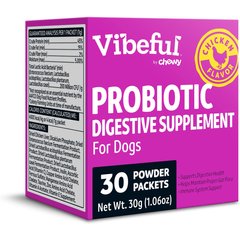
In some cases, probiotics like the Vibeful Probiotic Gastrointestinal Support, may help. This supplement features prebiotic fibers to help support healthy digestion and the immune system. More specifically, each packet packs 200 million CFU/g (colony-forming units) probiotics to promote good bacteria.
In others, you may need to work with your vet to correct an underlying condition that’s causing the consistency issues.
Recommended Product
When to Call Your Veterinarian About Dog Poop Color
It’s normal to be concerned when you see a different color in your dog’s poop, but a changing hue doesn’t always mean there’s something serious going on.
Call your veterinarian if your dog’s poop is black and tarry, red or bloody, gray, purple, or if you notice white specks. You should also reach out if an unusual color keeps showing up or if the poop changes suddenly in both color and consistency.
Take a clear photo before cleaning it up and grab a sample of your dog’s fresh stool in a clean bag or container, so your vet has more information to work with. Your vet will run diagnostic tests on both the stool and your dog to help figure out next steps.
In the meantime, get to know everything you can about your dog’s poop, so you can identify when something just doesn’t seem quite right.
FAQs About Dog Poop Color
What should I do when my dog poops blood?
If your dog is pooping blood, bring them to the vet immediately. Blood may appear as red poop or as black, tarry poop, depending on where it is coming from in the digestive tract.
If possible, save a fresh stool sample or take a clear photo so your vet can review what you are seeing. Blood isn’t always a sign of a serious health problem, but it’s better to be safe than sorry.
What color dog poop is concerning?
Any poop color other than brown should give you pause, but an ‘off’ color every once in a while likely isn’t a big deal. “If you frequently come across watery stool (diarrhea), bloody stool, greasy stool and black/white/green stool, this is a clear sign that your dog’s facing a health problem and should look for veterinary help immediately,” says Dr. Kong.
What color is parvo poop?
Parvo poop typically starts out brown but may develop red streaks and then get redder as the dog’s diarrhea progresses. In addition to bloody diarrhea, other signs of parvo include loss of appetite; abdominal pain and bloating; fever; low body temperature; lethargy; and vomiting. If your dog has any of these symptoms, seek vet help ASAP. Learn more about parvovirus in dogs.
Attributions
Expert input provided by Dr. Leslie Gillette, DVM, Chewy Pet Health Representative; Dr. Sabrina Kong, DVM, a dog trainer based in California and veterinary consultant at WeLoveDoodles; and Dr. Alejandro Caos, DVM, a veterinarian with The Vets in Denver.