Can Horses Eat Apples?


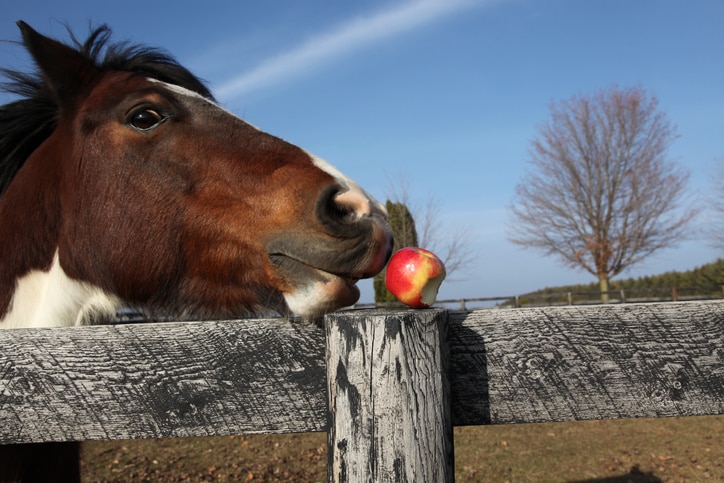
Photo by driftlessstudio/iStock/Getty Images Plus
You’ve probably seen a horse in a movie or TV show eating an apple—but is it really safe for them to have one as a treat?
Yes, apples are safe for horses as an occasional treat and as part of a balanced, forage-based equine diet.
Always speak with your equine veterinarian before adding new foods to your horse’s diet.
Key Takeaways
- Horses can safely eat apples as an occasional treat, and most enjoy them.
- Apples provide small amounts of potassium, calcium, and phosphorus, but they’re not a major source of nutrition.
- Most horses can have about one apple per day, but too many can increase the risk of colic.
- Always feed apples in slices, introduce them gradually, and contact a vet if your horse shows signs of digestive upset.
Can Horses Eat Apples?
Yes, horses can eat apples. “Apples are great for an occasional treat,” says Kelly Vineyard, PhD, an independent equine nutrition consultant. “They’re very palatable, so most horses like them.”
However, most horses have no “off switch” when it comes to their appetite for delicious snacks, says Masa Williams, PhD, a nutritionist at Equine Technical Solutions for Purina Land O’ Lakes. So be mindful they don’t overdo it, as too many treats can lead to colic.
Are Apples Good for Horses?
Yes. Apples do provide some nutrients that are good for horses, including:
- Phosphorus
- Calcium
- Potassium
Potassium is a crucial electrolyte that helps your horse’s muscles and nerves function properly, while calcium and phosphorus work together to build strong bones.
But apples aren’t the best source of those nutrients. “They’re a bonus, not part of the building blocks of nutrition,” Dr. Vineyard says. A horse’s primary diet should include all the nutrients they need.
How Many Apples Can I Give My Horse?
Most horses can safely eat “an apple a day,” assuming they’re average-sized apples. For metabolically healthy horses, a slightly larger serving size is OK, but think two or three apples a couple of times a week, not a bushel of apples.
If your horse is sensitive to sugar due to equine metabolic syndrome or another chronic condition, ask your veterinarian before feeding an apple as a treat.
Horses can eat any variety of apples except “hedge apples,” which aren’t really apples at all. They’re a totally different species and they pose a choking hazard to your horse—so avoid hedge apples altogether.
To make a small serving last longer, cut apples into pieces and serve them in a toy or on a homemade snuffle mat.
Recommended Products

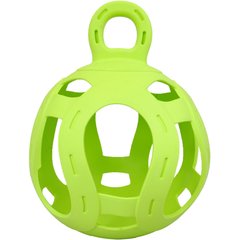
You can also use treats like apples as a sweet topper to encourage horses to eat grain with veterinarian-prescribed medicine in it—or just to make your horse’s daily feed more exciting.
How To Safely Feed Apples to Horses
For most horses, treats like apples are safe when fed in moderation. Here’s the safest way to feed apples to horses:
- Always introduce new foods gradually, starting with just a couple of pieces.
- Only offer your horse slices of apple, not a whole one, to prevent choke. Discard the stem and core.
- Wait a couple of days before giving them more apple to make sure they don’t have any digestive issues.
- Choose healthy, fresh apples—never feed mushy, rotten, or smelly fruits to horses.
- Rinse the apple thoroughly to remove any pesticides.
- For variety, serve slices in a feed pan as a top dressing for feed or medicine or in a foraging toy as a source of enrichment.
Recommended Product

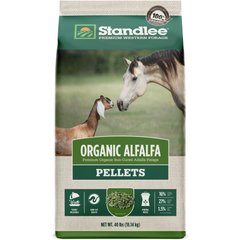
If your horse is sugar-sensitive, or if you just prefer to keep sweet treats to a minimum, try a healthy swap.
Dr. Williams recommends alfalfa pellets as a highly palatable treat that also helps to meet your horse’s daily forage requirements.
Recommended Product
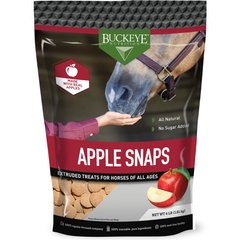
For horses that already love the flavor of apples, apple-flavored horse treats with no sugar added can satisfy their cravings without the starch.
Recommended Products

My Horse Ate Too Many Apples—What Do I Do?
Eating too much apple can create a risk of colic in horses. If your horse eats too much apple, watch for these symptoms:
- Biting or kicking at the flanks (other than to shoo flies away)
- Staring at their sides or belly
- Lack of appetite
- Restlessness
- Sweating without heat or exercise
- Repeatedly lying down and getting up
- Inability to pass manure
- Stretching as if to urinate, without urination
- Elevated heart rate
- Rapid, shallow breathing
If you see any signs of digestive upset, consult your equine veterinarian right away. Colic in horses is always a veterinary emergency.
If you’re not sure how many apples your horse ate but suspect it’s a lot, even though they’re not showing symptoms, contact your vet right away.
What Other Fruits Can Horses Eat?
Horses can enjoy a wide variety of tasty fruit treats, including:
- Pumpkin
- Watermelon
- Grapes
- Bananas
- Berries
- Melons
- Mango
- Stone fruits, like peaches and nectarines (always remove the pits)
- Dates (always remove the pits)
FAQs About Horses Eating Apples
Can you give whole apples to horses?
No. You should slice apples, remove the stem and core, and only serve your horse those slices to avoid choking.
How many apples a day can you give a horse?
Most horses can safely enjoy one small apple every day.
Can horses eat apple seeds?
Yes. Horses can eat the seeds in apples. In large quantities (for example, if a horse ate a cup of the seeds alone), a type of cyanogenic glycoside compound in apple seeds could be harmful and cause decreased oxygen, muscle and cardiac weakness, and other signs, but this is very unlikely.
Attributions