Horse Mud Management: How To Manage Mud Season as a Horse Owner


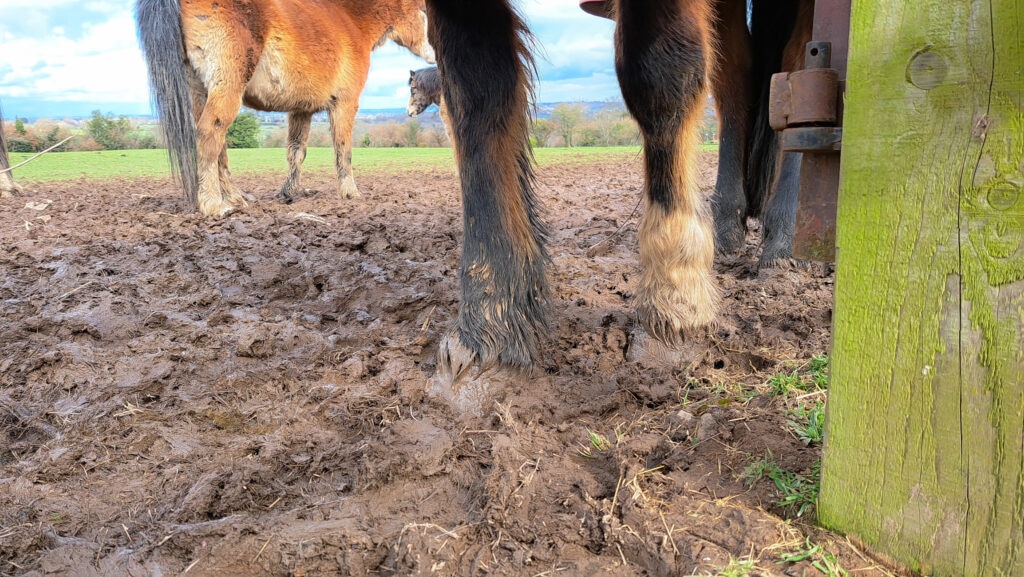
Photo by Eileen Groome/E+
If you’ve ever slogged through a muddy pasture to bring in your horse, only to find the deep mud suddenly sucking your boot off your foot, then you know how tricky navigating mud can be.
Horses and mud don’t mix well, and more than just an inconvenience, mud can cause serious horse health issues and injuries. Horse mud management may not be easy, but it’s a necessary part of keeping your barn safe for both horses and humans.
Key Takeaways
- Mud is often caused by a combination of issues like poor drainage, high-traffic areas, and poor placement of features like gates.
- Horse mud management can be challenging, but strategies like using mud control grids can help solve mud problems.
- Mud can lead to health issues, injuries, and even emergencies when horses become trapped, so it’s important to find the mud control strategies that work for your property.
Understanding Mud Season Challenges
Why Mud Forms on Horse Properties
“Mud usually isn’t a surprise,” says Yash Balasaria, CEO of American Stalls. “It’s often predictable, as it forms wherever you have water, improper footing preparation, significant repeat hoof traffic, and other factors.”
Balasaria explains that it’s essential to consider a property’s soil and prepare drainage to avoid mud. For example, heavy soils like clay that don’t drain well and low-lying areas where water collects will both be prone to mud building up.
According to Ron Wallace, owner of Equine Farm Management Inc., poor gate placement is another major problem that leads to mud formation. Placing gates in low-lying areas that have significant water runoff can lead to mud, and that can be a difficult issue to fix.
These challenges multiply with significant melting snow in the winter and spring, or heavy spring rains, and mud issues become even worse.
Impact of Mud on Horse Health
Mud can have a serious impact on horse health, including:
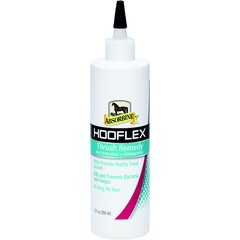
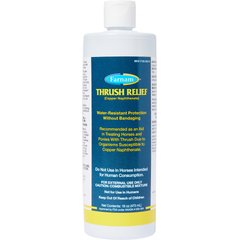
- Hoof issues: Continuous exposure to mud can soften hooves, making it more likely for a horse to experience punctures, hoof abscesses, thrush, and soft soles. Always make caring for your horse’s hooves a top priority, including keeping thrush treatment on hand.
Recommended Products
- Skin infections: Mud can affect the skin’s natural barrier, potentially leading to skin issues and infections. When horses’ legs are frequently muddy, their skin can become softer, allowing bacteria to grow and leading to scratches.
- Risk of injury from slipping: Mud can be very slick, leading to potential slips or falls that can result in injuries like tendon and ligament strains and tears.
Property and Pasture Management to Reduce Mud
Horse mud management can incorporate several approaches tailored for various challenges and different areas on your farm.
Improve High-Traffic Areas
Wallace suggests that property owners put down rock dust in high-traffic areas, like areas under gates and water troughs, and build the dust up so that it’s higher than the surrounding land.
Balasaria recommends working with an equine architect or landscape architect to conduct a topographic or land study to identify soil profiles and land contours. By doing so, you can hopefully reduce or avoid mud in high-traffic areas.
If land studies aren’t possible, Balasaria recommends reinforcing problematic areas before they fail. “For example, you can try to manage foot traffic by moving gates or feeders,” he suggests. Some horse owners may also opt to transition their horses off pasture for the winter months.
Install Mud Grids
Balasaria adds that installing mud control grids can create a firm, load-bearing surface in high-traffic areas. Mud grids are heavy-duty, interlocking plastic panel systems that create stable, mud-free surfaces.
The grids are strong enough that many clients can use heavy machinery and equipment over them without issues.
“Our mud control grids are prepared over a prepared base layer and then filled with angular gravel,” explains Balasaria. “This grid structure distributes the horse’s weight, preventing the footing from shifting and keeping the gravel from sinking into the soil. The water then drains completely through, but the surface stays firm.”
He explains that mud grids for horses may cost more upfront than gravel alone, but they also dramatically reduce maintenance, gravel replacement, and labor costs. The gravel may need to be periodically replenished, but mud control grids are fairly low-maintenance.
These grids may be worth the cost when you’re looking for an effective solution for a significant mud problem, like muddy areas around paddock gates or water troughs that you haven’t been able to fix.
Drainage Solutions
“Drainage is paramount on any farm,” says Balasaria, but he also cautions that drainage alone won’t solve mud issues.
French drains, swales, and grading the property can redirect water away from muddy areas. Just be sure to pair these strategies with intentional pasture layout so horses aren’t standing in the same spot every day, which can compact the ground and cause it to fail.
Shelter and Paddock Design
When it comes to mud control for horse paddocks, consider the paddock layout, including any shelter.
Balasaria notes that certain flooring can work well for run-in sheds, but it’s important to carefully choose flooring, since sheds are notorious for being muddy areas.
“One option is to use mud control grids with a compacted gravel infill,” he says. “This helps create a dry, level, and non-slip surface that holds up over time. However, keep in mind that ground preparation and gravel infill must be completed according to the manufacturer’s specifications to ensure proper performance.”
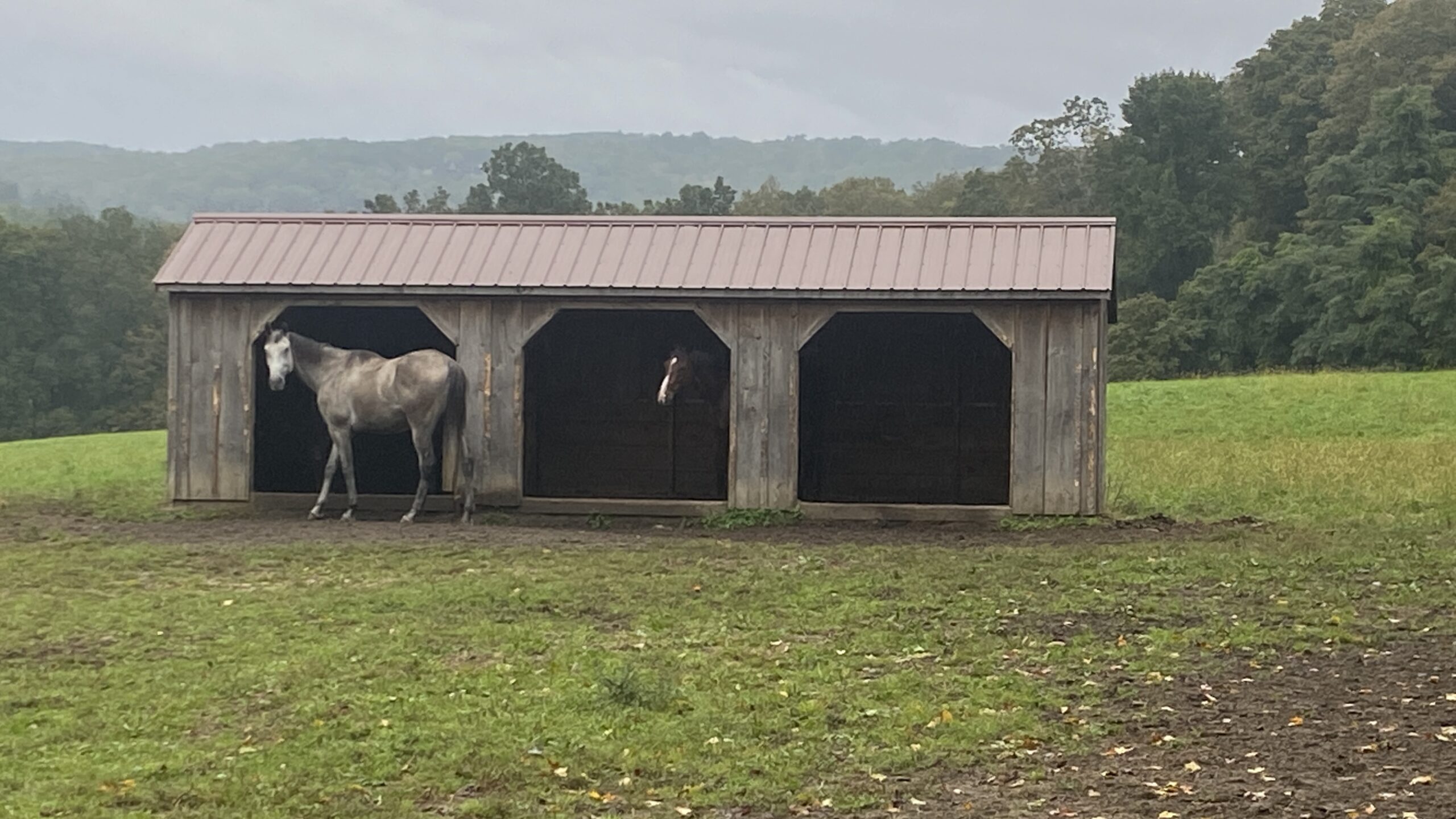
Photo by FS/iStock / Getty Images Plus
Some clients use concrete flooring, but it’s essential to ensure that the drainage is properly planned. Balasaria always recommends pairing concrete with interlocking rubber mats to provide extra traction.
Wallace highlights the importance of ensuring any shed flooring is higher than the pasture by at least 6 inches. “Make sure the runoff from the roof doesn’t erode around the shed,” he says.
Ultimately, horse pasture drainage solutions depend on making sure you have your pasture elements properly positioned, and strategically choosing flooring that works well in high-traffic areas like a shed.
Bedding and Footing Strategies
Best Bedding Types for Muddy Conditions
The bedding you use in a run-out stall or shed can mix with the ground, making mud issues worse. Pelleted bedding offers some advantages because it absorbs moisture.
Both shavings and straw can become slippery and will ultimately only add to your mud problem.
Wallace recommends making sure your stall or shed is positioned so it’s higher than the surrounding ground. Sweeping bedding back and away from the edge of the shed or doorway can minimize the amount of bedding that contributes to the mud.
Outdoor Footing Materials
Certain footing materials can help with mud management:
- Pea gravel: Pea gravel, which is smooth, rounded, and small, is sometimes used in paddocks and runs. It is best used to top your base layer because it isn’t very stable and won’t solve mud issues when used on its own.
- Stone dust: Stone dust or crushed stone can be installed over a geotextile fabric and larger gravel. It compacts well, and can be leveled and angled to help direct water. Stone dust can be a valuable tool in mud management, and it’s often used to fill in mud control grids.
- Wood chips: Wood chips are sometimes used as a short-term mud solution. They are often applied over a geotextile fabric to help maximize drainage. However, because they’ll decompose, wood chips need to be frequently replenished.
- Engineered wood fiber: Engineered wood fiber is a popular choice for high-traffic areas. It’s often paired with a gravel base. Since the fibers interlock, this material helps prevent deep mud from developing, while also staying firmer than other footing types.
Gear and Equipment to Help Manage Mud
While it’s important to address the root cause of mud on your farm, certain products can also be useful in mud management for horses. Mud boots or mud socks are designed to fit tightly around your horse’s legs, protecting them from mud and helping to keep them dry.
Recommended Product

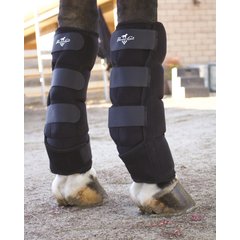
Ice boots can offer your horse the benefits of ice therapy, and may be useful in helping to support your horse’s leg health after they’ve been in a muddy turnout during the day.
Recommended Product
Stocking up on your own mud season apparel can also make dealing with mud easier.
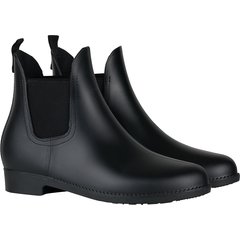
Make sure you have a good pair of knee-high rubber boots for days when you need to walk through muddy paddocks. Rubber boot covers or overshoes can also be helpful in protecting your paddock boots from shallower areas of mud.
If you prefer rubber boots you can also ride in, check out Horze Bonn Rubber Paddock Boots.
Recommended Product
Mud Emergency Preparedness
Unfortunately, mud can lead to potential emergencies, and horses can get so stuck in deep mud that they’re unable to free themselves.
If you discover a horse stuck in the mud, call animal rescue and/or your veterinarian right away. A vet can evaluate your horse, and may sedate them so rescuers can safely work to free your animal.
To rescue a horse stuck in mud, you will often need to dig mud away from them, reducing the suction. It may be necessary to elevate and support the horse’s head so their nostrils are above the mud during the rescue.
Heavy machinery may be necessary, so always enlist the help of a veterinarian and rescuers who are trained in large animal rescue safety protocols to avoid injuring your horse during the process. For large machinery to access the area, have plywood or other material on hand so drivers have a firm surface as a base.
As you develop your horse mud control plan, tailor these strategies to your individual property’s needs. Taking a careful look at your property and the unique challenges you face will help you determine which mud control solutions are best for you.
Attributions