Sort
Filter



Out of Stock
Dog Houses
Dog houses are a great way to provide shade and shelter for your best friend outdoors. You can find houses for dogs in a variety of materials, styles, and sizes, including sturdy dog shelters that withstand all kinds of weather and portable ones you can take anywhere you go. Some popular doghouse types include:
- Insulated outdoor dog houses: Help trap body heat for comfort in cooler temps
- Heated dog houses: Provide added warmth in cold temperatures
- Folding dog houses: Collapsible styles that go wherever you need them
- Soft-sided dog houses: Lightweight for portability
Choose a dog house that fits the climate you live in and the size and shelter needs of your dog. Be sure to check on your dog frequently, especially in cold or hot weather, and don't leave your dog outside alone for extended periods.
Frequently Asked Questions about Dog Houses
What should I put in a dog house?
You should put fresh outdoor dog bedding like straw, hay, or wood shavings in your dog house for comfort and added insulation. You can also put a towel or blanket for your dog to cuddle in, but you’ll need to change/clean it frequently to keep it dry and prevent mold growth. Some people also put food and water inside the dog house, or place them somewhere easily accessible and protected. Your dog may also enjoy having a favorite toy or chew inside the house for comfort.
Do dogs need a dog house?
Not all dogs need a dog house, but dogs who spend a lot of time outside in the yard should be provided with one. An outdoor dog house can provide protection from the elements and a place where your buddy can feel safe. Of course, you should always check on and interact with your dog, even if he spends a lot of time outside. And don’t leave your dog outside in severe weather or extreme temperatures, even if he has a dog house for shelter.
How big should a dog house be?
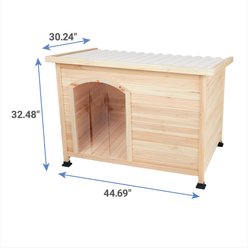
A dog house for a should be roughly 25% longer and taller than he is. Measure your dog from head to ground for the height measurement and from nose to tail base for the length measurement. Then, add approximately 25% to each measurement to get the right height and length dimensions. Be careful not to choose a dog house that is more than 50% taller or considerably longer than your dog, or he may have trouble keeping warm inside. Be sure the door opening is large enough—but not too large—for your dog to exit and enter comfortably.
Can you leave a dog outside with a dog house?
You can leave a dog outside with a dog house in most municipalities, but it needs to provide adequate protection, warmth, and comfort for your dog’s health and safety. The shelter should be watertight and insulated or heated in cold climates, or adequately ventilated in warm ones. Be sure to keep your dog’s outdoor house clean and free from parasites and always provide plenty of fresh water and food. Your area may have certain legal requirements for outdoor dog shelters, so check them to be sure.
Breed Size
Material
Features
Crate & Pen Type
Brand
6 Brands are shown below