Kitten Vaccine Schedule: A Complete Guide to Kitten Shots


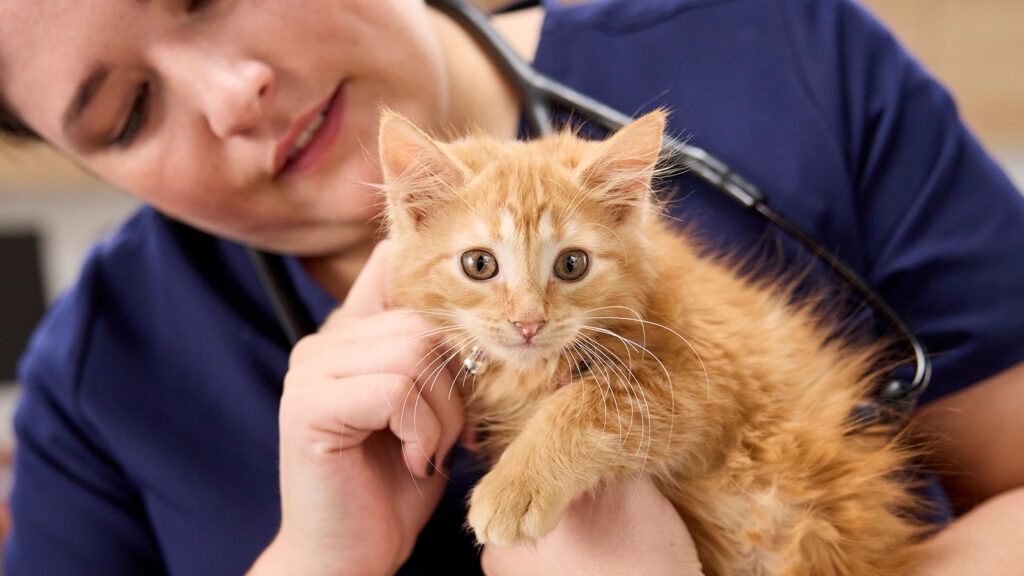
Photo by Chewy
Kittens may be tiny, but their immune systems have a big job to do. Kittens, particularly those under 6 months old, are especially vulnerable to viruses and infections, which is why following a proper kitten vaccine schedule is so important.
Vaccinations help protect against life-threatening illnesses, such as feline distemper, feline calicivirus, and feline leukemia virus, among others.
This guide covers everything you need to know about kitten shots, from when to schedule them to which ones are considered essential (and which are optional).
Key Takeaways
- Kittens need a series of core vaccines, ideally starting at 6–8 weeks old, to protect against serious and potentially fatal diseases.
- Non-core vaccines may also be recommended based on your kitten’s lifestyle, environment, and risk of exposure.
- Kittens are not fully protected until seven to 10 days after they’ve completed their full vaccine series, usually around 16–20 weeks of age.
What Shots Do Kittens Need?
Kittens need a series of core vaccines to protect them from the most common and potentially life-threatening diseases. These are recommended for all kittens, regardless of lifestyle.
Depending on your kitten’s environment and risk of exposure, your veterinarian may also suggest non-core vaccines, which offer protection against specific situational threats.
Core Kitten Vaccines
According to the 2020 AAHA/AAFP Feline Vaccination Guidelines, core vaccines are considered essential for all kittens, regardless of their lifestyle. They include:
- FVRCP vaccine: This vaccine protects against three highly contagious and potentially life-threatening viruses:
-
- Feline herpesvirus (FHV-1): Also known as feline viral rhinotracheitis (FVR), this virus is a major cause of upper respiratory infections in cats and is the most common cause of conjunctivitis (also known as cat pink eye).
-
- Feline calicivirus (FCV): This virus causes a mild to severe respiratory infection and painful mouth ulcers.
-
- Feline panleukopenia (FPV): Also known as feline distemper, this severe and often fatal disease attacks the immune system and digestive tract.
- Rabies vaccine: This vaccine protects against the rabies virus, which is fatal for cats. The virus is transmissible to humans and can be fatal if not promptly treated. The rabies vaccine is required by law in many areas.
- Feline leukemia virus (FeLV) vaccine: Strongly recommended for all kittens younger than 1 year old, this vaccine protects against a contagious virus that attacks a cat’s white blood cells and weakens the immune system, increasing the risk of infections, cancer, and death.
Non-Core Kitten Vaccines
“Non-core vaccines, on the other hand, are given based on a cat’s individual risk factors, such as whether they go outdoors, live in multi-cat households, or are exposed to other cats at shelters, boarding facilities, or grooming salons,” says Ashly Smith, DVM, regional medical director for Small Door Veterinary’s locations in the Washington, D.C. area.
According to the 2020 AAHA/AAFP Feline Vaccination Guidelines, non-core vaccines include:
- Chlamydia vaccine: This helps protect against Chlamydia felis, a bacterial infection that causes conjunctivitis and upper respiratory issues. It’s typically recommended only in multi-cat households or shelters with confirmed infection.
- Bordetella vaccine: This protects against Bordetella bronchiseptica, a bacterium that can cause respiratory illness in cats. It’s typically recommended only in multi-cat households or shelters with confirmed infection.
- FeLV vaccine: While this vaccine is considered a core vaccine in kittens under 1 year old, it’s optional for older cats.
When Do Kittens Get Their First Shots?
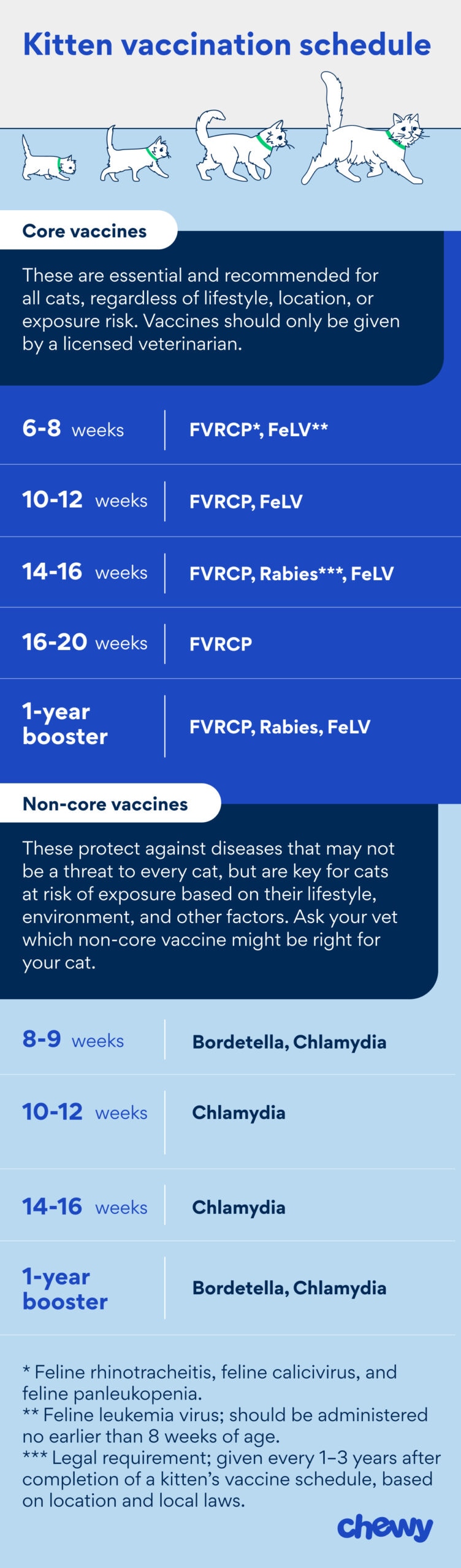
Photo by Chewy
A kitten is typically given their first set of vaccinations during their first vet visit, usually around 6–8 weeks of age.
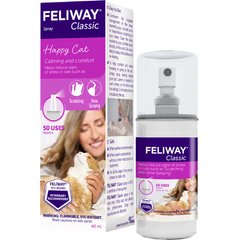
A secure cat carrier, like the Petmate Vari Kennel, is essential for safe transport to the vet, while calming aids, such as Feliway Classic Calming Spray and Pet Honesty Cat Calming Treats, can help make the trip less stressful.
Recommended Products


Your kitten’s vaccine schedule may vary based on age, health, and prior vaccination history.
And if a kitten or cat is behind on vaccines, “we’ll start their series based on their current age and tailor the schedule accordingly,” says Dr. Ashly Smith.
The kitten shot schedules below outline the recommended timelines for core and non-core vaccines based on recommendations from the AAHA.
Kitten Vaccine Schedule: Core Vaccines
| Age | Vaccine | Notes |
|---|---|---|
| 6–8 weeks | FVRCP, FeLV | First dose, Start FeLV no earlier than 8 weeks |
| 10–12 weeks | FVRCP, FeLV | Second dose if started at 6–8 weeks (or first dose if starting here) |
| 14–16 weeks | FVRCP, Rabies, FeLV | Third dose, Single dose (required by law), Second dose (if FeLV series started at 10–12 weeks) |
| 16–20 weeks | FVRCP | Final dose |
| 1 year after last kitten dose | FVRCP booster, Rabies booster, FeLV booster | First adult booster, Required by law, Give annually if cat is at risk of FeLV exposure (e.g., outdoor or multi-cat home) |
Kitten Vaccine Schedule: Non-Core Vaccines
| Age | Vaccine | Dosage |
|---|---|---|
| 8–9 weeks | Bordetella, Chlamydia | Single dose (typically given intranasally), First dose (sometimes included as part of the FVRCP combo vaccine or as a separate vaccine) |
| 10–12 weeks | Chlamydia | Second dose (or first dose if starting here) |
| 14–16 weeks | Chlamydia | Second dose (if started at 10–12 weeks) |
| 1 year | Bordetella, Chlamydia | Booster, depending on risk |
What Vaccines Do Adult Cats Need?
After the kitten series is complete, adult cats still need vaccines to stay protected, just not as often.
Your veterinarian can help determine which vaccines your cat needs based on age, lifestyle, and risk of exposure.
Here’s a look at the core and non-core vaccines typically recommended for adult cats.
Adult Cat Vaccine Schedule
| Vaccine | Type | Frequency |
|---|---|---|
| FVRCP | Core | Often given every three years |
| Rabies | Core | Every one to three years (varies by location/law) |
| FeLV | Non-core (if older than 1 year) | Often given every two to three years, depending on risk factors |
| Bordetella | Non-core | Every six to 12 months, depending on risk |
| Chlamydia | Non-core | Annually, if at risk |
What if your adult cat’s vaccine history is unknown? According to Dr. Ashly Smith, they’re usually treated as unvaccinated and started on an appropriate vaccine series.
Where Are Cats Vaccinated?
Vaccines are given in specific locations on a cat’s body, typically as low on the limb as possible. This standardized placement helps veterinarians identify which vaccine was given where and monitor for side effects. And, if a rare vaccine-associated sarcoma occurs, standardized placement makes surgical removal easier, says Dr. Ashly Smith.
Here’s where cats typically receive their vaccines:
- FVRCP: Injected subcutaneously (under the skin) in the right front leg
- FeLV: Injected subcutaneously in the left rear leg
- Rabies: Injected subcutaneously in the right rear leg
- Bordetella: Intranasally, with a small dose placed into the cat’s nostrils (never administer intranasal Bordetella products by injection)
- Chlamydia: Injected subcutaneously in the right front leg
What Are Common Side Effects of Vaccines in Kittens?
“It’s common for kittens to have some type of mild side effect after getting their kitten vaccines,” says Marc Smith, DVM, owner of Natchez Trace Veterinary Services, in Nashville, Tennessee.
“Mild reactions are usually short-lived and let us know that the kitten’s immune system is responding appropriately to the vaccination,” he adds.
However, some kittens may not show any visible side effects—and that’s completely normal.
“It doesn’t mean their bodies aren’t responding to the vaccine,” Dr. Marc Smith says. “They are just processing it differently.”
The most common side effects include:
- Mild lethargy
- Decreased appetite
- Soreness at the injection site
- Slight swelling or tenderness at the injection site
- Low-grade fever
Mild side effects typically resolve within 24–48 hours and don’t require any treatment, Dr. Marc Smith says.
However, if symptoms persist or if your kitten shows signs of a severe reaction—which usually happen within two to four hours of vaccination—call your vet or an emergency clinic right away.
Signs of a serious reaction may include:
- Facial swelling
- Hives
- Trouble breathing
- Vomiting
- Diarrhea
- Disorientation
- Pale gums
- Cold limbs
- Severe lethargy lasting more than a day
- Seizures
- Collapse
How Much Do Kitten Vaccinations Cost?
The average cost of cat vaccinations can range from $15 to over $200, depending on the type of vaccine, the brand, and your location.
Also, keep in mind that before your kitten is vaccinated, they’ll need a physical exam to determine whether they’re healthy enough to receive the shots. The initial exam is performed by a veterinarian and can cost anywhere from $50 to over $120.
FAQs About Kitten Vaccines
When do kittens get their first shots?
Kittens typically receive their first round of vaccines between 6 and 8 weeks of age. Vaccines are then repeated every three to four weeks until they are 16–20 weeks old.
Do indoor kittens need vaccines?
Yes, even indoor-only kittens need core vaccines, including FVRCP, rabies, and FeLV (if under 1 year old) to protect against common and potentially serious diseases. Some viruses can be brought into the home on clothing, shoes, or other pets.
What happens if a kitten misses a vaccine?
If your kitten misses a scheduled vaccine, your vet may recommend continuing the series as planned, restarting it, or giving an additional dose. It all depends on how much time has passed. Talk to your veterinarian about the best course of action.
Can kittens go outside after just one round of shots?
No, kittens are not fully protected until seven to 10 days after they’ve completed their full vaccine series, usually around 16–20 weeks of age. Until then, they should be kept indoors to avoid exposure to infectious diseases.
Attributions