What Is Treibball for Dogs? A Beginner’s Guide to the Herding Sport


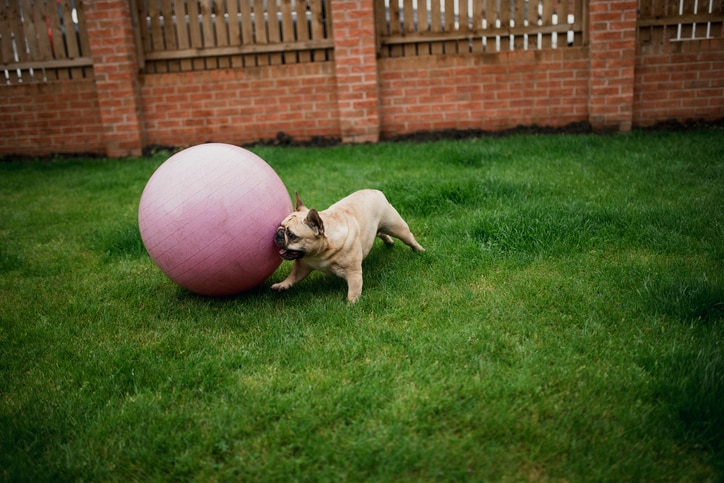
Photo by SolStock/iStock/Getty Images Plus
If your dog lights up when there’s a “job” to do—whether that’s chasing a ball, learning a new trick, or figuring out a puzzle toy—treibball might be right up their alley.
In treibball, pups push inflatable exercise balls into a goal. It’s like a cross between soccer and billiards—with a lot more nose boops and wagging tails.
Curious if your dog would love it? Learn how treibball works, why dogs go wild for it, and how to get started together.
Key Takeaways
- Treibball is a fun dog sport where dogs push large balls into a goal using cues from their pet parent.
- It provides both mental stimulation and low-impact physical exercise, making it a great fit for many dogs.
- Treibball strengthens communication and teamwork between you and your dog through training and play.
- Dogs who enjoy learning and problem-solving tend to thrive, and any breed can participate.
- With the right setup and training, treibball can be played casually at home, but you can join competitions too.
What Is Treibball for Dogs?
Treibball (pronounced “try-ball”) is a dog sport where dogs use their nose or body to push exercise balls, one by one, into a goal that’s typically 15 feet wide and 5 feet deep.
Pet parents guide their dog to move the balls in a specific order using verbal cues and hand signals. As dogs level up, they’ll push more balls, work from greater distances, complete the course more quickly, and sometimes navigate obstacles.
Benefits of Treibball for Dogs
Treibball comes with some pretty impressive perks for your pup, says Chris Roeder, a board director at the National Association of Treibball Enthusiasts (NATE) and treibball instructor at Pawsitive Partners in Indianapolis.
Some benefits of treibball include:
- Mental stimulation: Encourages dogs to problem-solve, follow cues, and use their minds to complete tasks
- Teamwork: Strengthens communication and deepens the bond between you and your dog
- Low-impact exercise: Provides physical activity without putting a lot of strain on your dog’s body
- Good for shy or fearful dogs: Allows dogs to work one-on-one to build confidence, with video-based competition options available too
- Outlet for natural instincts: Channels herding behaviors into a structured, productive activity
How To Play Treibball With Your Dog
“The sport can be as competitive as you want it to be,” says Michael McManus, owner of Ready Sit Go Dog Training and PUSH Treibball, in Troy, Missouri.
There are online and in-person competitions across the U.S., but if competition isn’t your thing, treibball is just as fun as a low-key backyard (or park) game you and your dog can enjoy together.
So, how exactly do you play treibball? Here’s a step-by-step look at how it works:
1. Set Up the Field and Set the Timer
Treibball is played on an open field, yard, or large indoor space. Several exercise balls are arranged in a triangle formation, and a goal is set up a distance away.
There are several skill levels and game variations. The exact rules and equipment vary depending on the venue, the game variation, and your dog’s experience.
Some elements that may vary include:
- Field size: 50 feet long by 35 feet wide to 75 feet long by 50 feet wide
- Number of balls: Three to eight balls per game
- Time limit: Seven to 15 minutes to get all balls to the goal
- Goal distance: 15–50 feet
- Obstacles: Advanced levels may include features like ditches, hills, or gates
2. Start at the Goal
Both you and your dog start near the goal with your dog in a seated position.
You remain within about 5–10 feet of the goal—depending on your dog’s level—throughout the game. This area, known as the handler zone, is marked on the ground in competitions.
3. Send Your Dog Behind the Ball
Once the timer starts, you’ll send your dog out to the balls (called an “out run”). But instead of running straight at the balls, your dog learns to go around them and position themselves on the far side, facing you.
This is key to controlling where the balls go when pushed.
4. Guide the Push
Using verbal cues and hand signals, guide your dog to push each ball, one at a time, toward you and into the goal. Dogs typically use their nose, chest, or front legs to move the balls.
Depending on the level, your dog may push the balls in any order (beginner level) or be required to follow a specific order (advanced level).
5. Finish the Course
The round ends once all the balls are brought into the goal and your dog lies down in a designated space next to you.
In competition, the dog-handler team that gets all their balls into the goal the fastest wins.
If you and your dog want to work with an instructor, you can. You can also use NATE’s resources to teach yourself.
Is Treibball Right for Your Dog?
Dogs of any breed can get involved! In fact, McManus says one of the biggest misconceptions is that treibball is only for herding breeds, but he points out that all kinds of dogs can play.
That said, treibball isn’t necessarily the right match for every pup.
Traits That Make a Dog a Good Fit for Treibball
Treibball is all about focus, teamwork, and engagement.
“The best trait is a dog that loves having fun with their person,” Roeder says.
Here are some other signs that your dog might be a good fit for the sport:
- Enjoys training, learning new skills, or having a “job” to do
- Responsive to cues and direction (even if still learning)
- Motivated by treats, toys, or praise
- Enjoys interactive play
- Able to move comfortably and push lightweight balls without pain
When Treibball May Not Be a Good Fit
While most dogs can participate, some pups might be a better fit for other activities (and that’s OK!).
This may include dogs who:
- Have untreated orthopedic issues or injuries
- Have severe mobility limitations
Always consult your veterinarian before starting a new sport.
How To Choose the Best Ball for Treibball
The right ball size depends on your dog’s height at the shoulder, Roeder says. In general, balls 10–18 inches in diameter are used for smaller pups, while medium to large dogs require 22–30–inch balls.
Good Treibball Ball Picks
Here are some good options based on your dog’s size:
- For tiny dogs (shorter than 9 inches): Jolly Pets Push-n-Play Dog Toy (10- inch)
Recommended Product

- For extra-small dogs (9–14 inches tall): Jolly Pets Push-n-Play Dog Toy (14-inch)
Recommended Product

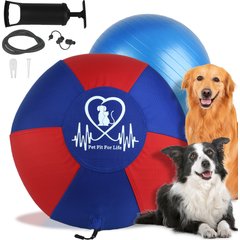
- For small dogs (14–18 inches tall): Pet Fit For Life Herding Ball Dog Toy (18-inch)
Recommended Product
- For medium-sized dogs (18–22 inches tall): Ideally, a ball that’s around 20–23 inches)
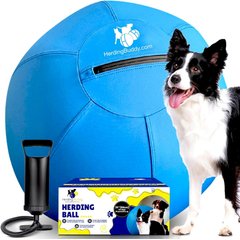
- For large dogs (22–26 inches tall): Herding Buddy Ball Dog Toy (25-inch); the largest breeds will benefit from a 30-inch ball
Recommended Product
Can’t find the perfect size? Think outside the box. Standard yoga balls are often used for larger dogs, while lightweight children’s playground balls can work well for smaller pups—just make sure they’re anti-burst.
Balls to Avoid
- Heavy rubber balls (like dodgeballs or dog toys made for regular play)
- Balls that are too small or large for your dog
- Super thin, easily punctured materials
FAQs About Treibball for Dogs
Do dogs need to be herding breeds to do treibball?
Nope! While herding breeds may have a natural advantage, treibball can be a fun sport for other dogs too.
What is the difference between treibball and herding?
Herding has traditionally involved dogs moving farm animals, while treibball mimics that behavior by using inflatable balls (no animals required).
How can my dog get treibball training?
You can start at home by watching how-to videos or work with a trainer in person or virtually.
Is treibball safe for senior dogs?
Yes, treibball can be safe for senior dogs. Because it’s low-impact and doesn’t involve jumping, it might be a good fit for seniors. Get your vet’s stamp of approval first.
Is treibball competitive?
Yes and no. Treibball can be both competitive and casual. There are national competitions, but many pet parents and their dogs enjoy it as a fun enrichment activity in their backyard or at a local park.
Attributions