Siberian Husky vs. German Shepherd: Which Is Best for You?


Photo by Chewy
Choosing between a Siberian Husky and a German Shepherd? Both great choices, both great breeds: They are intelligent and active dogs who are deeply devoted to their people.
However, they come with different strengths, care needs, and day-to-day expectations. Knowing more about their personality, exercise levels, grooming requirements, health, and more can help you pick the dog who best suits your lifestyle.
Key Takeaways
- Siberian Huskies were bred to run long distances, while German Shepherds were developed for herding and versatile working roles.
- German Shepherds are typically larger than Siberian Huskies.
- Both breeds are high energy, but Huskies often require more daily exercise and a larger, secure outdoor space.
- Both breeds shed year-round and heavily during seasonal changes.
- The right fit depends on your activity level, commitment to training, grooming tolerance, and ability to meet each breed’s physical and mental needs.
History

Photo by Bigandt_Photography/iStock via Getty Images Plus
The Siberian Husky originated more than 1,000 years ago in Siberia, where the Chukchi people bred these dogs to pull sleds across long distances in harsh, cold environments. Their role required endurance, efficiency, and the ability to work in teams—which still shows in their energetic, social nature today.
The German Shepherd originated in Germany in the late 1800s and was developed as a herding dog. Over time, their intelligence, trainability, and versatility led them to take on many roles, including service, search-and-rescue, and police work.
While both breeds have working roots, their original jobs were quite different: Huskies were built for stamina and teamwork over miles of terrain, while German Shepherds were bred for responsiveness, focus, and adaptability across tasks.
Appearance
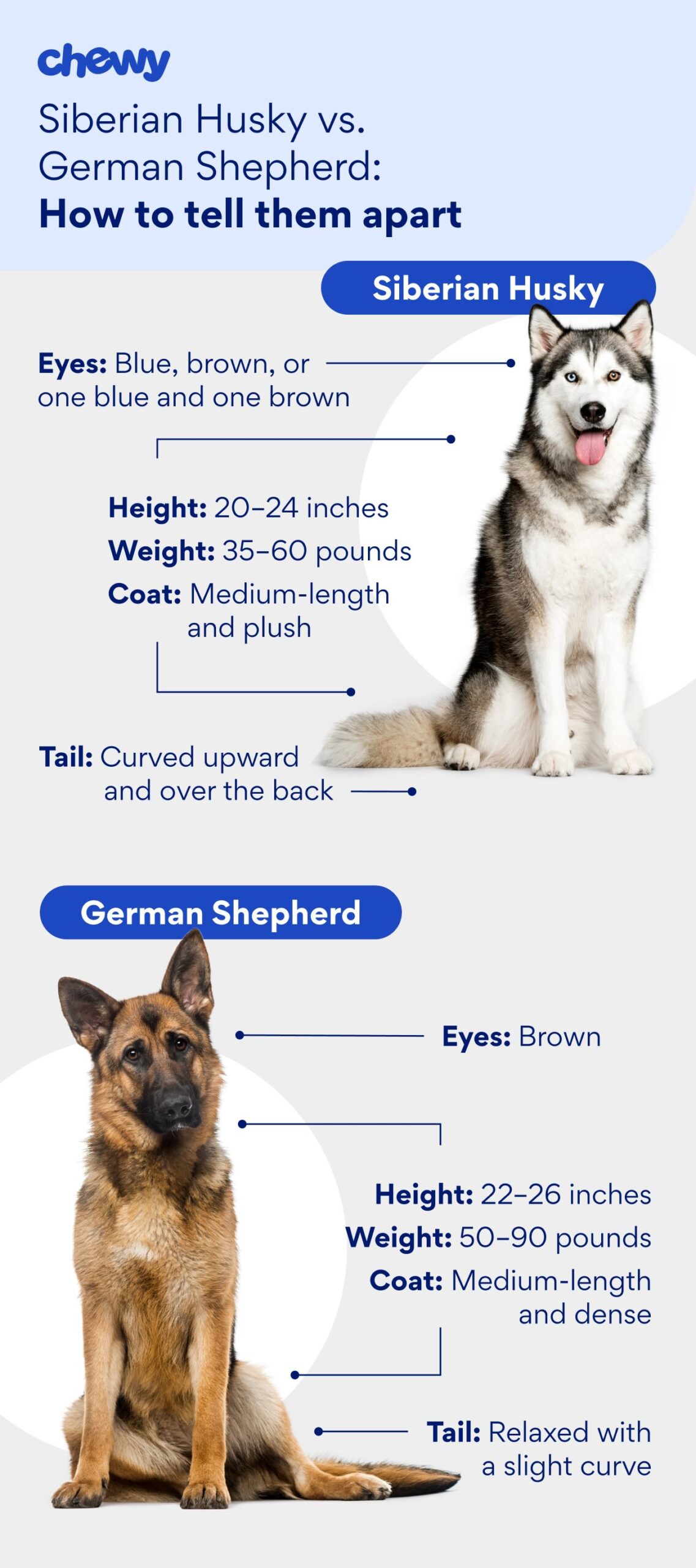
Photo by Chewy
Siberian Huskies and German Shepherds are both striking dogs with upright ears and athletic builds. But their size, coat, and overall structure make them easy to tell apart.
- Size: Siberian Huskies typically stand 20–24 inches tall and weigh 35–60 pounds. German Shepherds are larger, typically standing 22–26 inches tall and weighing 50–90 pounds.
- Coat length: Siberian Huskies have a medium-length double coat designed for cold weather. Their coats tend to look plush but aren’t overly long. German Shepherds also have a medium-length double coat, but it is usually denser.
- Coat colors: Husky coats are often seen in black, gray, red, or sable colors with white markings. German Shepherd colors include black and tan, black and red, sable, and solid black.
- Build: Huskies are lighter and more streamlined, while German Shepherds have a more muscular, slightly sloped build.
- Expression: Huskies often have a bright, alert expression and may have blue or brown eyes—or even one of each eye color. German Shepherds typically have almond-shaped brown eyes and a focused expression.
- Tail: Huskies often carry their tails over their back in a sickle shape. German Shepherds have a low-set, saberlike tail.
Personality

Photo by Sergeeva/E+ via Getty Images
Siberian Huskies are social, energetic dogs who often enjoy being around people and other dogs. Because they were bred to work in teams, they tend to thrive with companionship. They can be independent thinkers, so training your dog requires patience, consistency, and positive reinforcement.
German Shepherds are known for their intelligence, loyalty, and eagerness to work with their pet parents. They often form close bonds with their families and tend to excel when given structure, training, and a job to do.
Both breeds are brainy, but they express it differently. Huskies may follow their instincts more readily, while German Shepherds often look to their pet parent for direction. Early socialization and ongoing training are important for both.
Exercise Needs

Photo by Chewy
Siberian Huskies need a good deal of daily exercise—at least 90 minutes to two hours per day. They thrive on activities like running, hiking, pulling sports, and long walks. Without enough activity, they may look for their own ways to burn energy, which can include escaping or digging.
Recommended Product

German Shepherds also require significant daily exercise, typically one to two hours per day. They benefit from structured activities such as obedience training, agility, scent work, and interactive play like fetching balls in the backyard.
Recommended Products

While both breeds are active, Huskies often need more sustained, endurance-based exercise, while German Shepherds benefit from a mix of physical activity and mentally engaging work.
Grooming

Photo by Petko Ninov/E+ via Getty Images
Siberian Huskies and German Shepherds have a double coat that sheds year-round, with heavy seasonal shedding—often called “blowing coat”—once or twice a year. During these periods (in the spring and fall), large amounts of undercoat come out over several weeks.
Routine care for both Huskies and German Shepherds involves:
- Brushing your dog at least once or twice weekly, increasing to daily during heavy shedding seasons. A pin brush is a good fit for both breeds, and you can use a rake brush during the heavy shedding seasons.
Recommended Products


- Occasional baths. German Shepherds may need more consistent bathing than Huskies, whose coat tends to repel dirt and odor.
- Regular nail trims (about every three to four weeks).
Recommended Product
- Diligent dental care, including daily toothbrushing with a dog-safe toothpaste and toothbrush. Your dog will also need professional dental cleanings at your vet’s recommendation.
Recommended Products

- Regular ear checks to spot signs of debris or irritation.
Simply put: Don’t bring home one of these breeds if you’re not OK with loose fur on your floors and furniture.
Health

Photo by Bigandt_Photography/iStock via Getty Images Plus
Siberian Huskies are generally considered a hardy breed, but they can be prone to certain conditions, including:
- Cataracts and other inherited eye conditions, such as progressive retinal atrophy (PRA), that can affect vision
- Hip dysplasia, though less common than in some larger breeds
- Epilepsy, a seizure disorder
- Hypothyroidism, which includes symptoms like lethargy, hair loss, recurring ear and skin infections, and weight gain
German Shepherds are more prone to certain orthopedic and digestive conditions, including:
- Hip dysplasia and elbow dysplasia, which can affect mobility and joint health
- Degenerative myelopathy, a progressive spinal cord condition
- Exocrine pancreatic insufficiency (EPI), which affects digestion and nutrient absorption
Both breeds may also be at risk for gastric dilatation-volvulus (GDV), a severe form of bloat in dogs. This is a life-threatening condition in which the stomach fills with gas and twists, requiring immediate veterinary care.
To support long-term health in either breed, pet parents should:
- Work with a responsible breeder or adopt from a reputable rescue
- Schedule regular veterinary exams and screenings
- Maintain a healthy weight to reduce joint strain
- Stay current on vaccinations and parasite prevention
- Ask their veterinarian about breed-specific health testing
| Breed | Size | Lifespan | Exercise Needs | Grooming Needs | Health Considerations |
|---|---|---|---|---|---|
| Siberian Husky | 20–24 in.; 35–60 lbs. | 12–14 years | High (1.5–2+ hours daily) | Weekly to daily brushing | Cataracts, PRA, hip dysplasia, GDV |
| German Shepherd | 22–26 in.; 50–90 lbs. | 9–13 years | High (1–2 hours daily) | Weekly to daily brushing | Hip and elbow dysplasia, degenerative myelopathy, EPI, GDV |
The Siberian Husky may be a better match for pet parents who want an energetic, social dog who can keep up with long runs or outdoor adventures. They tend to do best in active households with secure outdoor space, and plenty of time for exercise and enrichment.
The German Shepherd may be a better fit for pet parents who want a highly trainable, versatile companion who thrives on structure and engagement. They often do well with families who can provide consistent training, mental stimulation, and close daily interaction.
Ultimately, both breeds require time, commitment, and thoughtful care. Choosing the right dog comes down to your lifestyle and your ability to meet their physical, mental, and emotional needs.
Attributions
This article was created with assistance from AI tools. The content has been reviewed for accuracy and edited by a veterinarian.