Maine Coon
Updated January 28, 2026
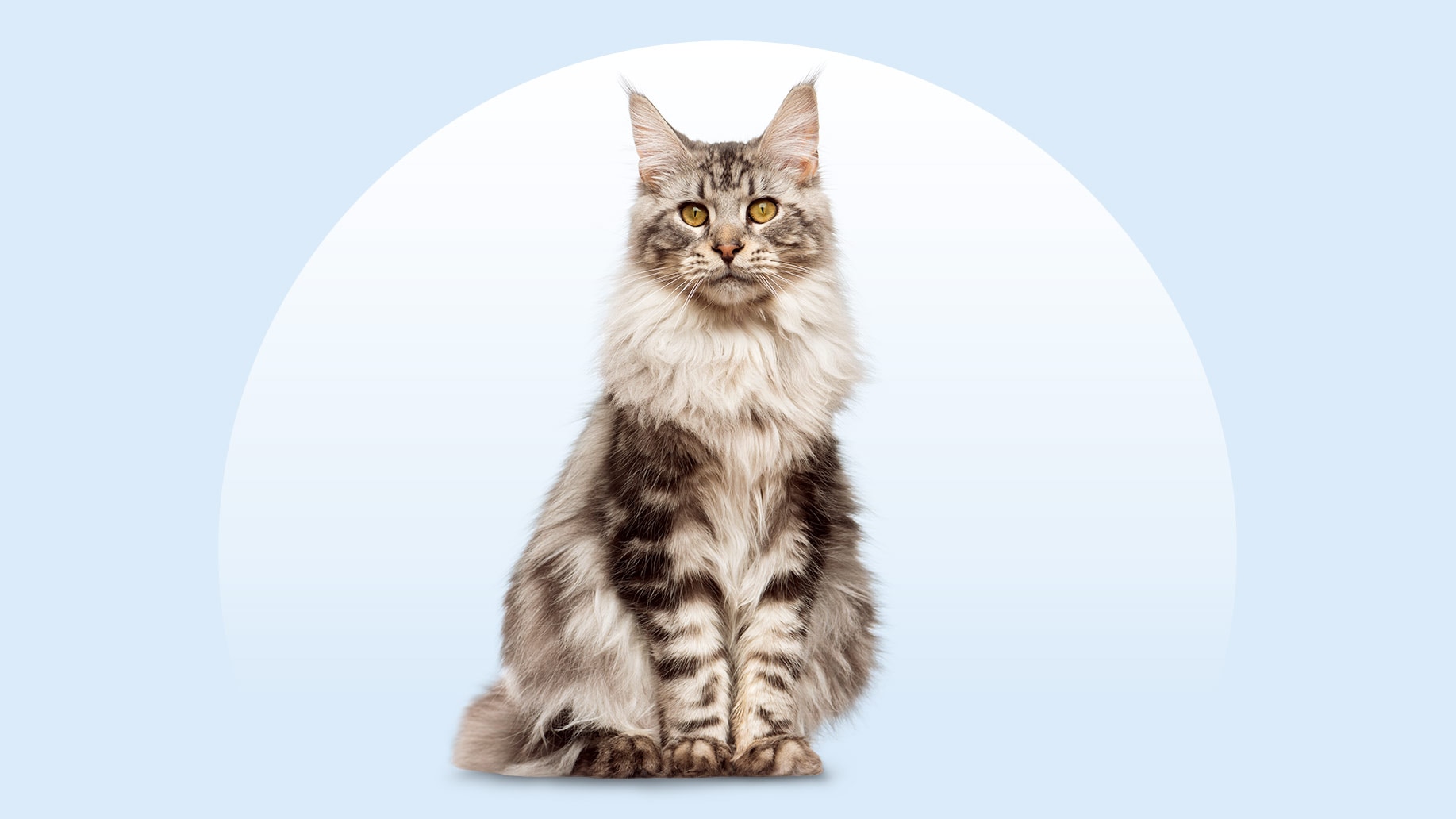
Maine Coon
Updated January 28, 2026
A Maine Coon’s ideal pet parent loves an affectionate sidekick and has room in their heart for a gentle giant. These big softies bond deeply with their people, charm visitors, and happily chirp their opinions. If you adore a dog-like cat who craves attention and supervises every sink drip, they’ll adore you right back.
Intelligent, Loving, Loyal
12–22 pounds
10–13 years
If you’re stuck choosing between the unconditional loyalty of a dog and the easygoing independence of a cat, the Maine Coon might be the pet for you. These giant cats are famously dog-sized: In fact, many males top 20 pounds, often outweighing the smallest dog breeds.
Built to withstand harsh Northeastern winters, these fluffy giants sport magnificent feline features: a long and bushy tail, lionlike mane, and adorable fur tufts between their toes. Snow might be their natural habitat, but indoors, Maine Coon cats prefer to keep themselves busy, supervising every faucet drip and testing the structural integrity of your laundry pile.
Maine Coons are intelligent, loving, and loyal. Many are persistent talkers, readily responding to you with charming trills, chirps, and grunts, and some can even be taught to respond to cues and play fetch.
If this is all sounding too good to be true, the Maine Coon just might be the soul pup—er, soul cat—for you.
Maine Coon Characteristics
Maine Coon Appearance
“The most striking feature of one of these cats is their size,” says Sharon Savoury-McCrary, a volunteer at New Jersey-based Maine Coon Rescue.
After taking in their impressive stature (Maine Coons are the largest domestic cat, after all), you’ll notice the features that helped them thrive in harsh Northeastern winters where the breed originated: long lynxlike ear tips; a full and insulating coat with longer fur around the neck and along the belly and hindquarters; a bushy tail; and tufts of fur between their toes.
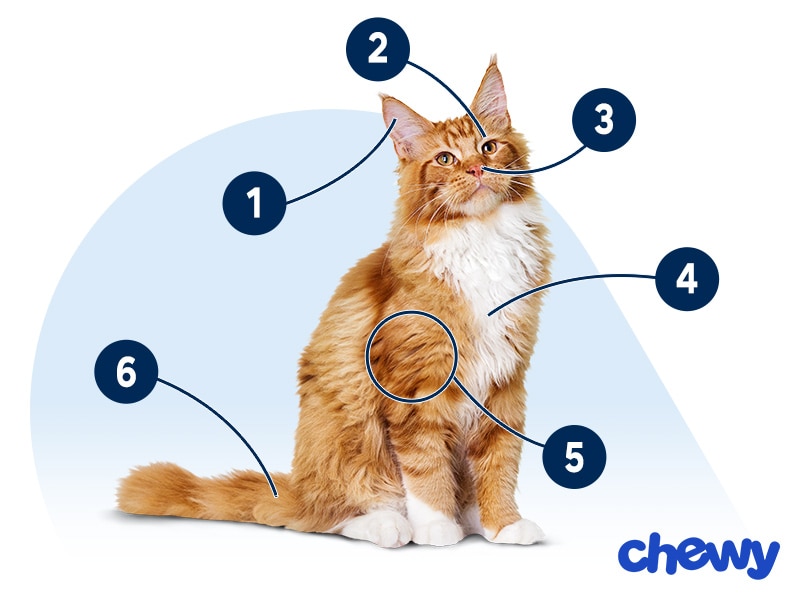
- Ears
Maine Coons have large ears that taper to a point, exaggerated by long fur growing from the tips, called “ear tufts” or “lynx tips.”
- Eyes
They have large, round eyes that are most often shades of green or gold. White Maine Coons, or those with a mix of white and another color, may have blue eyes or eyes that are different colors (called heterochromia).
- Nose
Maine Coon cats have a wide, prominent muzzle that stands out from their cheekbones. Their nose color corresponds to their coat color.
- Coat Length
The fur is shorter on the shoulders, and gradually lengthens down the back and sides. They have a longer “lion’s mane” around the neck, which is called a frontal ruff, and longer, shaggier fur on the belly and hindquarters that often becomes more apparent with age. Maine Coons are double-coated.
- Coat Color
Their coat colors have a wide range and include black, blue, white, tabby, bicolor, tortoiseshell, and calico.
- Tail
Maine Coons have a long, bushy tail.
Maine Coon Temperament
Often called the gentle giant of the cat world, the Maine Coon is the rare combo of large and in charge with soft and sweet.
Maine Coons are smart, loving, and highly loyal companions. While they adore their entire family, they usually choose one special human to develop an especially close bond with. If you’re the lucky one, expect plenty of forehead nudges, or headbutts—a true sign of feline affection rather than a wrestling move.
However, if you’re looking for a quiet housemate, look elsewhere: Maine Coons are known to trill, chirp, and grunt, making them excellent conversationalists. And “if they want something, they will be very persistent until their requests are met,” Savoury-McCrary says.
One common request? To turn on the faucet! Many Maine Coons have a mild obsession with water, often dipping a paw in their water bowl or insisting on drinking straight from the tap.
While playful and curious, Maine Coons have a moderate energy level. They’re not typically shy and usually enjoy attention, though like all cats, they appreciate being treated gently.
Their social nature and easygoing personalities make Maine Coons great family cats, as they often get along well with kids of all ages and pets of all sizes—provided everyone learns to respect each other.
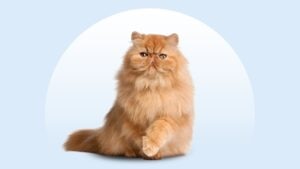
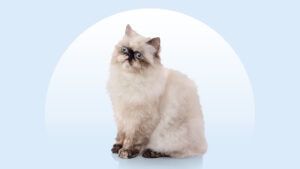
Related Breeds


How to Care for a Maine Coon
Despite what your Maine Coon might tell you (and we know they have a lot to say!), sticking a paw or head under the kitchen faucet doesn’t count as grooming.
Their glorious fur requires regular care to prevent mats and minimize the impressive amount of fur that lands on your pants and couch, especially during the spring and fall shedding seasons.
It’s also important to keep their waistline in check. Maine Coon cats are prone to certain joint conditions, so maintaining a healthy weight through moderate exercise and play is key to helping them live a long, happy life.
Grooming
Diet
Exercise
Environment
Maine Coon Health
The average Maine Coon lifespan is 10–13 years. Here are some Maine Coon health issues to be aware of:
-
- Hypertrophic cardiomyopathy (HCM): This is the most common form of heart disease in cats. While genetic testing isn’t available for all breeds, Maine Coons are an exception—testing can help identify cats at risk. If you’re getting your Maine Coon from a reputable breeder, ask about health history and HCM testing results. However, a negative genetic test does not guarantee your cat will never develop HCM. Therefore, the gold standard for detecting HCM is a routine echocardiogram.
- Polycystic kidney disease (PKD): While any cat can develop chronic kidney disease, PKD has a genetic component. This condition causes multiple fluid-filled cysts to form in the kidneys, which can disrupt their function and eventually lead to kidney failure. Fortunately, like HCM, genetic testing can detect the mutation responsible for PKD. Responsible breeders can and should test their cats for PKD to help reduce the risk in their Maine Coon kittens.
- Hip dysplasia: A condition in which the hip joint (made of the pelvic bone and femoral head) does not align properly, causing pain and early-onset arthritis. It’s most common in large cat breeds, including Maine Coons, Persians, and Norwegian Forest Cats.
Maine Coon History
There are a few tall tales about how the Maine Coon came to be, perhaps the most entertaining being the (debunked) myth that the breed was a result of a love story between cats and raccoons, inspired by the brown tabby Maine Coon’s bushy, ringed tail. Happily, this particular pairing is genetically impossible.
In reality, it’s widely accepted that the Maine Coon’s roots trace back to the early pilgrims who arrived in New England with cats aboard their ships. Sailors relied on these feline crewmates not as cuddle buddies but as essential rodent hunters.
According to Savoury-McCrary, the Maine Coon’s characteristic features developed naturally in response to the harsh Northeastern winters. Their water-resistant coat, oversized snowshoelike paws, bushy tail, and ear tufts were crucial to their survival.
Despite their long history in the U.S., Maine Coon cats weren’t officially recognized as a pedigree breed until 1976—70 years after the founding of the Cat Fanciers’ Association. Yet, they’ve been part of the cat-show world since the beginning. At the first U.S. cat show in 1895, a brown tabby Maine Coon named Cosey was awarded the title of Best Cat.