
Persian Cat
Updated February 18, 2026
Persian Cat
Updated February 18, 2026
Persian cats are calm, affectionate companions with long, luxurious coats and distinctive round faces. They thrive in quiet homes, enjoy gentle attention, and need daily grooming to stay healthy and comfortable. With the right care, Persians make devoted, easygoing pets.
Affectionate, Calm, Refined
7–14 pounds
10–17 years
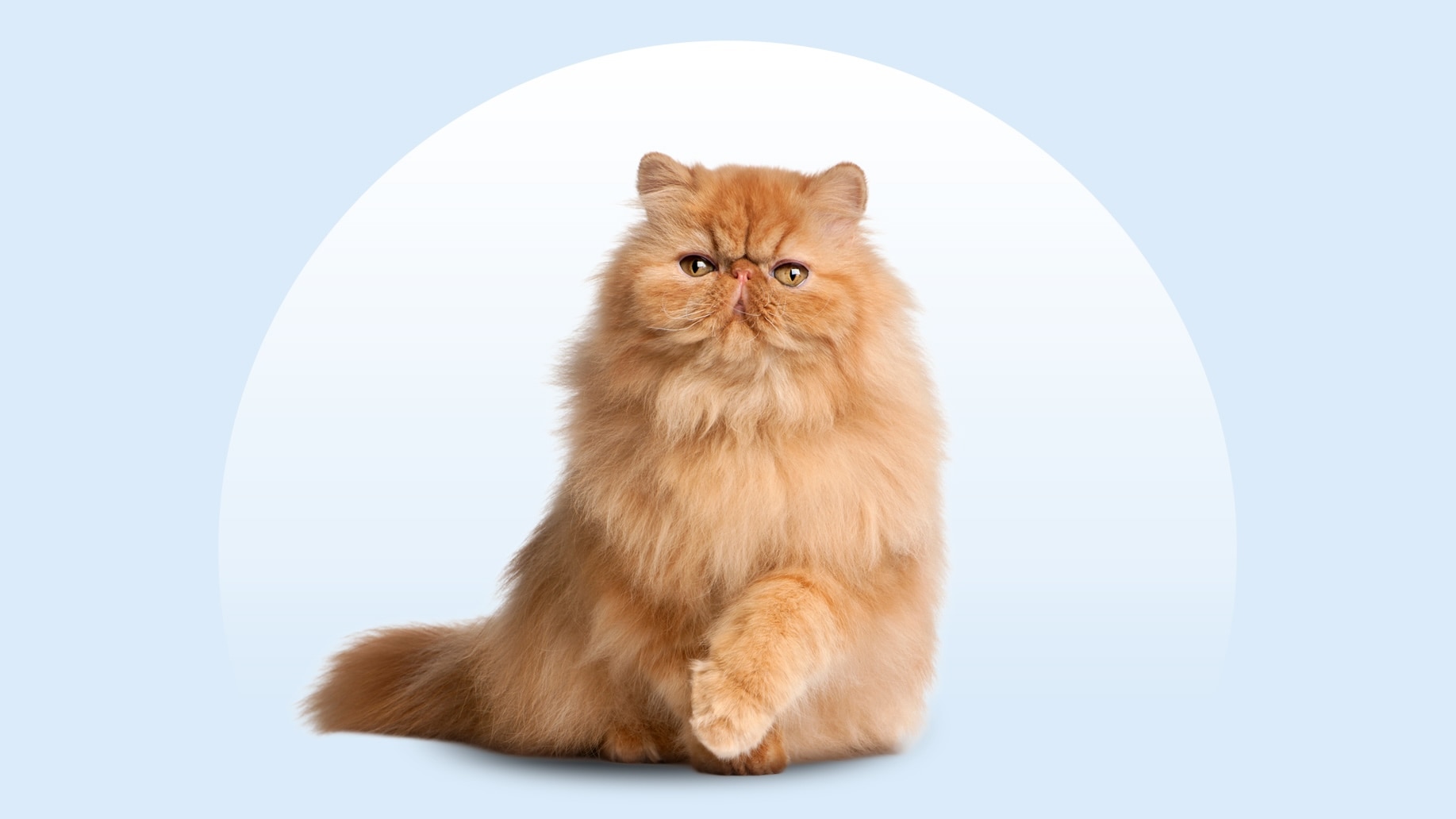
With their long, flowing coats and unmistakably round faces, Persian cats are one of the most recognizable breeds in the world.
They’re known for their calm, affectionate nature and preference for quiet companionship over constant activity, making them especially well-suited to relaxed homes and apartment living.
While their grooming needs are higher than average, many pet parents find the trade-off well worth it for such an attentive, gentle companion. It’s no wonder Persians have been treasured for centuries—by everyone from European royalty to modern tastemakers like Martha Stewart—proving that their appeal truly stands the test of time.
Persian Cat Characteristics
Persian Cat Appearance
Persian cats are instantly recognizable, with their large heads, flat faces, big expressive eyes, and long, luxurious fur. They are medium-sized cats with short legs and big, round paws.
Together, these features create the breed’s signature soft, rounded lines and plush appearance.
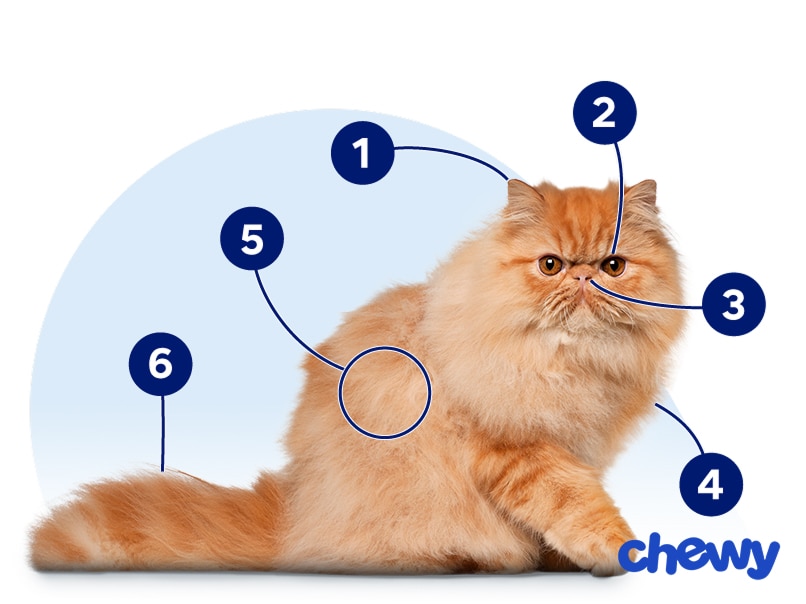
- Ears
Persian cats have small, rounded ears that sit low and wide on the head.
- Eyes
The eyes are one of the most striking Persian cat characteristics: They’re large, round, and expressive, with a variety of colors that often complement coat hues.
- Nose
This flat-faced cat has a distinctive short, snub nose.
- Coat Length
A Persian cat’s coat is long, thick, and plush with a soft and silky texture.
- Coat Color
Their coats come in a wide variety of colors and patterns: White Persian cats, black Persian cats, orange Persian cats, and everything in between are possible. The colors are categorized by the Cat Financiers’ Association (CFA) into seven groups: solids, tabbies, silver and goldens, shaded and smokes, parti-colors, calicos and bicolors, and Himalayans.
- Tail
Their tail is short and covered in long, soft fur.
Persian Cat Temperament
Persians are known for their calm, people-oriented temperament and relaxed approach to daily life. They tend to be less driven to climb, roam, or engage in high-energy play than many other breeds, making them well-suited to apartments and quieter households.
Persians enjoy being near their people and welcome gentle attention, but they’re typically content to lounge nearby rather than demand constant interaction. Thanks to the low-key Persian cat personality, these pets can be a great cat for families with small children and other pets.
“They tend to avoid conflict with other pets and are generally very welcoming, making them wonderful additions to multi-pet homes,” says Victoria Glinsky, breeder and owner of Snowheart Persians in Washington state.
Glinsky recommends that families who will be gone a lot may want to have a second pet so their Persian doesn’t get lonely.
Related Breeds


How to Care for a Persian Cat
Caring for a Persian’s long hair involves regular grooming and spending plenty of quality time together. These cats require daily brushing and combing to keep their fur and skin healthy, in addition to other upkeep.
Grooming
Diet
Exercise
Environment
Persian Cat Health
With healthy breeding practices and attentive care, the average Persian cat lifespan is 10–17 years.
Persian cats are generally robust, but their flat face, long coat, and genetics can predispose them to certain health concerns. Choosing a reputable breeder and keeping up with regular vet checkups make early detection and management far easier.
- Brachycephalic airway syndrome: Because of their shortened muzzle, many Persians experience restricted airflow, which can lead to noisy breathing, exercise intolerance, or overheating. Stress and hot weather tend to make things worse. Keeping Persians in climate-controlled environments and maintaining a healthy weight helps reduce strain on their breathing, but surgery is still sometimes necessary.
- Polycystic kidney disease (PKD): PKD is a genetic disorder in which fluid-filled cysts develop in the kidneys, eventually impairing kidney function. Screening breeding cats is critical, and affected cats benefit from regular blood work, veterinary diets, and monitoring to slow disease progression and increase the Persian cat lifespan.
- Eye and tear duct problems: Large, round eyes combined with shallow tear ducts often lead to chronic tears, staining, and recurrent infections. The Persian’s prominent eyes also make corneal ulcers and injuries more likely. Daily cleaning and prompt veterinary care help prevent long-term damage.
- Dental disease: Crowded or misaligned teeth are common in flat-faced cats, making the Persian breed predisposed to dental disease. Routine dental care is a must for these cats.
- Skin and coat conditions: Thick fur, especially combined with skin folds that trap moisture, can lead to matting, irritation, and bacterial or yeast infections.
- Obesity and gastrointestinal sensitivity: The Persian cat’s low-activity lifestyle makes weight gain easy, and some of these cats also have sensitive digestion. Careful feeding, high-quality diets, and gentle (but frequent!) play are essential for long-term health.
Persian Cat History
Today’s beloved Persian cat is the result of centuries of admiration, trade, and selective breeding. Their long-haired ancestors likely originated in Persia (modern-day Iran) and nearby regions as early as the 1500s.
“They were considered luxury animals, often kept by nobility and exchanged as diplomatic gifts,” Glinsky says.
According to the CFA, an Italian trader named Pietro della Valle brought back a long-haired cat from a trip to Persia in 1626 that was combined with Turkish Angora cats. The popularity of the long-haired, sturdy, flat-nosed cats that resulted quickly spread through Europe.
“[They] became especially popular in Britain, including among royalty such as Queen Victoria,” Glinsky says.
Their beauty and calm temperament made them highly sought after, and when organized cat shows emerged in the early 1900s, these long-haired imports were formally established as the Persian breed.
Early Persians looked different from many of today’s show cats.
“These early Persians featured a moderate nose, open expression, and balanced proportions,” Glinsky notes.
Over time, however, breed standards evolved. In the mid- to late-20th century, organizations such as the CFA refined the standard to emphasize a rounder head and shorter nose, giving rise to the more brachycephalic look now offered by most Persian cat breeders.
Both traditional and modern Persians trace back to the same aristocratic long-haired cats who once graced palaces and royal courts, making the Persian one of the world’s oldest and most iconic cat breeds.