Is Your Cat Overheating? 11 Signs of Heat Exhaustion in Cats


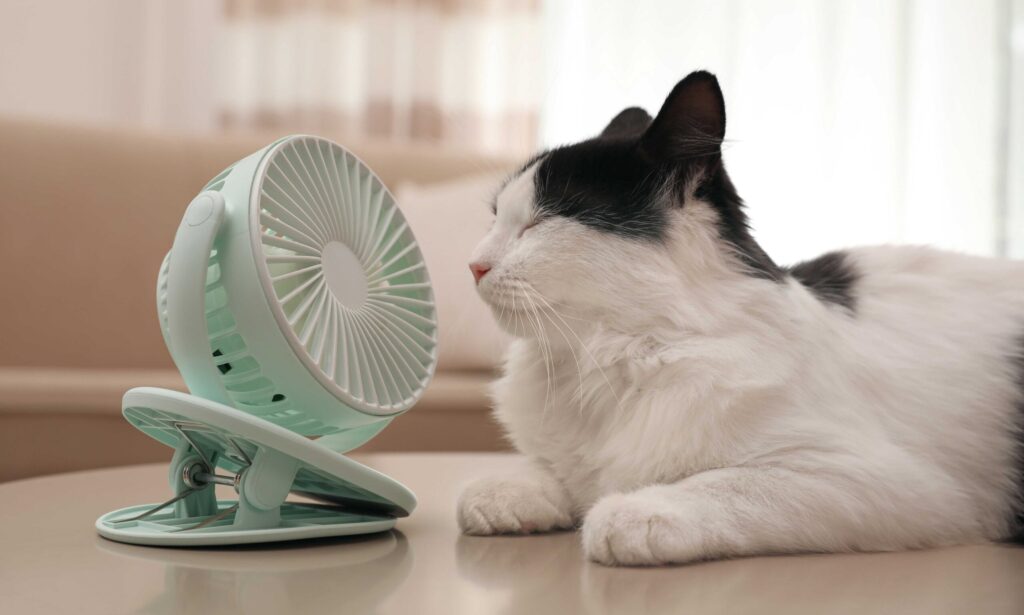
Photo by Liudmila Chernetska/iStock
While you might be used to the heat that comes with summer vacations and beach days, your cat probably prefers a cool day indoors.
In fact, cats can be susceptible to overheating, heatstroke (hyperthermia), and dehydration, especially during hot weather and humid days, or in poorly ventilated spaces.
When you feel hot, chances are your feline friend does too, and overheating in cats can be a medical emergency.
Key Takeaways
- Heatstroke occurs when your cat's body is unable to cool itself down.
- Generally, temperatures above 80 F (about 27 C) put cats at risk.
- Common symptoms of heatstroke in cats include panting, lethargy, and restlessness.
- Offer fresh water and bring your cat to the vet if they show signs of overheating.
What is Heat Exhaustion?
A cat’s normal body temperature falls between about 100–102.5 F (about 38–39 C).
It doesn’t take much for a cat to reach heatstroke. Even a temperature of 103–104 F (39–40 C) requires immediate attention, as heatstroke occurs when a cat’s body temperature reaches over 105 F (40.5 C) and the cat can no longer effectively cool themself off.
“Heatstroke in cats is no different than in other species,” says Dr. JoAnn Morrison, DVM, DACVIM, director of veterinary science for Banfield Pet Hospital in Vancouver, Washington. “It is the inability for the body to cool itself appropriately, usually in the face of high environmental temperatures and/or humidity.”
Heatstroke is a medical emergency and requires immediate treatment by your veterinarian.
How Hot Is Too Hot for Cats?
Most cats are comfortable in temperatures ranging from 60–80 F (about 18–26 C). Once temperatures climb above 80 F (26 C), some cats, especially indoor cats who are not acclimated to warmer temperatures, may be at risk of overheating.
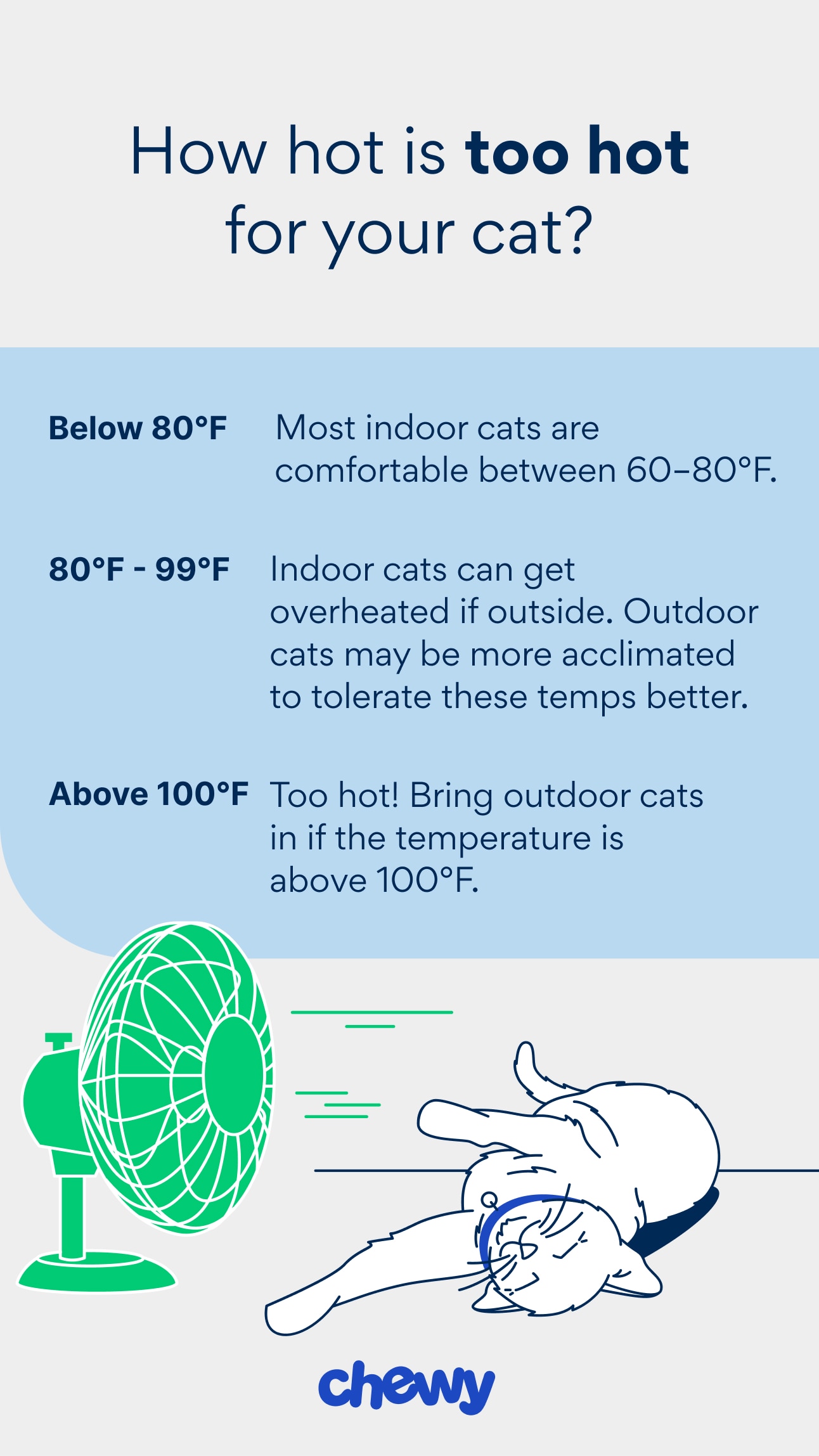
Photo by Chewy
11 Symptoms of Overheating in Cats
If your cat is overheating, they will do their best to tell you through various symptoms and behavior changes.
These are the most common symptoms of heatstroke:
- Panting and/or trouble breathing
- Restlessness
- Rapid heartbeat
- Drooling
- Lethargy
- Increased body temperature
- Loss of balance
- Vocalizing
- Bright pink or red gums
- Red tongue
- Glazed eyes
“If your pet shows any of these signs or you suspect your pet has heatstroke, make every effort to minimize their stress and keep them calm,” says Dr. Morrison. “Contact and then transport your cat to a veterinarian or an emergency veterinary hospital immediately.”
Heat exhaustion is a medical emergency. If your cat isn’t cooled down promptly, it can lead to irreversible organ damage and even loss of life.
How to Cool Down an Overheated Cat
Often, cats will take it upon themselves to find shady or cool spots—like under structures, near cooling vents, or by fans—to prevent heat exhaustion. But there are ways you can help if you think your cat is getting overheated.
- Get your cat to a cool, calm, and soothing environment, like an air-conditioned room, recommends Dr. Lou Anne Wolfe, DVM, at Marina Animal Clinic in Tulsa, Oklahoma. This can help reduce your cat’s stress and start to get the situation under control.
- Rinse your cat in cool (not cold) water—only if water won’t further stress your cat. If water stresses out your cat, try rubbing them with a damp towel. “Do not place ice cubes on your cat or submerge your cat in water, as this can increase his stress level, putting him at even higher risk of medical complications,” Dr. Morrison says.
- Make drinking water available. Clean their cat water bowl and provide fresh water. The running water of a cat water fountain also may help encourage them to drink. If your cat refuses to drink, use an eyedropper or syringe to drop a couple of beads of water in their mouth at a time. Do not shoot water into their mouth or down their throat, as it can cause choking or aspiration.
- Take your cat to the vet. Try to continue cooling techniques while transporting them to the vet.
Causes of Overheating in Cats
High temperatures are the underlying cause of heatstroke, but age, medical conditions, and breed can increase a cat’s risk of overheating.
Heat exhaustion in cats can also be a result of:
- Leaving your cat in a hot car (never leave your cat unattended)
- Too much activity in the heat
- Being stuck in direct sunlight with no access to a shaded area
- Lack of access to fresh, cold water
Cat Breeds Most at Risk for Overheating
Some breeds, particularly brachycephalic breeds, may be predisposed to developing heatstroke or be especially sensitive to the effects of heat and humidity and unable to cool themselves effectively, Dr. Morrison notes.
These breeds include:
Why Outdoor Cats Are at Higher Risk of Heatstroke
While indoor cats can develop heatstroke, especially if they’re in a house without air conditioning in the summer months, outdoor cats generally have a particularly high risk because it’s harder for them to escape excessive heat.
Compared with indoor cats, outdoor cats may also have more limited access to fresh, cool water.
For this and other reasons, it’s best to keep your cat indoors.
Whether or not your cat falls into the high-risk category, veterinary experts recommend keeping all cats out of the direct sun as much as possible.
As with humans in warm weather, cats need access to shade, cool areas, and water to stay hydrated, especially on really hot days. Cats generally are protected best when they’re inside and in a cool area.
If your cat has signs of heatstroke, contact your veterinarian right away—this can be a life-threatening emergency.
FAQs About Cats Overheating
How do I safely cool down my overheated cat?
Move your cat to a cool, calm environment like an air-conditioned room or near a fan, and rub your cat with a cool, damp towel. Ensure fresh water is accessible. Avoid adding to your cat’s stress and only rinse your cat in cool water (not cold) if they aren’t stressed by baths.
How do I know if my cat is overheating?
Signs of overheating in cats include panting or trouble breathing, restlessness, rapid heartbeat or increased heart rate, drooling, lethargy or weakness, increased body temperature, stumbling or loss of balance, vocalizing, bright pink or red gums, a red tongue, or glazed eyes.
How do you treat an overheated cat?
Bring your cat to a cool, calm environment like an air-conditioned room or near a fan, and rub your cat with a cool, damp towel (not cold). Ensure fresh water is accessible and contact your vet. Bring them in if the vet says so—or take them immediately to an emergency vet.
How can I tell the difference between overheating in my cat and a fever?
Cats with a fever exhibit some similar symptoms , including lethargy, but they are also prone to hiding and loss of appetite and may have warm paws or ear tips. Contact your veterinarian for guidance if your cats show signs of either fever or overheating.
Attributions