Siamese Cat
Updated January 28, 2026
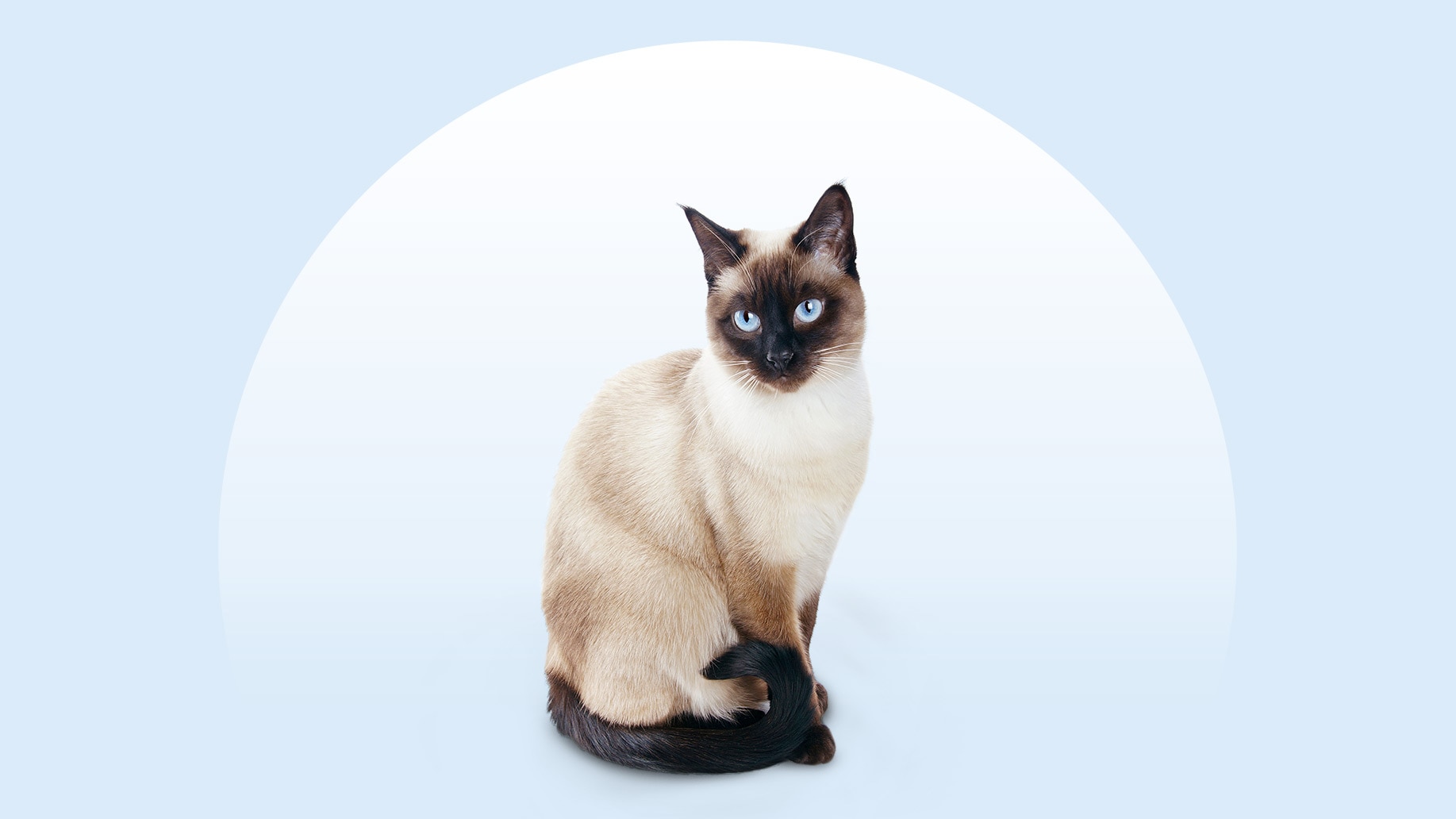
Siamese Cat
Updated January 28, 2026
Looking for an ultra-cute companion who follows you everywhere? Siamese cats are social, vocal, and utterly devoted to their favorite humans. With striking blue eyes and legendary conversation skills, these felines will light up any room—and quickly become your new best friend.
Social, Chatty, Smart
5–12 pounds
10–20 years
Siamese cats aren’t exactly known for being quiet … or independent. These blue-eyed beauties will chat through your morning coffee, join your Zoom meetings, and basically insert themselves into every part of your day.
Known for forming intense bonds, Siamese cats may pick one member of the household as their special person, but they’ll happily spend time with the entire family.
As intelligent and athletic kitties, they need ample playtime, exercise, and enrichment to feel their best physically and mentally. With a long lifespan of 10–20 years, a Siamese cat offers decades of companionship and love.
Siamese Cat Characteristics
Siamese Cat Appearance
Siamese cats are instantly recognizable thanks to their sleek silhouette, blue eyes, and color-point pattern. These elegant cats carry themselves with confidence and can often be found with their long, thin tails held high.
All Siamese kittens are born with solid white fur but eventually develop darker points on their ears, faces, paws, and tails, giving them that signature Siamese look.
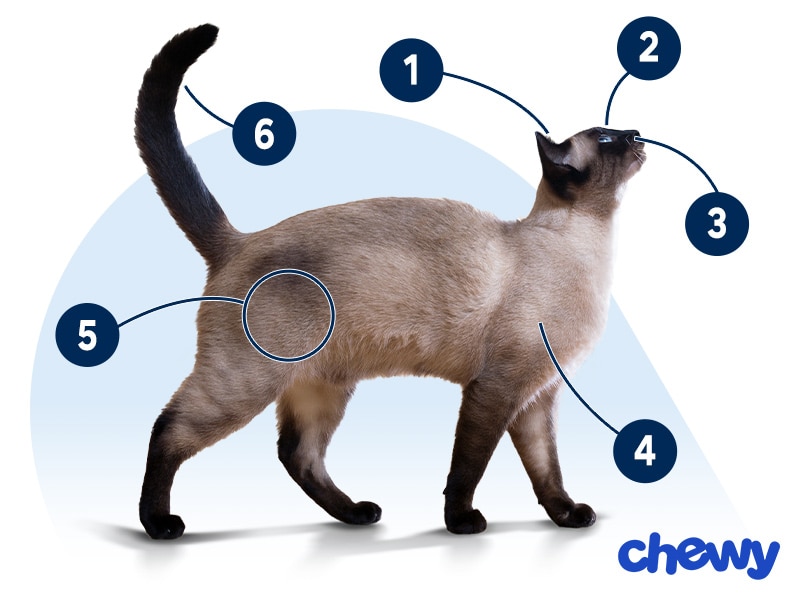
- Ears
Siamese cats have large, pointed ears that sit wide on their heads, making them look alert 24/7.
- Eyes
Their expressive, almond-shaped eyes range from light to bright blue.
- Nose
Their nose can be pink, gray, or chocolate brown, but all are perfectly boopable.
- Coat Length
Siamese cats have a short, fine coat that lies close to the body and requires minimal grooming.
- Coat Color
Siamese cats have a lighter body and darker points on their ears, face, paws, and tails. The classic Siamese color pattern includes seal point (deep brown to black), chocolate point (milk-chocolate brown), blue point (slate gray), and lilac point (pinkish gray).
- Tail
Their long, thin tail tapers to a fine point, which emphasizes their slender physique.
Siamese Cat Temperament
Friendly and affectionate, Siamese cats are happiest when glued to their favorite humans’ sides.
“Siamese cats are usually very social and often develop a special bond with certain people,” says Bonnie Beaver, DVM, MS, DSc(hon), FNAP, DACVB, DACAW, professor at the Texas A&M College of Veterinary Medicine & Biomedical Science.
Expect your Siamese cat to follow you from room to room and offer running commentary on everything you do. These intelligent and sometimes sassy cats crave interaction and aren’t shy about letting you know when they need attention, whether it’s a cuddle session or even a game of fetch.
Because they’re outgoing and rambunctious, Siamese do well in households with older children. But these high-energy felines may play too roughly with younger kids, says Monique Fitzpatrick, DVM, a veterinarian at Salmon Brook Veterinary Hospital in Granby, Connecticut.
While individual Siamese cat personalities play a role in how they get along with other pets, they generally thrive when they have a playmate to keep them entertained.
However, Dr. Beaver says these cats can be more easily stressed than other breeds, so “a stable but enriched environment is highly desirable.” Think regular playtime, consistent routines, and cozy, quiet places where they can rest and recharge.
Related Breeds



How to Care for a Siamese Cat
Caring for a Siamese is not much different than caring for any other cat—except there may be more meowing. All cats need a balanced diet, enrichment, and exercise, and there are some breed-specific guidelines to note.
Grooming
Diet
Exercise
Environment
Siamese Cat Health
The average Siamese cat lifespan is 10–20 years (sometimes even longer!). How long your cat will live depends on factors such as weight, fitness level, and overall health.
Knowing common health conditions can help you catch early signs and take preventive steps.
- Asthma: Siamese cats are prone to respiratory issues, such as asthma. Dr. Fitzpatrick recommends using unscented cleaning products, avoiding candles and heavy perfumes, never smoking indoors, and considering air purifiers. If you notice coughing, wheezing, or difficulty breathing, schedule a vet visit.
- Tumors: Dr. Beaver says spaying female Siamese cats removes hormonal influences that cause mammary tumors. Young Siamese cats may also be predisposed to mast cell tumors.
- Pica (eating non-food items): Siamese cats are notorious for eating things they shouldn’t, says Dr. Fitzpatrick. Don’t leave hair ties or string around, keep cabinets secured, and monitor toy play closely to help prevent a trip to the emergency vet.
- Eye issues: Some Siamese cats are born with crossed eyes. Many adapt well, but it can occasionally affect their vision. A more serious concern is progressive retinal atrophy (PRA), which causes the retina to gradually degenerate and leads to blindness. Genetic testing of breeding cats can stop this from being passed to Siamese kittens.
- Hair conditions: Dr. Beaver says Siamese cats can develop several hair-related issues, including white hair patches around the eyes (periocular leukotrichia), hair loss on the ears (pinnal alopecia), and overgrooming (psychogenic alopecia), which is often caused by stress.
- Amyloidosis: Amyloidosis involves abnormal protein deposits in organs, particularly the liver and kidneys. Dr. Fitzpatrick notes that you cannot prevent amyloidosis, but annual vet visits and blood work can catch it early.
Siamese Cat History
If you’ve ever wondered why Siamese cats have such regal vibes, look to their roots: These cats originated in Siam (modern-day Thailand), where they were considered sacred and often lived alongside nobles and royalty.
As one of the oldest documented cat breeds according to the National Siamese Cat Club, they’re even referenced in an ancient collection of Thai manuscripts from the Ayutthaya period (1351–1767). Called the Tamra Maew (The Cat Poems), the manuscripts feature illustrations of Siamese cats with their distinct blue eyes and color points.
The Siamese breed made an equally impressive entry into the United States. In 1878, a diplomat gifted a Siamese cat to President Rutherford B. Hayes. First Lady Lucy Hayes named the cat Siam, and the breed quickly caught public interest. In 1906, the Cat Fanciers’ Association officially recognized the breed, helping further boost its popularity.
Today, there are multiple Siamese varieties. Traditional Siamese cat colors include seal, chocolate, blue, and lilac, while flame and lynx points are also common.
Siamese cat prices typically range from $500 to over $1,000 from a reputable breeder. Adopting a Siamese cat is also an option: Many rescues and shelters take in Siamese or Siamese-mix cats. Check with local organizations or breed-specific rescues to find a match.