How To Start Dog Agility Training at Home


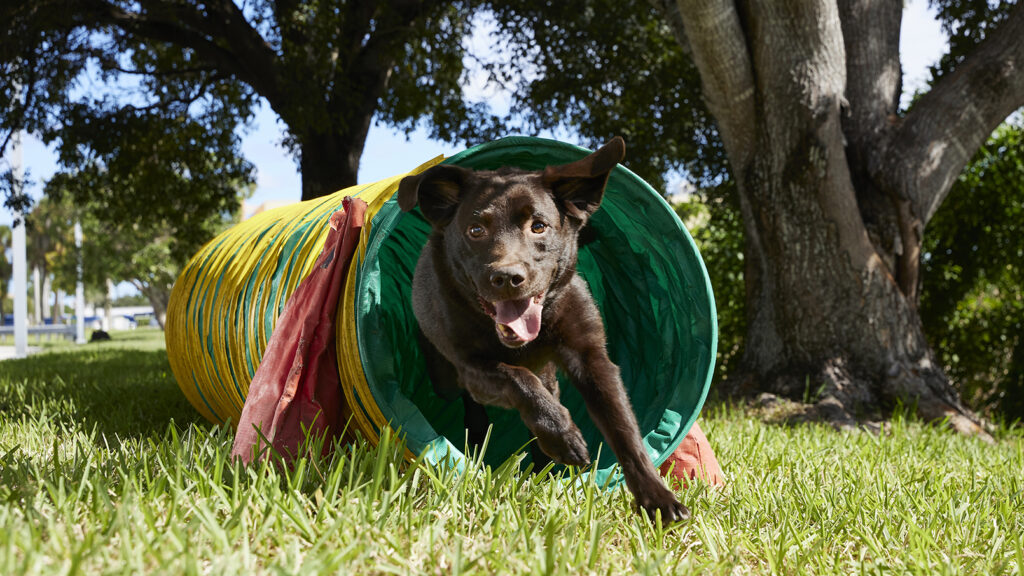
Photo by Chewy
Dog agility training is one of the fastest-growing dog sports in the U.S. In agility, dogs race through an obstacle course—jumping, weaving and running tunnels—while guided by their handler.
And the best part? Your dog can do it, too. Here’s how to get started safely with dog agility training.
Key Takeaways
- Dog agility training is a fast-growing sport where dogs navigate obstacles like jumps, tunnels, and weave poles with their handler.
- Most healthy dogs can participate in agility at some level, but puppies should avoid high-impact obstacles until they’re 12–18 months old.
- Agility provides physical exercise, mental stimulation, and confidence-building, while strengthening the bond between dog and handler.
- Positive reinforcement, short training sessions, and professional guidance are key to safely teaching agility skills.
What Is Agility Training for Dogs?
Dog agility training is a competitive dog sport where dogs navigate an obstacle course—including jumps, tunnels, and weave poles—while responding to their handler’s cues.
It’s all about teamwork, timing, and communication, with dogs learning to respond to cues quickly and confidently as they move through the course.
What Are the Benefits of Dog Agility Training?
Even if you and your dog never set paw in the event ring, dog agility training comes with plenty of perks, including:
- It strengthens your bond. Agility is all about teamwork, helping you learn to read your dog and communicate more clearly.
- It can boost your dog’s confidence. For nervous pups, agility can gradually build comfort around new objects, environments, people, and dogs.
- It combines physical and mental stimulation. Agility is “awesome exercise for cardio, balance, and paw-eye coordination,” says Sarah J. Wooten, DVM, CVJ, a veterinarian in Greeley, Colorado. It also taps into natural chase instincts and problem-solving skills—great for high-energy dogs.
- It can improve focus. Teaching your dog to tune in to you around distractions can help them stay more engaged with you in everyday life.
Is Your Dog Right for the Sport of Agility?
“Any healthy dog can do agility at some level,” says Janet Velenovsky, CPDT-KA, CDBC, KPA CTP, ACCBC, pet trainer and behavior consultant and owner of Kaizen Pet Training & Behavior in Montpelier, Virginia. That includes small dogs, like Chihuahuas.
That said, agility isn’t just about enthusiasm—it’s about readiness. Experts say your dog should have:
- A strong relationship with you: Agility relies on teamwork and clear communication, says Terri Rodriguez, KPA CTP, dog trainer and agility competitor.
- Good physical health: Talk to your veterinarian before starting. Your dog should be at a healthy weight, free from pain, and able to move comfortably and energetically.
- Appropriate conditioning for their age: “Of course, older dogs can learn agility sports,” says Dr. Wooten, noting courses can be modified for aging joints and endurance. But dogs with conditions like heart disease or osteoarthritis should always get veterinary guidance before starting a new exercise program.
- Confidence with new experiences: Notice how your pup responds to different textures, objects, sounds, and heights at home and on walks. If they consistently seem uncomfortable, agility may not be the right fit.
- Comfort around people and dogs: If you plan to join a class, your dog should be able to stay calm in group settings—or work with a professional trainer to build that skill first.
If your dog is healthy, confident, and enjoys learning new skills, agility can be a rewarding outlet.
When Can You Start Dog Agility Training?
You can begin foundational agility training as soon as your puppy comes home by focusing on body awareness, flatwork, and basic cues like moving next to you, staying, and reliable recalls.
Save high-impact obstacles and intense cardio for when your dog is fully grown—typically 12–18 months, depending on breed—to avoid stress on developing joints.
Before introducing jumps, weave poles, or other repetitive movements, check with your veterinarian and monitor closely. Stop training if your dog shows signs of limping, fatigue, pain, or reluctance to continue.
How To Train a Dog for Agility
Get Professional Help
Start by finding a positive reinforcement training center—one that uses rewards like dog treats and praise—and a qualified coach to help you build foundational skills and a strong working relationship with your dog, says Heather Gillihan, CPDT-KA, dog trainer and operations manager for Zoom Room Franchising LLC in Fort Worth, Texas.
Professional guidance is especially important for obstacles your dog will physically touch on the course, including:
Recommended Products
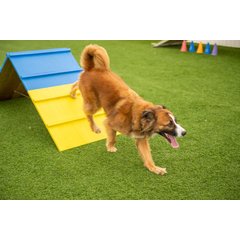
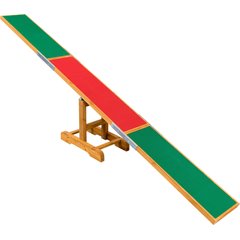
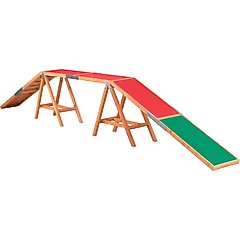
- Non-contact obstacles: Jumps, weave poles, and tunnels
Recommended Products
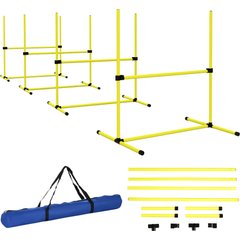
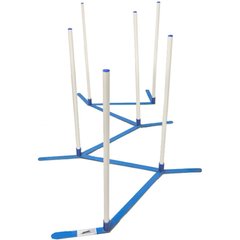
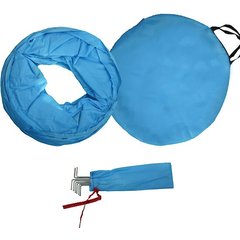
Contact obstacles can be unsafe if introduced incorrectly, so proper instruction helps prevent injury.
You can also learn a lot by attending agility trials, chatting with competitors when they’re free, and even volunteering at events. For local classes and competitions, visit the United States Dog Agility Association (USDAA) or the American Kennel Club (AKC).
Use Rewards
Agility training relies on rewards, so figure out which treats and toys motivate your dog most. Liver training treats are a popular option.
Recommended Product

When teaching something new, reward your dog every time they get it right (or close). As their skills improve, you can gradually reduce treats—but don’t eliminate them entirely. After all, nobody likes to work for free.
Practice Skills at Home
If you do want to start teaching some skills by yourself, check out the following home agility training tips for dogs.
Jump
The jump skill is simple: Your dog jumps over a pole (or broomstick, if you’re DIYing) or through a suspended ring or tire.
To keep things safe:
- Keep the bar low to start.
- Train on a surface that isn’t hard or slippery.
- Begin with the bar on the ground, then gradually raise it as your dog gains confidence, Rodriguez advises.
To teach your dog to jump:
- Gently restrain your dog on one side of the jump or ask your dog to wait.
- Toss something they love, such as a treat or toy, on the other side.
- Release your dog. You may need to go over the jump with them to help them out.
- Repeat.
- When your dog is successfully doing the above, say “jump” as your dog jumps. Repeat a few times.
- Now stop tossing the reward over the jump. Release your dog, say “jump,” and give the reward after they’ve jumped.
Tunnel
For the tunnel skills, dogs run through a tunnel, which can be either straight or curved.
While proper agility tunnels can be expensive, you can easily DIY one with a sheet over two chairs. The shorter the tunnel, the easier it will be for your dog.
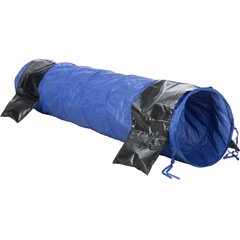
Once your pup is confidently tackling beginner setups, you might consider investing in regulation agility equipment—such as the Trixie Agility Dog Training Tunnel—to better mimic real-course conditions.
Recommended Product
To teach your dog to run through a tunnel:
- As your dog explores one end, go to the other side (or have a helper there) and encourage them through, rewarding as soon as they exit.
- If they’re hesitant, make it fun—peek inside, toss treats, or even crawl through yourself if there’s room.
- Once they’re choosing the tunnel confidently, walk toward it, add a hand signal, and say your cue (such as “tunnel”) as they go through. Over time, use the cue as they approach the tunnel, so they learn to enter on command.
- Reward each successful run.
Weave Poles
The weave pole obstacle involves your dog zigzagging through a set of poles, typically 12 of them, spaced 24 inches apart. And if they complete all 12 poles without skipping one, they’vemastered the obstacle.
To start, you’ll need (you guessed it) a set of weave poles.
Recommended Product

Your dog will also need to be old enough to learn the tricky art of weaving—around 12–18 months.
To teach your dog weaving:
- Set the poles in a straight line, 24 inches apart.
- Create a channel by moving every other pole about a foot out of line so your dog can walk straight through. Guide them if needed and reward at the end.
- As your dog confidently moves through the channel, add a verbal cue such as “weave.”
- Gradually move the poles closer to the original line so your dog begins to weave around them.
- Each time you narrow the channel, repeat the process until the poles are back in a straight line.
- To refine the skill, slightly tilt alternating poles left and right while continuing to use your “weave” cue.
- Once your dog is comfortable, straighten the poles fully.
Keep Sessions Short
Keep sessions short and upbeat. Three- to five-minute intervals—totaling about 15–20 minutes—is plenty, Velenovsky says.
Offer water, rest, and a little play between rounds, and aim to end on a high note. Stop before your dog wants to quit and celebrate big wins with praise and treats so they walk away feeling accomplished.
FAQs About Dog Agility Training
Is dog agility training good for all dogs?
Most healthy dogs can participate in dog agility training at some level, but puppies and dogs with medical conditions should get veterinary clearance first.
What age can a dog start agility training?
Foundation training can begin in puppyhood, but high-impact obstacles should wait until a dog is fully grown—typically 12–18 months.
Do you need equipment to start agility training?
No. You can begin with household items like broomsticks and chairs before investing in official agility equipment.
How long should agility training sessions be?
Short sessions of three to five minutes at a time, totaling about 15–20 minutes, are ideal for most dogs.
Attributions