Why Is My Dog Limping?
Sponsored by



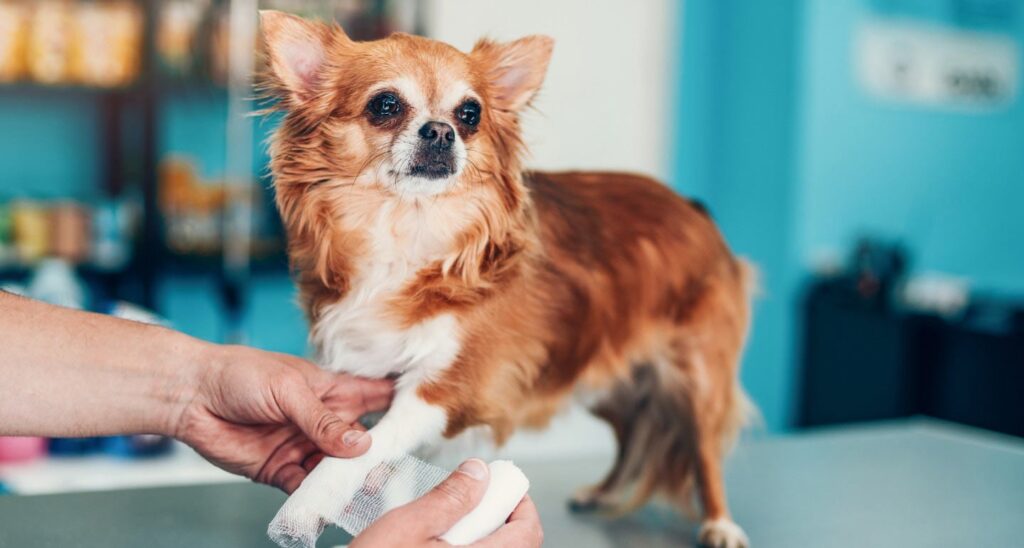
Photo by iStock.com/filadendron
Limping in dogs is a common sign of pain, and it’s normal to be concerned when your best friend starts walking funny or holding up a paw.
It means something isn’t quite right, but it doesn’t always mean there’s an emergency. The cause can be something minor, like a small paw injury, or something more serious, like a joint or bone issue. Because there are so many possible reasons, the right treatment can vary quite a bit—from medications to manage pain and inflammation to surgery.
Talking with your vet about joint health early can help to keep your dog comfortable as they age. A healthy diet, weight management, and veterinarian-recommended supplements like Cosequin® can support joint health in dogs.
Key Takeaways
- Dog limping is usually a sign of pain, even if your dog doesn’t vocalize discomfort.
- Causes range from minor injuries to serious conditions like ligament tears or bone cancer.
- Sudden limping is often linked to injury, while gradual limping may indicate chronic conditions like osteoarthritis.
- If limping persists, worsens, or is accompanied by swelling or lethargy, a veterinary visit is recommended.
- Your veterinarian will recommend the best multimodal treatment plan for your dog's limping based on the underlying cause diagnosed.
What Does Limping in Dogs Look Like?
Limping happens when your dog stops putting all or part of their weight on one or more of their legs due to pain or discomfort. It’s sometimes referred to as lameness, and it can look different depending on the cause. Some signs are obvious, while others are more subtle.
Look for these common signs to determine if your dog is limping:
- Holding one leg up while standing or walking
- Favoring one leg or shifting weight to other limbs
- Walking more slowly or refusing to put weight on a limb
- Stiffness, especially after rest or sleep
- Difficulty getting up, lying down, or climbing stairs
- Shortened stride or uneven gait
- Tip toeing or toe-touching
Because dogs are good at hiding discomfort, even mild or occasional limping can indicate an underlying issue that should be monitored closely.
Why Is My Dog Limping?
Anything that causes pain or affects a dog’s ability to walk can cause limping. It’s helpful to keep in mind whether your dog’s lameness came on quickly or developed over time, particularly when talking to your vet.
Limping can be sudden, chronic, or intermittent, and understanding the pattern can give you clues about what’s causing it. Some conditions can cause more than one type of limping, so a single issue may appear as sudden, chronic, or intermittent over time.
Sudden (Acute) Limping
Sudden, or acute, limping appears quickly, often after activity, and is commonly caused by an injury or trauma. It may improve with rest—or worsen if the underlying issue is more serious.
Common causes of sudden limping include:
- Insect bite or sting
- Thorn, debris, or foreign material in the foot
- Cut or burned paw pad
- Broken nails
- Broken bones or fractures
- Torn ligament in the knee
- Dislocated hip or elbow
- Sprained or strained muscle, ligament, or tendon
- Nerve injury, or a pinched nerve
- Bone, joint, or soft tissue/skin infection
- Bone cancer
- Developmental conditions, such as hypertrophic osteodystrophy (painful swelling of growth plates) and panosteitis (“growing pains” seen in young dogs)
- Vaccine reaction
- Tick bite infections (Lyme or ehrlichiosis)
Chronic Limping
Chronic limping lasts more than one to two weeks and may come and go over time. It’s often linked to arthritis or other long-term conditions.
Causes of chronic limping can include:
- Osteoarthritis
- Hip dysplasia
- Elbow dysplasia
- Chronic back problems
- Cruciate ligament disease
- Patellar luxation
- Degenerative myelopathy
- Intervertebral disc disease
- Chronic soft tissue injuries or infections
- Bone cancer or other tumors
- Immune-mediated joint disease
- Previous injuries that didn’t fully heal
Intermittent Limping
Intermittent limping happens occasionally and then seems to resolve on its own. It’s commonly associated with joint instability, such as a luxating patella. Common causes include:
- Early cruciate ligament disease (partial tears)
- Joint instability or hypermobility
- Patellar luxation (mild or low grade)
- Mild soft tissue injuries that flare up with activity
- Panosteitis (“growing pains” in young dogs)
- Tick-borne diseases (such as Lyme disease), which can cause shifting leg lameness
- Immune-mediated joint disease
- Broken or brittle nails
My Dog Is Limping, What Should I Do?
If you notice your dog limping, don’t panic. Follow these steps:
Step 1: Check for Obvious Issues
If your dog allows it, gently examine:
- Paw pads for cuts or debris
- Nails for breaks or bleeding
- Limbs for swelling or heat
If you find the source of the problem is something minor, like a thorn in the paw, you can address it yourself and move on to step 2. If it’s a more serious injury, it’s best to call your vet right away.
Do not force movement if your dog is in pain.
Step 2: Limit Activity
- Keep your dog calm and rested
- Avoid running, jumping, or stairs
- Use leash walks only for bathroom breaks
Step 3: Monitor Closely
Watch for changes over 24–48 hours:
- Is the limp improving or worsening?
- Is your dog eating and acting normally?
Step 4: Contact Your Veterinarian
If you haven’t noticed an improvement, or the limping has gotten worse, it’s time to call your vet. Even mild limping may need evaluation if it doesn’t improve quickly.
When To Call the Vet Immediately
In some cases of dog limping, vet visits shouldn’t wait—especially if the limp is severe, sudden, or paired with other concerning symptoms. Knowing these warning signs can help you act quickly and get your dog the care they need.
- Vocalizing (yelping or whining)
- Shaking or trembling
- Obvious broken bones or malformation of the limbs
- Continuous bleeding
- Stumbling or ataxia (loss of coordination)
- Behavior changes (not wanting to walk/move, hiding, lethargy, fear/aggression)
- Hunched back or guarding abdomen
How Vets Diagnose the Cause of Dog Limping
The vet will need to know your furry friend’s age, breed, spay/neuter status, any other diseases your pet may have, whether or not your dog is on any meds or flea/tick/heartworm prevention, and their vaccination history.
You could be asked the following:
- Is your dog limping on the back or front leg?
- How long has the limping been going on?
- Was it a sudden change or more gradual?
- Can you think of something that could have caused it?
- Any history of joint disease known in the parents of your dog?
- Is it worse after exercise or rest?
Physical Exam and Diagnostics
Your veterinarian will likely start with a full physical exam, checking everything from your dog’s temperature, heart rate, and breathing to how their joints and muscles feel.
They may also watch your dog walk and move around to better understand the limp—like whether it’s affecting a front or back leg or if there appears to be back or neck involvement.
Other assessments might include:
- X-rays (Your dog may need to be sedated to get good pictures of bones, muscles, joints, and ligaments)
- Blood samples
- MRI or other advanced imaging
- Joint taps
Treatment of Dog Limping
Depending on the cause of your dog’s limping, your vet will start an appropriate treatment plan. This plan can include things to be done by yourself at home, therapies administered by the vet, or a combination of both.
Veterinary Treatments
Your veterinarian will likely begin a multimodal treatment plan to ensure that your dog is pain-free as soon as possible. While oral medications are usually the best option to begin with, the underlying cause will factor into the treatment plan. In some cases, especially with neurologic causes of limping, urgent surgery might be recommended.
- Pain medication
- Anti-inflammatory medications
- Corticosteroids
- Antibiotics
- Joint support injections
- Bandage or splinting
- Surgery
- Weight management
- Chemotherapy or radiation
At-Home Care
Your veterinarian might also recommend at-home care for your limping dog. Sometimes this involves knowing what things you should not do, and other times your vet might give you proactive measures to take at home. At-home care might include:
- Rest
- Activity restriction
- Cold packs (acute pain)
- Warm compress (chronic pain and stiffness)
Supplements and Supportive Therapies
In some cases of limping in dogs, nutritional supplements and alternative therapies can be very helpful in the recovery process.
Most of these supportive measures can be done at home but might require specialized equipment, while others will need to be done by a specialist.
Joint Support Supplements
Joint supplements are great long-term options to support your pup’s joint health.
Supplements containing glucosamine, omega-3 fatty acids, and other special ingredients have been shown to help support joint health in dogs.
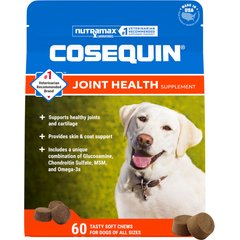
A good example is Cosequin. It comes in a wide variety of preparations for dogs of all sizes and contains glucosamine hydrochloride (FCHG49®) and sodium chondroitin sulfate (TRH122®), a proprietary combination of ingredients that supports healthy joints in dogs.
Sponsored
Recommended Product
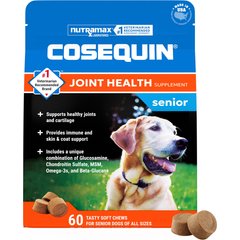
Cosequin Senior soft chews also contain omega-3 fatty acids to support your dog’s skin and coat health, and beta-glucan for immune support.
Sponsored
Recommended Product
Physical and Alternative Therapies
Physical therapy for limping dogs helps to reduce pain, improve mobility, and strengthen the muscles.
If you’re comfortable with it, your vet can teach you passive range of motion stretches to do at home. You can also take your dog to a veterinary rehab clinic that might have tools such as an underwater treadmill for low impact exercise, laser therapy,and muscle stimulation, among other practices.
Acupuncture is also a great option to help with certain causes of lameness. Talk to your vet about your pup’s options.
Preventing Limping in Dogs
Preventing limping in dogs starts with proper precaution to avoid injuries, trauma, and preventable illnesses. You can prevent limping by:
- Securing your dog on a leash when outside of fenced areas to avoid injury
- Using year-round flea and tick medication prescribed by your vet to prevent tick-borne lameness
- Maintaining a healthy weight to put less stress on joints
- Feeding a vet-prescribed diet that supports both weight management and joint health
Joint supplements can support joint health in dogs from an early age. Cosequin, for example, can be given at any stage of life. Cosequin with Multifunctional Support can be introduced to puppies, and they can be switched to Cosequin Senior later in life. Cosequin comes in many forms, including soft chews, soft chews with omega 3s, chewable tablets, minis, and senior soft chews to accommodate all dogs whatever their age and stature.
Sponsored
Recommended Products
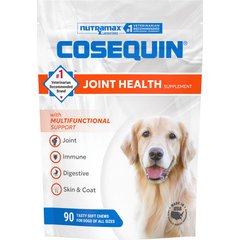
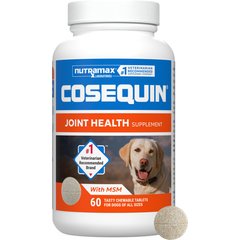
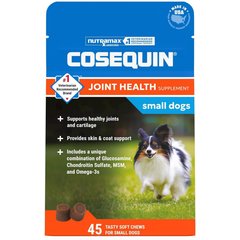
It’s important to keep up with regular wellness checks with your vet and discuss your options for flea and tick prevention, diet and weight management, as well as joint support supplements. Additionally, always have breeding dogs screened for elbow and hip dysplasia, as well as other genetic causes of lameness.
Dog Limping FAQs
Why is my dog limping all of a sudden?
Sudden limping is usually caused by an injury, such as a sprain, torn ligament, or something stuck in the paw.
Can dog limping go away on its own?
Mild limping may improve with rest, but if it lasts more than one to two days, your dog should see a veterinarian.
Should I walk my dog if they are limping?
Limit activity. Short, controlled leash walks only—no running or jumping.
When is limping an emergency?
It’s urgent if your dog can’t bear weight, shows severe pain, or has swelling or a visible injury. If you notice any of these signs, contact your vet immediately.
Why is my dog limping but acting normally?
It’s unlikely for a dog to limp without experiencing some pain. If your dog is limping, it’s safest to assume they’re uncomfortable, so check in with your veterinarian for guidance.
Why is my dog limping after sleeping?
It’s often due to stiffness from resting, especially with conditions like arthritis that improve as they start moving. It can also happen if a leg “falls asleep” or if an underlying injury or illness is aggravated.
Attributions