
Nova Scotia Duck Tolling Retriever
Updated April 2, 2026

Nova Scotia Duck Tolling Retriever
Updated April 2, 2026
Active and playful, the Nova Scotia Duck Tolling Retriever needs an equally active pet parent who never misses a workout (or at least their pet’s workout). Tollers, as they’re called, are the smallest of the retrievers, and what they lack in size they make up for in energy and smarts.
Energetic, Fun-Loving, Intelligent
35–50 pounds
17–21 inches
12–14 years
Red, Buff, Red Gold
With their foxy red coat, these active pups will probably get a few stares in the neighborhood—and their exotic-sounding name might get some attention too. After all, a Nova Scotia Duck Tolling Retriever isn’t exactly as common at the dog park as a Golden Retriever.
But these sprite, loyal pups from the north are exactly as warm-hearted as their counterparts. If you’re an energetic pet parent who enjoys a day at the lake or pool, this smallest member of the retriever group might be your soul pup.
Recommended Products


Nova Scotia Duck Tolling Retriever Characteristics
Nova Scotia Duck Tolling Retriever Appearance
The Nova Scotia Duck Tolling Retriever has a golden red coat with a dash of white markings. Their bright eyes exude smarts and determination, and they have a white-tipped tail that wags high.
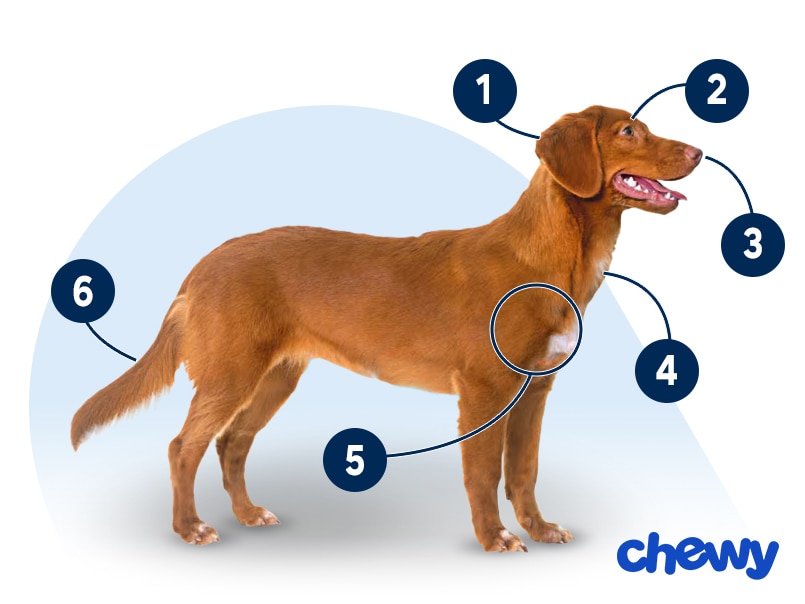
- Ears
Nova Scotia Duck Tolling Retrievers’ triangular ears have rounded tips and a graceful floppiness.
- Eyes
Their almond-shaped eyes match their golden-red coat color.
- Nose
Tollers have a broad nose with wide-open nostrils. Their nose is either black or matches their coat color.
- Coat Length
They have a soft, medium-length, water-repellent double coat. The topcoat may be feathered or wavy. Their undercoat is soft and thick.
- Coat Color
Nova Scotia Duck Tolling Retriever colors are any shade of red—from a golden red to a dark, coppery red. They might have white markings on the tip of their tail, feet, chest, or blaze (between their eyes).
- Tail
The Nova Scotia Duck Tolling Retriever tail is long and feathered. Tollers hold their tails upright in a slight curve when they’re alert.
Nova Scotia Duck Tolling Retriever Temperament
This high-energy, playful dog is the perfect match for someone who’s equally fun and active. They will probably adore car rides, long hikes, trips to the beach, and just about any activity that gets them out of the house.
This dog is as smart as they are active; they’re also a bit adorably independent-minded and can get distracted.
As such, running after things is one of their favorite activities. They’re very good at it and could probably even outrun athletic parents—though they’ll politely slow down for you to keep up.
They have a soft side as well, and at the end of the day they’ll be more than content to snuggle up with their bestie. (That’s you!)
Related Breeds






How to Care for a Nova Scotia Duck Tolling Retriever
Toller dogs need a normal amount of grooming and a lot of exercise.
Grooming
Training
Diet
Exercise
Environment
Nova Scotia Duck Tolling Retriever Health
The Nova Scotia Duck Tolling Retriever lifespan is 12–14 years. Here are some health issues to be aware of.
- Addison’s disease: This endocrine disorder is caused by a deficiency in steroid hormones and is a medical emergency. If you notice increased thirst and urination; trembling; decreased appetite; diarrhea and vomiting; among other symptoms, see your vet immediately. Diagnosis is typically done by blood test, and with treatment, dogs with Addison’s can live relatively normal lives.
- Degenerative encephalopathy: This neurodegenerative disease is usually caused by a genetic mutation and causes the part of the brain important in controlling movement to degenerate over time. Unfortunately, there is no treatment at this time.
- Degenerative myelopathy: This is a neurological disease that affects the spinal cord; it causes problems with breathing, vocalizing, and eating—and it slowly weakens, then paralyzes, the back legs. Keeping your pup at a healthy weight and active as long as possible may help slow the progression. There is no treatment to reverse it, but physical therapy may help. If you notice anything unusual with your pup, like lameness or stumbling, visit your veterinarian.
- Elbow and hip dysplasia: Elbow and hip dysplasia are genetic conditions that develop during puppyhood when the joints don’t align well and become looser than normal. Signs include limping, and treatment might involve weight loss, reduced activity, joint supplements, physical therapy, pain meds, or, in severe cases, surgery.
- Progressive retinal atrophy (PRA): PRA leads to blindness in dogs, and while there is no cure, pups who lose their eyesight tend to adapt well and can still live full, happy lives.
Nova Scotia Duck Tolling Retriever History
The Nova Scotia Duck Tolling Retriever hails from the Little River District of Nova Scotia, where they were first bred in the 19th century. Their nickname, Little River Duck Dog, is an homage to their origins.
Sportsmen bred Tollers to act as “decoy dogs,” designed to imitate foxes in size and color. Then, hunters took them to splash along the riverbanks so they could lure curious ducks to shore. Ducks are fascinated by foxes—maybe because they’re a predator and they want to keep an eye on them.
The breed’s name includes a derivative of the Middle English word tollen, which means to lure.
Today, these pups are loving family dogs who enjoy nothing more than a good run followed by some snuggles. They were recognized by the American Kennel Club in 2003.
Nova Scotia Duck Tolling Retriever puppies tend to cost thousands of dollars. If you choose this route, pick a responsible breeder.
You can also choose Nova Scotia Duck Tolling Retriever adoption, as there are many pups waiting patiently in shelters for forever homes. Search via a Nova Scotia Duck Tolling Retriever rescue like Toller Rescue, keep an eye out for the breed at your local animal shelter, or search Chewy’s database of adoptable dogs in your area.