Boykin Spaniel
Updated May 8, 2026
Boykin Spaniel
Updated May 8, 2026
Intelligent, spirited pups, Boykin Spaniels need a pet parent who also loves the great outdoors. Whether it’s hiking, running, or swimming, they’re all in—and they’re a fabulous bestie, to boot.
Active, Enthusiastic, Friendly
25–40 pounds
14–18 inches
10–15 years
Liver
Boykin Spaniels are in the running for Best All-Around when it comes to canine companions. Sure, they’re star athletes, but they’re also just as lovable as that good friend you can always rely on for an enthusiastic pep talk or pick-me-up.
Loyal to a fault, these pups want to spend time together, and they’ll never say no to a long, nature-filled walk to fight off any boredom or blues. This sporty dog will get you out and about, keeping your heart and mind happy (and theirs, too).
Boykin Spaniel Characteristics
Boykin Spaniel Appearance
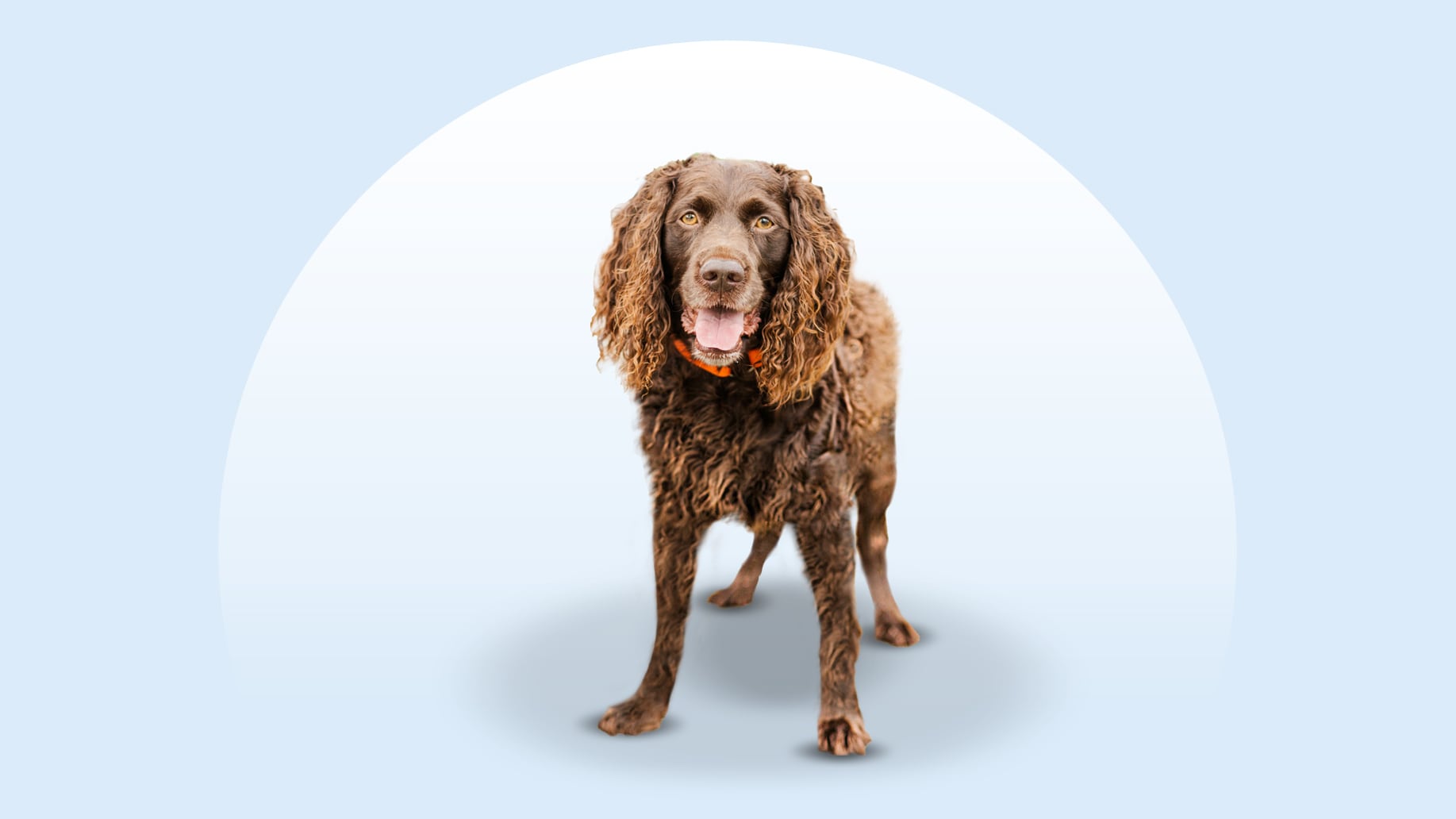
Boykin Spaniels have eyes that exude intelligence and alertness, and their tails wag at warp speed. They move with a happy sense of purpose, and their fur color is a hue of solid brown tinged with light red. Sometimes, they have white patches on their chests.
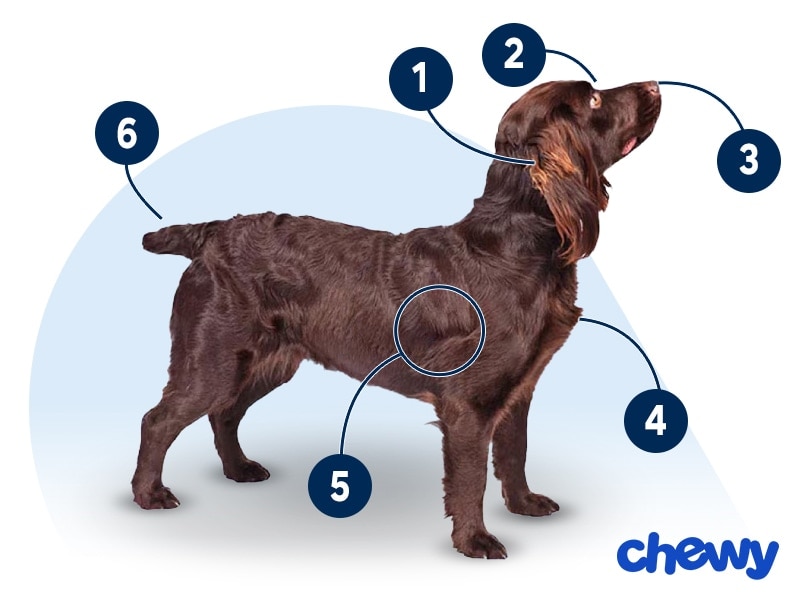
- Ears
Boykin Spaniels have adorably floppy, feathery ears.
- Eyes
Boykin Spaniels’ oval- or almond-shaped eyes are hues of brown, amber, or yellow.
- Nose
The Boykin breed’s nose is liver-colored and straight, with wide nostrils.
- Coat Length
Boykin Spaniel dogs have medium-length coats that can be wavy or flat.
- Coat Color
Boykin dog colors are a solid liver (reddish-brown) color that might include chocolate shades ranging from light to very dark.
- Tail
While it was once common to dock a Boykin Spaniel tail, nowadays many of these pups have their tails intact. Many groups, including the American Veterinary Medical Association, oppose tail docking, and many countries and U.S. states have banned the practice.
Boykin Spaniel Temperament
Outgoing and bouncy, the Boykin Spaniel personality wins best all-around. This pup is a solid best friend with a lot of energy and a lot of pluck, with a lot of outdoor adventure just waiting to happen.
These are smart dogs, and they need mental stimulation (or you might not appreciate the other ways they choose to spend their time).
Exercise and affection are key. And when they get it in spades, Boykin Spaniels make delightful family dogs, as they get along famously with most kids (as long as everyone is well-socialized and introduced properly).
Related Breeds








How to Care for a Boykin Spaniel
Boykin Spaniels learn quickly and are eager to please, so training should be a pleasure. They’ll need regular exercise, and grooming is fairly straightforward (but you’ll need to pay special attention to their ears).
Grooming
Training
Diet
Exercise
Environment
Boykin Spaniel Health
The average Boykin Spaniel life expectancy is 10–15 years. Here are some health issues to be aware of.
- Cataracts: Boykin Spaniels are prone to juvenile cataracts in particular. Cataracts aren’t usually painful, but they can cause cloudy eyes and vision loss. Surgery is the go-to treatment.
- Collie eye anomaly: This congenital disease usually affects both eyes, though it can be worse in one than the other. Collie eye anomaly leads to blind spots in your pup’s field of vision, and while it’s not painful, it can cause total vision loss. If you notice a cloudy appearance in your pup’s eyes—along with other symptoms like smaller than normal eyelids or sunken eyeballs—see your vet immediately.
- Degenerative myelopathy: DM in dogs is a neurological disease that affects the spinal cord; it causes problems with breathing, vocalizing, and eating, and it slowly weakens then paralyzes the back legs. Keeping your pup at a healthy weight and active as long as possible may help slow the progression. There is no treatment to reverse it, but physical therapy may help. If you notice anything unusual with your pup, like lameness or stumbling, visit your veterinarian.
- Exercise-induced collapse: Boykin Spaniels are prone to exercise-induced collapse, usually during or right after intense exercise. Preventive treatment involves avoiding excessive exercise, ensuring your dog is well-hydrated, and preventing them from overheating.
- Hip dysplasia: Hip dysplasia is when the ball and socket of the hip and thigh bones don’t properly fit. It’s an inherited condition that can be made worse if a pup is overweight. It eventually leads to arthritis and pain. More severe cases may require surgery, but the condition is often treated with medications, joint supplements, special diets, weight management, and/or physical therapy.
- Luxating patella: Boykin Spaniels can develop a luxating patella, where the kneecap slips out of place. A bunny hop, skip, or limp could be a symptom. It may be treated with supplements and meds, if mild, though surgery may be necessary.
- Pulmonic stenosis: Pulmonic stenosis is a congenital heart defect that can present as a heart murmur, or with symptoms like exercise intolerance or fainting. Surgery is usually the go-to treatment.
Boykin Spaniel History
Boykin Spaniels were originally bred to hunt wild turkeys and ducks in the swamps of South Carolina in the early 1900s.
While they’re now beloved family dogs more likely to hunt a Lamb Chop toy, they are the official South Carolina state dog, and they were recognized by the American Kennel Club in 2009. Their popularity has skyrocketed in recent years, since they’re such great all-around pups.
Boykin puppies can cost thousands of dollars. If you pick this route, choose from responsible Boykin Spaniel breeders.
You can also look for a Boykin Spaniel rescue. Check out a local rescue like Boykin Spaniel Rescue, keep an eye out for the breed at your local animal shelter, or search Chewy’s database of adoptable dogs in your area.