Why Is My Cat’s Tail Twitching? Is This Normal?


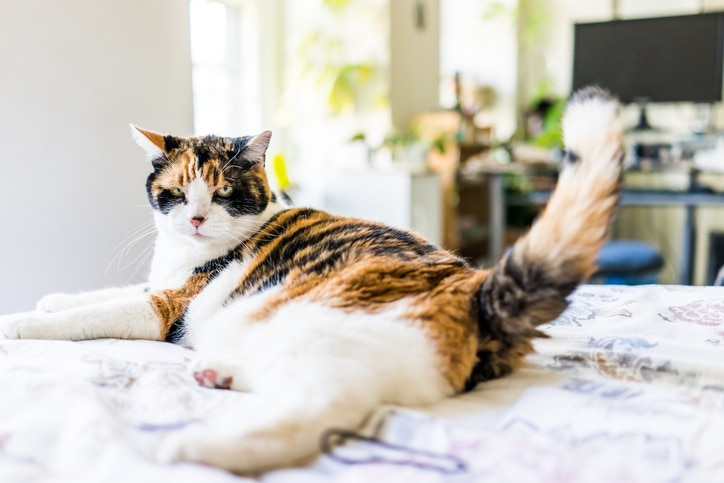
Photo by krblokhin/iStock/Getty Images Plus
Q: I’ve noticed my cat’s tail twitching a lot. Sometimes it’s just a subtle twitch, but other times it’s a sharp swish. Is that normal?
A: Yes, tail twitching in cats is usually normal, but the meaning depends on the type of movement.
We spoke with a veterinarian and certified cat behaviorist to learn more about what this behavior means.
Key Takeaways
- Tail twitching is normal cat communication and often reflects focus, excitement, or emotion.
- Fast flicks or thrashing usually signal annoyance or overstimulation, meaning your cat wants space.
- Quivering tails can mean happiness, spraying behavior, or stress, depending on context.
- Gentle tail flicks during sleep are harmless and simply indicate your cat is dreaming.
- Persistent, intense, or painful-looking tail twitching can signal a medical issue, so a vet visit is warranted.
Why Is My Cat’s Tail Twitching?
Why do cats flick their tails?
Whether it’s a subtle twitch, a quiver, or a sharp swish, tail movements can reveal a lot about your cat’s state of mind and even their health.
Here are seven possible meanings behind your cat’s twitching tail.
Hunting or Playing
Cats are born predators, and tail twitching is often a normal part of hunting behavior.
Look for:
- Tail flicks
- Quivers
This can happen when they’re focused on a target, such as a bird, bug, or toy. Right before a pounce, a cat will usually crouch low to the ground, and the tip of their tail may quiver rapidly, similar to a rattlesnake’s rattle.
These twitches are an involuntary response to the rush of adrenaline and mental focus that kicks in when they’re in prey mode, even if the “prey” is just a feather wand or catnip toy.
Toy options like the Vila Feather Teaser Wand & Fishing Pole Interactive Toy or the Yeowww! Catnip Yellow Banana Cat Toy can offer healthy mental stimulation for your cat, so offer toys liberally and let their tail twitch away.
Recommended Products


Annoyance or Overstimulation
“A cat that’s annoyed will have a tail that’s moving a lot,” says Joey Lusvardi, a certified cat behaviorist and the founder of Class Act Cats in Minneapolis.
Look for:
- A thrashing motion
- Tip twitching
You might notice this when your cat’s had enough petting or is annoyed by another animal. Lusvardi says it’s their way of signaling discomfort and asking for space.
If that message goes unnoticed, it could quickly escalate to a swat or hiss.
Spraying
When a cat sprays, their tail stands tall and quivers rapidly as they release a small stream of urine onto a vertical surface.
Look for:
- Quivers
- Vibrating motion
- Upright tail
The vibrating motion helps disperse the urine and the pheromones it carries, which serve as scent markers to establish territory.
Spraying is most often triggered by stress, especially stress caused by other cats, says Daniel Dixon, DVM, a veterinarian and founder of North Keller Animal Hospital in Keller, Texas.
If your cat is spraying indoors, speak with your vet to rule out underlying medical issues.
Excitement or Happiness
Some cats express excitement or happiness with a twitch of their tail.
Look for:
- Upright tail
- A quick, vibrating shake
- Usually paired with rubbing against your legs or furniture
Lusvardi notes that you might see this kind of twitch when you walk through the door or start getting your cat’s dinner ready—it’s essentially their way of doing a little happy dance.
It’s sometimes called “mock spraying” because it mimics the same tail movement cats use when spraying, but without any pee being released.
Dreaming
Cats often twitch their tails in their sleep, particularly during REM sleep—the stage when dreaming happens.
Look for:
- Slow, gentle flicks while asleep
These flicks are completely normal and simply indicate that your cat’s brain is active. A soft, cozy cat bed can keep them comfy while they’re chasing a mouse or bird in dreamland.
Try the Frisco Foldable Covered Canopy Cat Bed or the Frisco Elevated Modern Wrought Iron Cat Bed with Long Faux Fur Cushion.
Recommended Products


A Showdown With Another Cat
“A cat that’s standing off with another cat will often have a tail that’s thumping, though sometimes just the tip of the tail will move,” Lusvardi says.
Look for:
- Tail thumping while looking at another feline
- Big, irregular movements (not quick twitching)
It’s your cat’s way of saying, “back off” without escalating to physical conflict.
A Health Issue
In some cases, tail twitching can be a sign of an underlying medical condition that needs attention. According to Dr. Dixon, medical causes can include:
- Feline hyperesthesia syndrome (FHS): A rare neurological condition that causes sudden bursts of twitching, skin rippling, and extreme sensitivity along the spine or tail, often leading to self-grooming or tail-chasing.
- Spinal cord impingement: Pressure on the spinal cord caused by a mass, infection, or inflammation can lead to abnormal nerve signals, resulting in involuntary tail twitching or sensitivity.
- Trauma: Injuries to the spine, pelvis, or tail can damage nerves and lead to twitching, pain, or reduced tail control.
- Skin conditions: Skin issues, such as flea allergy dermatitis or food allergies, can cause itchiness and irritation along the back or tail, which can lead to twitching or twitch-like movements.
- Infections: Some viral, parasitic, or fungal infections can affect the nervous system or create inflammation that may cause tail twitching.
When To Worry About Cat Tail Twitching
Tail twitching is usually normal and part of your cat’s body language. But in some cases, it can signal stress or an underlying health issue.
Here are some signs you should ask your vet about:
- Persistent or intense tail twitching, flicking, thrashing, or quivering
- Sudden sensitivity to touch along the back or near the base of the tail
- Excessive grooming, tail-chasing, or vocalizing, along with episodes of tail twitching
- Skin rippling
- Tail-quivering paired with indoor spraying
If your cat exhibits any of these symptoms, make an appointment with your vet for a full checkup.
FAQs About Cat Tail Twitching
Do cat tails twitch when they’re happy?
Yes, some cats twitch their tails when they’re happy or excited, like when they’re greeting you or anticipating something they enjoy, like dinner. The tail is typically held high and gently quivers.
When should I worry about tail twitching?
If the twitching is intense, persistent, or paired with other unusual symptoms—such as skin rippling, sensitivity to touch, excessive grooming, or spraying indoors—it may indicate stress or a medical issue. Talk to your veterinarian if you notice these symptoms.
Why does my cat’s tail twitch when I pet them?
Tail twitching during petting, especially sharp flicks, can mean your cat is becoming overstimulated or irritated. It’s their way of signaling that they’ve had enough physical contact and would like a break.
Attributions