
Soft Coated Wheaten Terrier
Updated March 26, 2026
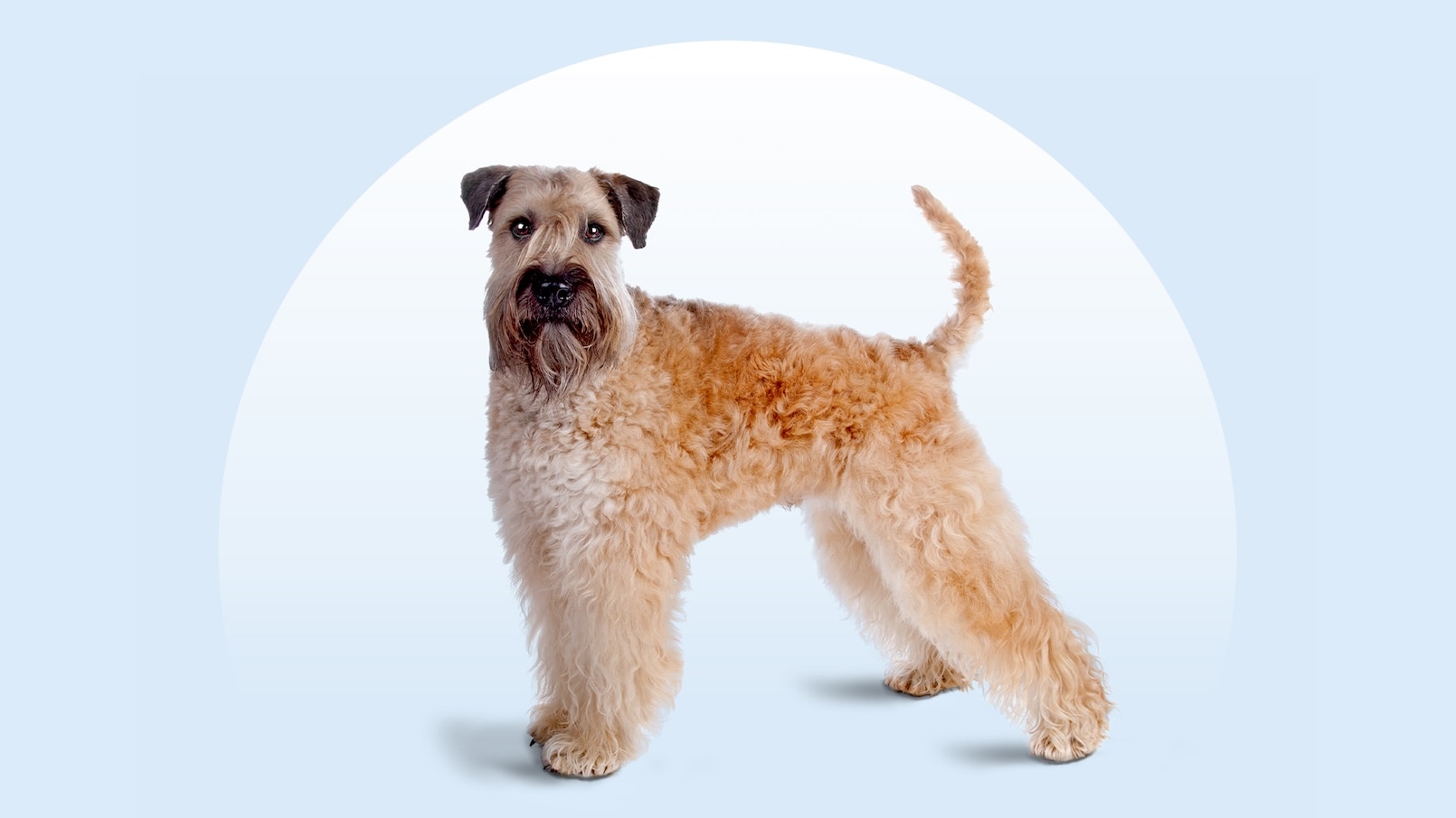
Soft Coated Wheaten Terrier
Updated March 26, 2026
Soft Coated Wheaten Terriers have warm coats and even warmer hearts. Lively and affectionate, these tolerant terriers can adapt to a wide range of families and environments as long as their needs for exercise, companionship, and regular grooming are enthusiastically met.
Alert, Affectionate, Adaptable
30–40 pounds
17–19 inches
12–14 years
Wheaten
Don’t let the Soft Coated Wheaten Terrier’s emo hairstyle fool you. These dogs may look like clouds, but they’re pure sunshine beneath those wavy locks.
Bred to work on Irish farms, Wheaten Terriers are a winning combination of brains, beauty, and benevolence. Like other terrier breeds, Soft Coated Wheaten Terriers are spirited companions, though they are unique in being more friendly than feisty.
But perhaps best of all, these doggedly devoted pups only have eyes for you (and the rest of your family)—even if you can’t always see them beneath their wild Wheaten ’do.
Recommended Products


Soft Coated Wheaten Terrier Characteristics
Soft Coated Wheaten Terrier Appearance
The Soft Coated Wheaten Terrier is a breed of balance.
They somehow manage to have a strikingly square outline and sturdy stature while swimming in soft, silky, wheaten waves that blow in the breeze. Even the Wheaten Terrier’s size maxes out at a perfectly moderate 40 pounds.
From the tips of their large black noses to the ends of their high-flying tails, Soft Coated Wheaten Terriers are a picture of both strength and sunniness.
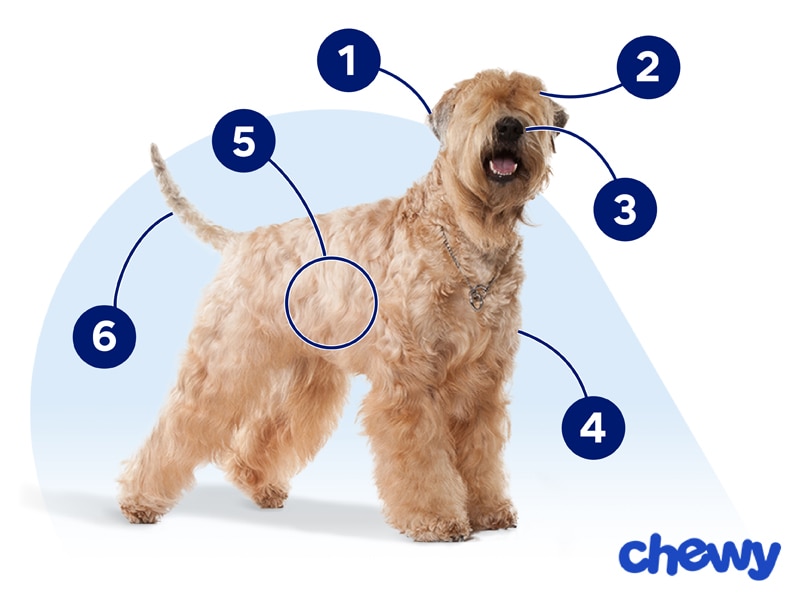
- Ears
The Wheaten Terrier’s small- to medium-sized ears bend downward, with the insides grazing their cheeks and the tips pointing to the ground.
- Eyes
Wheaten Terrier eyes are somewhat almond-shaped and come in shades of reddish brown and brown, with black rims.
- Nose
Wheatens have prominent black noses.
- Coat Length
The Wheaten’s characteristically soft, wavy coat covers the entire body.
- Coat Color
Wheatens may come in any shade of wheaten. Puppies and adolescents can carry different color variations, but by age 2, your dog’s true wheaten color should be apparent.
- Tail
Wheaten Terriers have a furry, high-set tail that’s carried at a 90-degree angle from their back. The breed standard calls for Wheaten tails to be docked, though this is a controversial practice many veterinary groups oppose, including the American Veterinary Medical Association.
Soft Coated Wheaten Terrier Temperament
The Soft Coated Wheaten Terrier Club of America (SCWTCA) describes the bread as “bright, active, and charming.”
Though they were bred for farm work, Wheaten Terriers make excellent family dogs, getting along with adults and children alike. However, prospective pet parents should be prepared for the very real possibility that their Wheaten’s playful puppy spirit isn’t a phase. Soft Coated Wheaten Terriers are active dogs who typically keep their high energy levels for life.
Wheaten Terriers can also get along with other pets at home, though they do tend to chase small animals like squirrels and rabbits. Early socialization and careful introductions are key to peaceful coexistence.
Like many dogs bred to complete tasks on their own, Wheatens can exhibit some independence during training that conflicts with their desire to please. And as members of the terrier group, they’re particularly talented at barking.
But with early, gentle, consistent training, Soft Coated Wheaten Terriers can learn to be well-behaved canine companions.
Related Breeds




How to Care for a Soft Coated Wheaten Terrier
As energetic dogs who love their people, Soft Coated Wheaten Terriers need close companionship and daily exercise. They won’t be happy spending their days alone and bored.
Some of their quality one-on-one time requirements will be met through grooming, as the Wheaten’s coat needs daily attention.
Grooming
Training
Diet
Exercise
Environment
Soft Coated Wheaten Terrier Health
The average Soft Coated Wheaten Terrier lifespan is 12–14 years. They are a generally healthy breed, but like all dogs, they are prone to develop certain health conditions. It’s important to partner with an ethical breeder who prioritizes health and genetic testing.
Common health considerations include:
- Addison’s disease: Also known as hypoadrenocorticism, Addison’s disease occurs when the adrenal glands are unable to produce enough corticosteroids, a type of hormone that helps dogs safely respond to stress. While the disease can be detected with blood work, many dogs aren’t diagnosed until they collapse in shock from their body’s inability to manage stress—an event called an Addisonian crisis. If your dog collapses, seek immediate veterinary care. Addison’s disease can’t be cured, but it can be managed with medication.
- Renal dysplasia: Renal dysplasia describes a condition in which one or both kidneys don’t develop as they should in utero and are unable to function properly. Symptoms include increased thirst and urination, as well as decreased appetite. Eventually, kidney failure can occur. Treatments can help prolong a dog’s life, but there isn’t a cure.
- Protein-losing enteropathy: Protein-losing enteropathy (PLE) is a disease in which an abnormally high amount of protein is lost in the gastrointestinal system. The condition can cause diarrhea; weight loss; vomiting; fluid buildup in the chest or abdomen; edema; and even death. Treatment typically depends on the underlying issue causing the protein loss.
- Protein-losing nephropathy: Protein-losing nephropathy (PLN) is a type of kidney disease. As with PLE, the condition can cause fluid buildup in the chest or abdomen, edema, and death. PLN is often seen with PLE in Wheatens and can lead to chronic kidney disease.
- Hypothyroidism: Hypothyroidism describes a thyroid hormone deficiency that affects metabolic function. Treatment typically requires lifelong hormone replacement therapy.
Soft Coated Wheaten Terrier History
According to the SCWTCA, Soft Coated Wheaten Terriers likely share a common ancestry with two other terrier breeds: the Irish Terrier and the Kerry Blue Terrier. All were bred to serve as general farm dogs; working as protectors; vermin exterminators; fox and badger hunters; cattle herders; and gun dogs.
The Soft Coated Wheaten Terrier was first recognized by the Irish Kennel Club in 1937, and the breed made its U.S. debut in 1940. In 1973, Wheatens gained AKC recognition and joined the terrier group.