Mouse Care Sheet


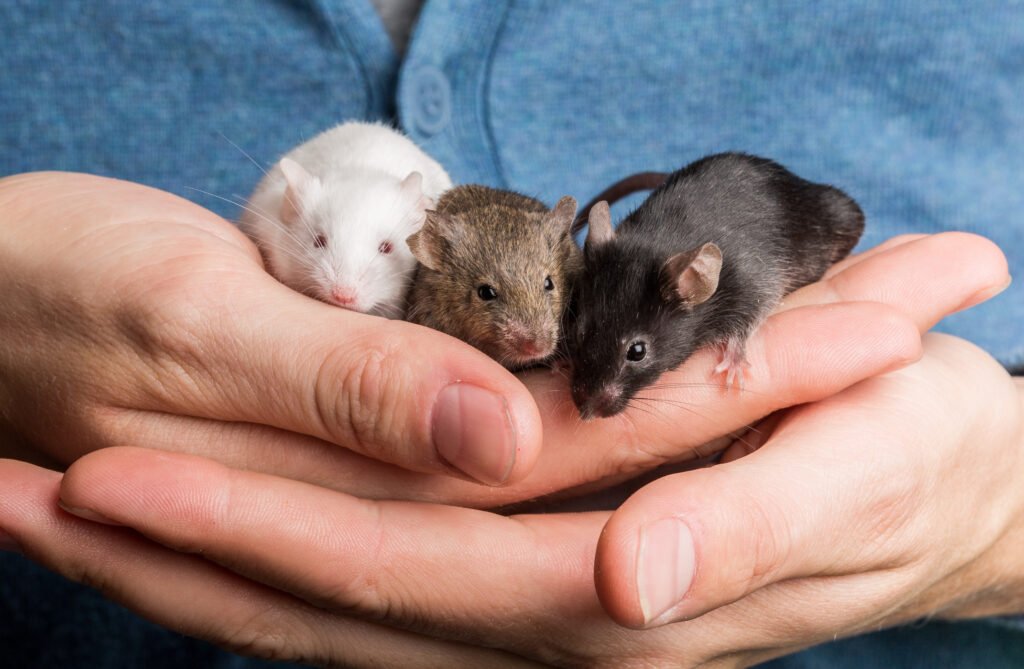
Photo by artisteer/iStock/Getty Images Plus
Mice are tiny, social, and active creatures who make great pets for beginner and experienced rodent handlers. There are a few different fancy mouse types, including:
- Standard
- Satin
- Long hair
- Frizzie
- Hairless
Whether you’re thinking about getting a mouse or you’ve had one for a while, learn how to care for them to give them a fulfilling, healthy life.
Mouse Overview
- Most pet mice will live 1–2 years.
- Mice can grow to 2.5–4 inches long.
- Mice are very social and enjoy living together in the same habitat.
- Avoid regularly holding your mouse unless you’ve trained them from a young age.
Fun Facts About Mice
- Baby mice are born hairless and blind, usually in litters of about six to a dozen.
- Domesticated mice reach adulthood at 6 weeks and senior age at 11 months.
- Mice use whiskers to discover changes in their environment and different textures.
Pet Mice Cages
Mice should have a wire cage with a secure top, multiple levels, and a plastic bottom. Glass or plastic enclosures are also OK, but wire is best for proper ventilation.
Recommended Product

The space between the bars should be no more than ¼ inch to prevent your pets from escaping.
Mice like staying cozy yet comfortable, so keep your house’s temperature no higher than 80 F and no lower than mid-50s F.
For two to three mice, you need a cage that’s at least 18” long, 18” wide, and 10” high. If possible, get the largest cage available to give your pets enough space to play and live.
While you can keep male and female mice together, be prepared for them to mate as early as 6 weeks old. Never put multiple males together, since they can be aggressive.
Line the bottom of their cage with 2–3 inches of bedding, such as undyed shredded paper or hay.
Recommended Products


Mice enjoy burrowing, so give them plenty of space and depth to dig.
Include a food bowl and water bottle or a shallow, wide water dish.
Recommended Products
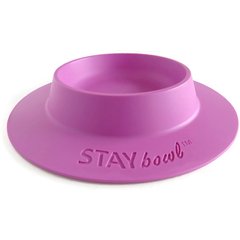
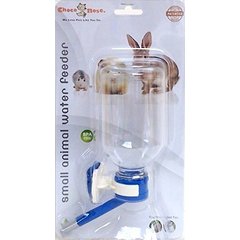
Give your mice plenty of toys and hides for physical and mental enrichment. Mice are busy little animals and exhibit many fun behaviors to watch.
Recommended Products



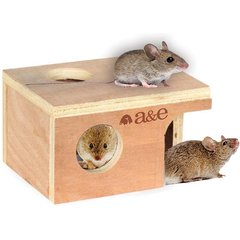
Include a variety of the following:
- A hideaway box and hammocks with nesting and bedding materials
- Ladders
- Exercise wheel
- Tunnels, cardboard tubes, or tiny playhouses
- Ropes and branches made of a variety of materials
- Chew toys to support their dental health
Cleaning and Maintenance
Spot-clean your mouse’s enclosure daily by removing soiled bedding and uneaten food. Thoroughly clean the enclosure a couple of times a week, depending on how many mice you keep in your enclosure.
Before you clean the cage, move your mice to a temporary, secure cage, such as a travel cage.
Recommended Product
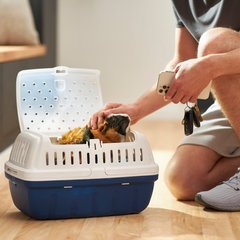
Remove old bedding, toys, accessories, and feeding dishes until the cage is empty.
Spray the cage and any non-porous toys and accessories with a rodent-safe habitat cleaner or a 3% bleach solution. Leave the solution on for at least 10 minutes to ensure everything is disinfected, then thoroughly rinse with water until you no longer smell the habitat cleaner or cleaning agent. Wash food and water bowls with warm water and unscented dish soap.
It’s important to wait for everything to completely dry before replacing the bedding, bowls, accessories, and toys. Then put your mice back in the clean cage.
What Do Pet Mice Eat?
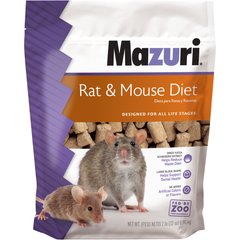
Feed your mice high-quality commercial pelleted mouse food. This will help ensure your pets get the nutrients they need.
Recommended Products

You can also feed your mice a variety of fruits and vegetables, including:
- Apples
- Bananas
- Peas
- Carrots
- Broccoli
- Dark leafy greens
If you do feed your mice fresh food, make sure you offer it in a different food bowl than the one you use for their commercial food.
Discard any uneaten fresh food after 12 hours to avoid contamination and potential spoilage.
Do not feed your pet mice:
- Chocolate
- Raw beans
- Garlic and onion
- Citrus fruits
Also, avoid foods high in sugar, salt, or caffeine, as these can be harmful.
Make sure you keep a water bottle or a shallow, wide water dish in the enclosure with clean fresh water at all times.
Mouse Handling
Most mice prefer not to be held. But with early and regular training, you can encourage your mice to enjoy being held. When handling them, gently scoop them up from underneath.
If your mouse feels threatened, they may bite with very sharp teeth, so make sure you use extreme caution when handling them.
Mouse Health
With short lifespans, mice generally visit the veterinarian only when there’s a health issue.
If you got your mouse when they were very young, you can start paying attention to their health and behaviors right away. Mice should have clear eyes, soft fur, and a curious personality. They should have a lot of energy and be active.
If you notice your mouse has gained a lot of weight, there are changes in their physical appearance, or you’ve seen a difference in their personality or behavior, contact your vet right away. These could be signs of a larger health problem. Mice are also very prone to tumors.
Pet Mouse Supply Checklist
Before you bring your pet mice home, make sure you have all the supplies ready, including:
- Appropriately sized habitat
- High-quality pelleted mouse food
- Bedding and nesting materials
- Food bowl and water bottle
- Exercise wheel
- Hideaways
- Toys and chews
FAQs About Pet Mice
How long do pet mice live?
Most pet mice live an average of 1–2 years.
How much does a mouse cost to keep?
Costs vary by where you live, how many mice you keep, the size of your cage, and the supplies you choose.
Are mice good pets?
Mice make great pets. While all pets require work, these social, active rodents have minimal care needs.
Can mice bond with humans?
Mice are social creatures, and if properly socialized from an early age they may bond with their humans.
Do mice like to be cuddled?
In most cases, mice don’t like being cuddled or held.
How big do mice get?
Mice average anywhere from 2.5 to 4 inches long.
Click here for a printable PDF version of this care sheet!
Attributions