Sort
Filter
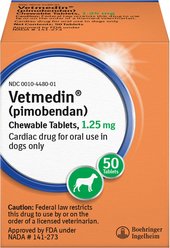

$68.59 Chewy Price
($1.38/ea) Price per Unit
$65.16 Autoship Price
- Prescription Item
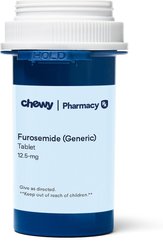
$15.00 Chewy Price
($0.25/ea) Price per Unit
Autoship Price
- Prescription Item
$46.80 Chewy Price
($0.78/ea) Price per Unit
Autoship Price
- Prescription Item
$6.00 Chewy Price
($0.10/ea) Price per Unit
Autoship Price
- Prescription Item
$7.20 Chewy Price
($0.12/ea) Price per Unit
Autoship Price
- Prescription Item
$0.16 Chewy Price
($0.16/ea) Price per Unit
Autoship Price
- Prescription Item

$135.69 Chewy Price
($2.72/ea) Price per Unit
$128.91 Autoship Price
- Prescription Item
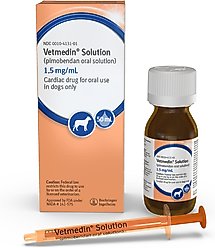
$74.49 Chewy Price
$85.99 List Price
Autoship Price
- Prescription Item
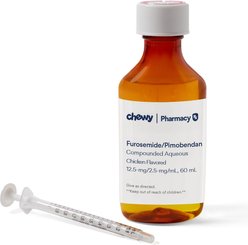
$68.20 Chewy Price
($1.14/mL) Price per Unit
Autoship Price
- Prescription Item
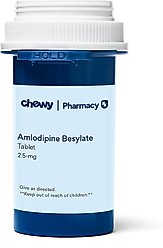
$4.50 Chewy Price
($0.15/ea) Price per Unit
Autoship Price
- Prescription Item
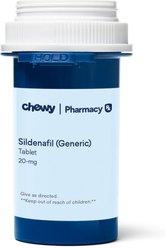
$36.00 Chewy Price
($0.30/ea) Price per Unit
Autoship Price
- Prescription Item
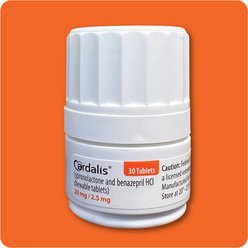
$45.49 Chewy Price
($1.51/ea) Price per Unit
$47.10 List Price
Autoship Price
- Prescription Item
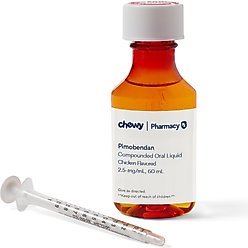
$92.75 Chewy Price
($1.55/mL) Price per Unit
Autoship Price
- Prescription Item
$0.13 Chewy Price
($0.13/ea) Price per Unit
Autoship Price
- Prescription Item
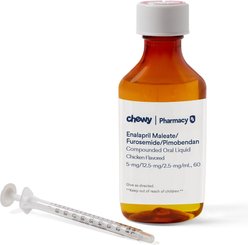
$62.95 Chewy Price
($1.05/mL) Price per Unit
Autoship Price
- Prescription Item
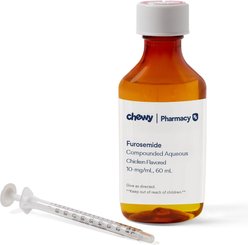
$57.12 Chewy Price
($0.96/mL) Price per Unit
Autoship Price
- Prescription Item
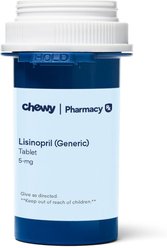
$4.50 Chewy Price
($0.05/ea) Price per Unit
Autoship Price
- Prescription Item
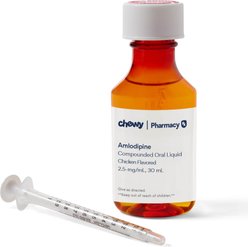
$44.75 Chewy Price
($1.50/mL) Price per Unit
Autoship Price
- Prescription Item
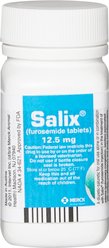
$12.60 Chewy Price
($0.21/ea) Price per Unit
Autoship Price
- Prescription Item
$63.00 Chewy Price
($1.05/ea) Price per Unit
Autoship Price
- Prescription Item
$4.50 Chewy Price
($0.15/ea) Price per Unit
Autoship Price
- Prescription Item
$0.96 Chewy Price
($0.96/ea) Price per Unit
Autoship Price
- Prescription Item
$58.80 Chewy Price
($1.96/mL) Price per Unit
Autoship Price
- Prescription Item
$27.00 Chewy Price
Autoship Price
- Prescription Item
$62.95 Chewy Price
($1.05/mL) Price per Unit
Autoship Price
- Prescription Item
$51.19 Chewy Price
($1.71/mL) Price per Unit
Autoship Price
- Prescription Item
$45.00 Chewy Price
($1.50/mL) Price per Unit
Autoship Price
- Prescription Item
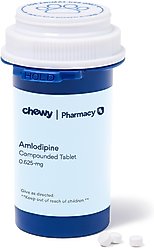
$17.40 Chewy Price
($0.58/ea) Price per Unit
Autoship Price
- Prescription Item
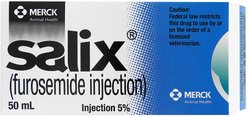
$22.75 Chewy Price
($0.46/mL) Price per Unit
Autoship Price
- Prescription Item
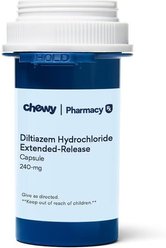
$23.10 Chewy Price
($0.77/ea) Price per Unit
Autoship Price
- Prescription Item
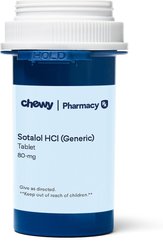
$10.20 Chewy Price
($0.17/ea) Price per Unit
Autoship Price
- Prescription Item
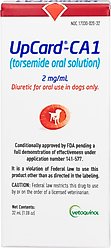
$31.99 Chewy Price
Autoship Price
- Prescription Item
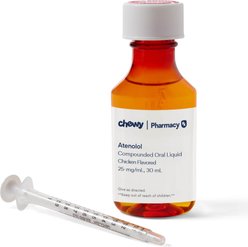
$47.49 Chewy Price
($1.59/mL) Price per Unit
Autoship Price
- Prescription Item
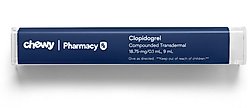
$73.45 Chewy Price
($8.17/mL) Price per Unit
Autoship Price
- Prescription Item
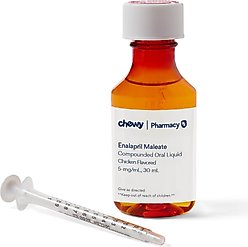
$38.54 Chewy Price
($1.29/mL) Price per Unit
Autoship Price
- Prescription Item
$0.45 Chewy Price
($0.45/ea) Price per Unit
Autoship Price
- Prescription Item
Heart Medicine For Dogs
Reviewed by Dr. Teresa Manucy, DVM
Heart medicine for dogs may be prescribed if a pup has a condition like heartworm, congestive heart failure, abnormal heart rhythms, inflammation, an enlarged or weakened heart, valve disease, blood clots, or high blood pressure. Heart medicine for dogs is typically used to control symptoms, improve how the heart functions, and prolong a dog’s life. These medications work by managing abnormal heart rhythms, improving circulation, or preventing fluid buildup. If you’re shopping for heart medicine for dogs, here are a few types to consider:
- Diuretics: Help reduce fluid buildup in the abdomen and lungs
- ACE inhibitors: Reduce the heart’s workload and relaxes blood vessels
- Beta-blockers: Reduce blood pressure and heart rate to improve heart function
- Vasodilators: Relax blood vessels to lower blood pressure and reduce heart workload
- Positive inotropes: Help improve how the heart contracts so it can pump efficiently
- Aldosterone antagonists: Reduce strain on the heart by lowering fluid retention
- Antiarrhythmics: Control abnormal heart rhythms
- Calcium channel blockers: Slow heart rate, relax blood vessels, and decrease heart workload
The right heart medicine for your dog will depend on their condition and response to the drugs—in some cases, a combination of drugs may be needed. There are several reasons your dog may need heart medication, so you should always consult with your vet to learn about your options. Keep an eye out for signs that your dog may need heart medication. Common signs may include coughing, breathing difficulties, weakness, fatigue, decreased appetite or weight loss, decreased ability to exercise, swollen abdomen, fainting or collapsing, or pale gums. Your vet can assess your dog’s condition to determine whether heart medication is appropriate.
Frequently Asked Questions about Heart Medicine For Dogs
What heart medicine do vets use to treat high blood pressure in dogs?
Vets will treat high blood pressure in dogs using ACE inhibitors like Benazepril and Enalapril or calcium channel blockers like Amlodipine. They may prescribe diuretics like Furosemide or beta blockers like Atenolol. A vet may also prescribe a vasodilator like Hydralazine.
Do I need a prescription for dog heart medicine?
Yes, you need a prescription for dog heart medicine. These medications are controlled and should only be used after consulting with your veterinarian. A vet will typically evaluate your dog and run tests before deciding which medication would be best for them. Your vet will also monitor how well the medication is working, if your pup is having any negative side effects, and if the medication needs to be altered or changed.
How long does it take for dog heart medicine to work?
Dog heart medicine will start working at different times, depending on the medication, specific condition, and how your pup responds to treatment. In general, medications like diuretics typically start working within a few hours. ACE inhibitors could take a few days to start working, while beta-blockers can start taking effect within a day. Always ask your vet about what you should expect.
Save 5% on repeat deliveries
Health Condition
Brand
7 Brands are shown below