Sort
Filter


$22.86 Chewy Price
($0.32/oz) Price per Unit
$25.49 List Price
Autoship Price

$18.29 Chewy Price
($1.31/lb) Price per Unit
$19.49 List Price
Autoship Price
$34.48 Chewy Price
($2.16/lb) Price per Unit
$34.99 List Price
Autoship Price
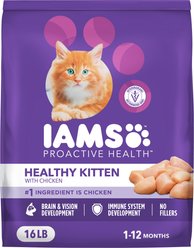
$33.98 Chewy Price
($2.13/lb) Price per Unit
$35.99 List Price
Autoship Price
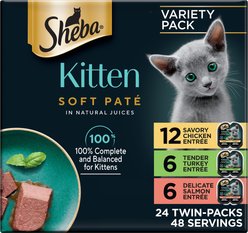
$23.38 Chewy Price
($0.38/oz) Price per Unit
$25.98 List Price
Autoship Price
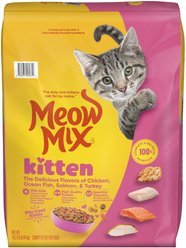
$17.99 Chewy Price
($1.27/lb) Price per Unit
Autoship Price
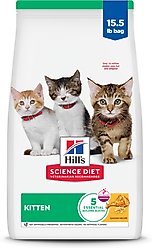
$60.99 Chewy Price
($3.94/lb) Price per Unit
$64.99 List Price
Autoship Price
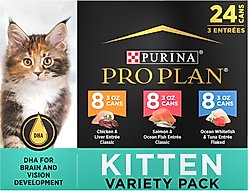
$47.04 Chewy Price
($0.66/oz) Price per Unit
$49.89 List Price
Autoship Price
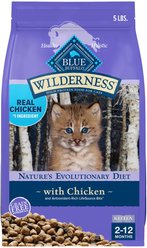
$29.98 Chewy Price
($6.00/lb) Price per Unit
$32.99 List Price
Autoship Price
$17.99 Chewy Price
($0.25/oz) Price per Unit
Autoship Price
$22.99 Chewy Price
($0.64/oz) Price per Unit
$23.89 List Price
Autoship Price
$2.96 Chewy Price
($0.14/oz) Price per Unit
$3.29 List Price
Autoship Price
$18.98 Chewy Price
($2.72/lb) Price per Unit
$21.69 List Price
Autoship Price
$43.09 Chewy Price
($0.75/oz) Price per Unit
$45.36 List Price
Autoship Price
$14.98 Chewy Price
($1.11/lb) Price per Unit
$15.99 List Price
Autoship Price
$12.57 Chewy Price
($0.41/oz) Price per Unit
$15.99 List Price
Autoship Price

$20.89 Chewy Price
($0.59/oz) Price per Unit
$21.99 List Price
Autoship Price
$34.99 Chewy Price
($5.00/lb) Price per Unit
$37.99 List Price
Autoship Price
$41.99 Chewy Price
($6.00/lb) Price per Unit
Autoship Price
$22.98 Chewy Price
($4.60/lb) Price per Unit
$26.49 List Price
Autoship Price

$17.99 Chewy Price
($0.25/oz) Price per Unit
Autoship Price
New
$44.99 Chewy Price
($0.63/oz) Price per Unit
$46.79 List Price
Autoship Price
$21.12 Chewy Price
($0.61/oz) Price per Unit
$23.04 List Price
Autoship Price
$23.04 Chewy Price
($0.32/oz) Price per Unit
$26.40 List Price
Autoship Price
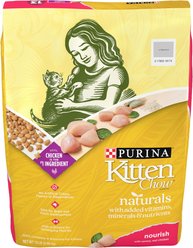
$19.78 Chewy Price
($1.53/lb) Price per Unit
$20.79 List Price
Autoship Price
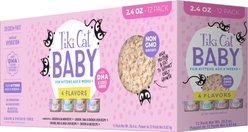
$21.55 Chewy Price
($0.75/oz) Price per Unit
$22.68 List Price
Autoship Price
$8.58 Chewy Price
($0.48/oz) Price per Unit
$11.59 List Price
Autoship Price
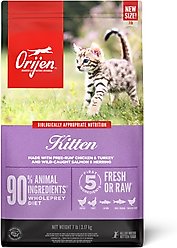
$49.99 Chewy Price
($7.15/lb) Price per Unit
Autoship Price
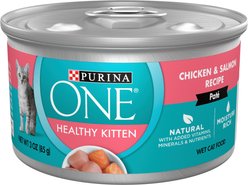
$32.88 Chewy Price
($0.46/oz) Price per Unit
$35.76 List Price
Autoship Price
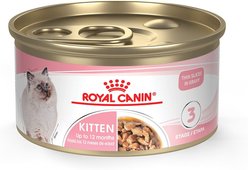
$54.96 Chewy Price
($0.77/oz) Price per Unit
Autoship Price
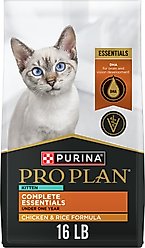
$53.48 Chewy Price
($3.35/lb) Price per Unit
$57.49 List Price
Autoship Price
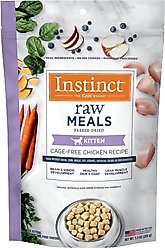
$24.99 Chewy Price
($2.64/oz) Price per Unit
Autoship Price

$22.99 Chewy Price
($0.64/oz) Price per Unit
$23.89 List Price
Autoship Price
New
$6.59 Chewy Price
($0.63/oz) Price per Unit
Autoship Price
$11.52 Chewy Price
($0.32/oz) Price per Unit
$12.99 List Price
Autoship Price
$23.45 Chewy Price
($1.68/lb) Price per Unit
Autoship Price
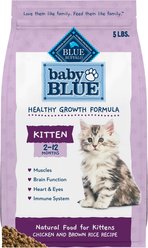
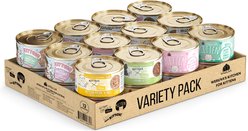
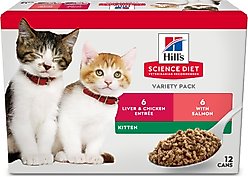
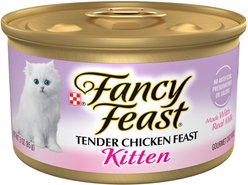
Get your playful feline off to a great start in life with kitten food specially formulated for their needs. Experts recommend feeding kittens a complete and balanced food labeled specifically for kittens or for all life stages. These special kitty food formulas offer higher protein and calories to fuel your growing furball’s needs, and they often contain targeted vitamins, minerals, and fatty acids like DHA, a natural omega fatty acid that promotes brain and vision development, to nourish healthy development. Food for kittens comes in many forms to suit a range of preferences and needs:
-
Wet kitten food: Soft pate, mousse, and gravy recipes for kittens are easy to chew and highly flavorful.
-
Dry kitten food: Crunchy kibble helps keep growing teeth strong and clean for good oral health.
-
Health-targeted kitten food formulas: Limited ingredient and veterinary formulas for kittens can help address specific health needs like skin and stomach issues.
-
Kitten treats and toppers: These tasty additions to a healthy diet can be used as a reward or a way to entice your kitty to eat more.
Your kitten will love the enticing flavors and textures of the many kitten food varieties available, and you’ll love knowing your furry friend is getting the right nutrition for this important life stage. Ask your vet for guidance on choosing the right type of food for your kitten, and be sure to set all your kitten’s favorites to Autoship for ease.
Frequently Asked Questions
What kind of food is best for kittens?
The best kind of food for kittens is either a complete and balanced formula made especially for kittens or one labeled for all life stages. Avoid feeding your kitten adult cat food, as kittens need a food that is higher in protein and calories, with specific levels of essential nutrients to fuel healthy growth. Note that very young kittens may require soft kitten food or even milk replacer, depending on their age, so be sure to ask your vet for expert guidance.
How many times a day should I feed my kitten?
Feed your kitten multiple times a day to ensure healthy growth and proper digestion. Weaned kittens 4-12 weeks old usually need to be fed four times a day or more. As kittens get older, feeding frequency can usually be reduced to three times a day, decreasing to one or two feedings per day as they near maturity. Ideal feeding frequencies will depend on what kitten food you use and your kitten’s specific health needs. Ask your vet for the best guidance on what and how often to feed your growing kitten.
Do kittens prefer wet or dry food?
Kittens often prefer wet food due to its stronger aroma and soft, easy-to chew-texture, but preferences vary widely. Many experts recommend feeding a mix of wet and dry kitten food for variety, or you can try offering both side by side and see which type your kitten likes best!
What ingredients should I look for in kitten food?
Look for ingredients like real meat from quality sources, as well as healthy fats to nourish your growing kitten’s high energy needs. Cats and kittens do best on diets high in protein and low in carbohydrates, so avoid foods with lots of starchy fillers and artificial ingredients that might not be healthy. High-quality kitten food usually contains added vitamins, minerals, DHA, and taurine as well, for complete nutrition that aids healthy development.
Save 5% on repeat deliveries
Product Type
Product Category
Brand
7 Brands are shown below