7 Spotted Cat Breeds

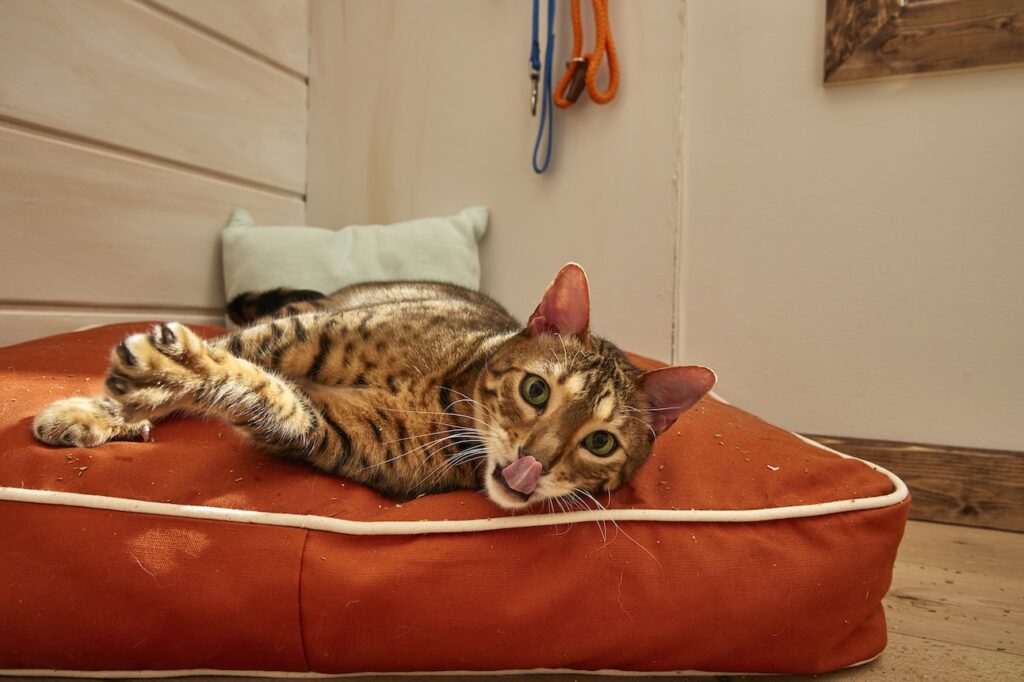
Photo by Chewy
Spotted cat breeds have a certain exotic beauty, making them highly sought-after pets. Some even have the blood of their wild counterparts coursing through their veins, despite being domesticated.
“Many people dream of being able to have one of the big, beautiful wild cats in their living room,” says Vickie Fisher, treasurer of The International Cat Association (TICA). “But that being pretty unrealistic, the next best thing is one of the small domestic cats with the look of their bigger kin.”
Here are some of the most popular spotted cats.
Key Takeaways
- Spotted cat breeds include the Bengal, Egyptian Mau, Ocicat, and Savannah.
- Their markings range from rosettes to singular dots and resemble wild cats.
- These cats are typically active, curious, and highly intelligent.
- Their exotic appearance appeals to pet parents who want a wild look in a domestic cat.
1. American Bobtail
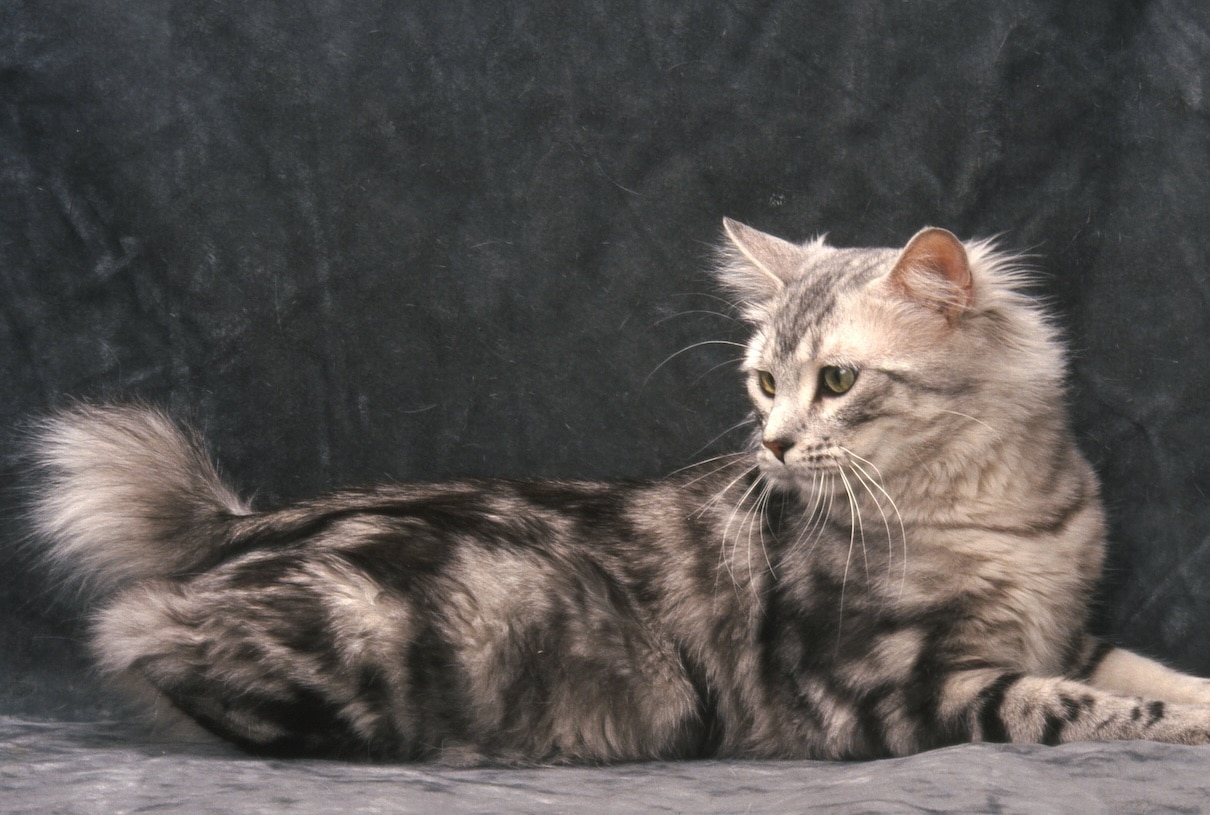
Photo by Adobe/Callalloo Twisty
- Size: 7–16 pounds
- Lifespan: 11–15 years
- Temperament: Intelligent, active, affectionate
The American Bobtail cat was created to resemble a bobcat, but rest assured—there isn’t a drop of wild blood in their body. Rather, this spotted cat breed was created by crossing a Siamese cat with a brown spotted tabby cat.
American Bobtails can have a medium-length spotted, striped, or swirled coat. But their defining feature is their naturally bobbed tail.
They’re a playful and smart cat breed who love to play and learn new tricks, like playing fetch with favorite cat toys.
Recommended Products

2. Bengal
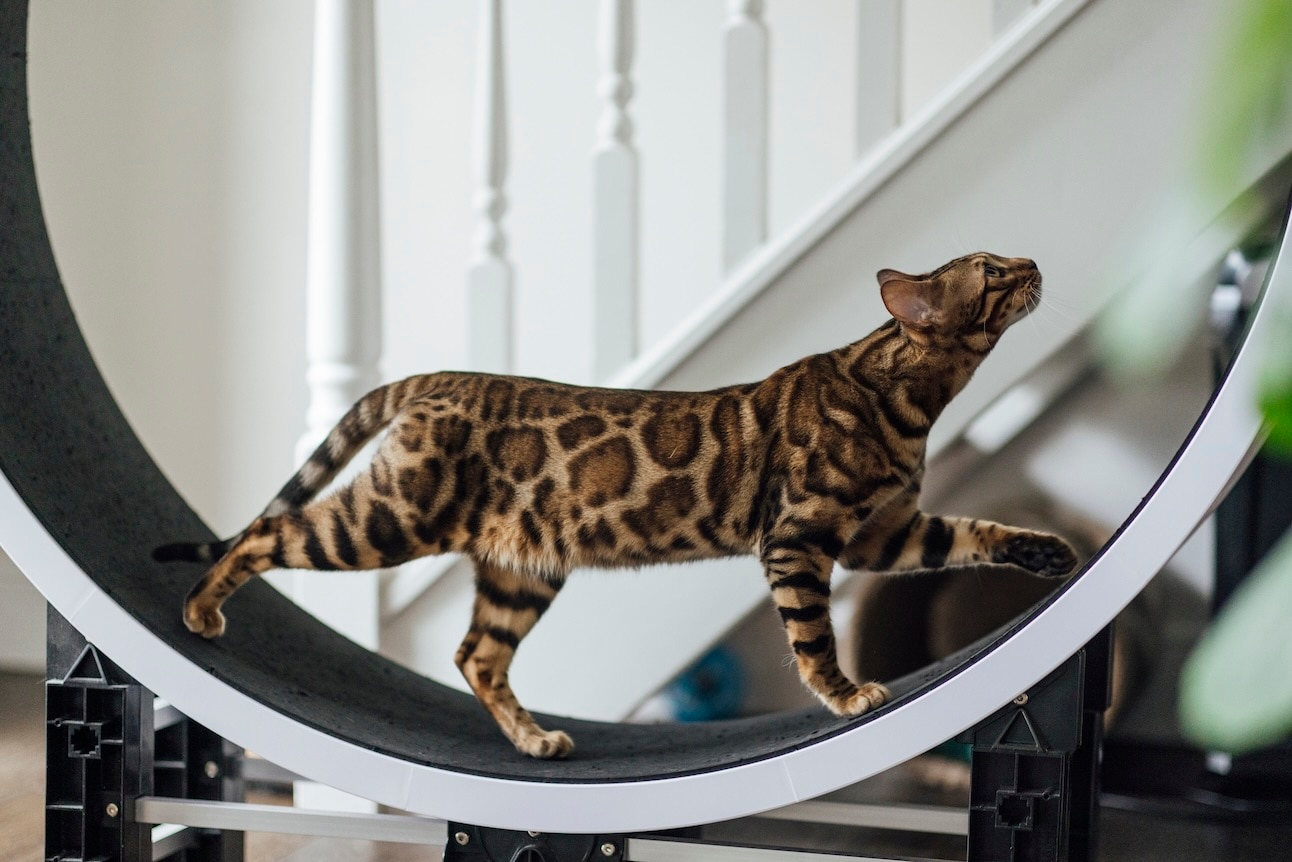
Photo by SolStock/E+ via Getty Images
- Size: 6–15 pounds
- Lifespan: 12–17 years
- Temperament: Whip-smart, energetic, curious
The Bengal cat breed was created by Jean S. Mill of California in the early 1980s. Mill started out by crossing a domestic cat with the Asian leopard cat, a small, spotted, non-domestic cat species from Asia.
“The Bengal should look like a little leopard,” says Anthony Hutcherson, chairperson of TICA’s Bengal cat breed committee.
Like their larger, wild counterparts, the Bengal is a very active cat and likes hanging out in high places. The playful breed loves interacting with people and can be easily trained to do tricks, he says.
“If you want a couch potato cat, don’t get a Bengal,” Hutcherson says.
The Bengal is the only spotted domestic cat breed with well-defined markings called rosettes, similar to those found on leopards, jaguars, and ocelots. They can also have a marbled pattern.
Bengals come in a variety of colors, including golden, bronze, mahogany, gray, and silver, with spots or marbling in black or browns.
Because of the Bengal cat’s unique genes, Royal Canin developed a cat food specially formulated for them. The optimal high-level protein and fat help build and maintain lean muscle mass, and the Y-shaped kibble of Royal Canin Bengal cat food is adapted to the Bengal’s jaw shape.
Recommended Product

3. Egyptian Mau

Photo by Mordolff/iStock /Getty Images Plus via Getty Images
- Size: 8–14 pounds
- Lifespan: 9–20 years
- Temperament: Brainiac, outgoing, loving
With a regal bearing and refined build, Egyptian Mau cats seem to know they were once revered as a deity by pharaohs. Papyri and frescoes as early as 1550 B.C.E. depict the distinctive spotted cats, and their ancient Egyptian roots are preserved in the breed’s name—the word mau means “cat” or “sun” in ancient Egyptian, according to Cat Fanciers’ Association (CFA) judge Tracy Petty.
The Egyptian Mau has green eyes and comes in three colors: silver, bronze, and smoke. The breed’s striking spots are scattered randomly, with no discernable pattern, Petty says.
Those fortunate enough to possess an Egyptian Mau know the breed’s exceptional intelligence, sensitivity, and loyalty. Although their exotic look gives the breed an aloof air, the Egyptian Mau is a very family-oriented cat, says Petty, adding, “they’re homebodies; they want to be around their people.”
4. Ocicat

Photo by alexavol/Shutterstock.com
- Size: 6–15 pounds
- Lifespan: 12–18 years
- Temperament: Affectionate, loyal, good-natured
The Ocicat breed came about when cat breeder Virginia Daly attempted to create a Siamese with Abyssinian-colored points in the 1960s, says TICA judge Cheryl Hogan. This produced an unintentional result called the Ocicat, which quickly became known for their unique appearance.
The Ocicat has “a wild look in a domestic package,” Hogan says, “but [the breed] was kind of an accident.”
The Ocicat’s powerful, muscular physique belies the cat’s loyal nature and affectionate temperament, says Hogan. Ocicats come in four colors: black, chocolate, lilac, and silver.
5. Pixiebob
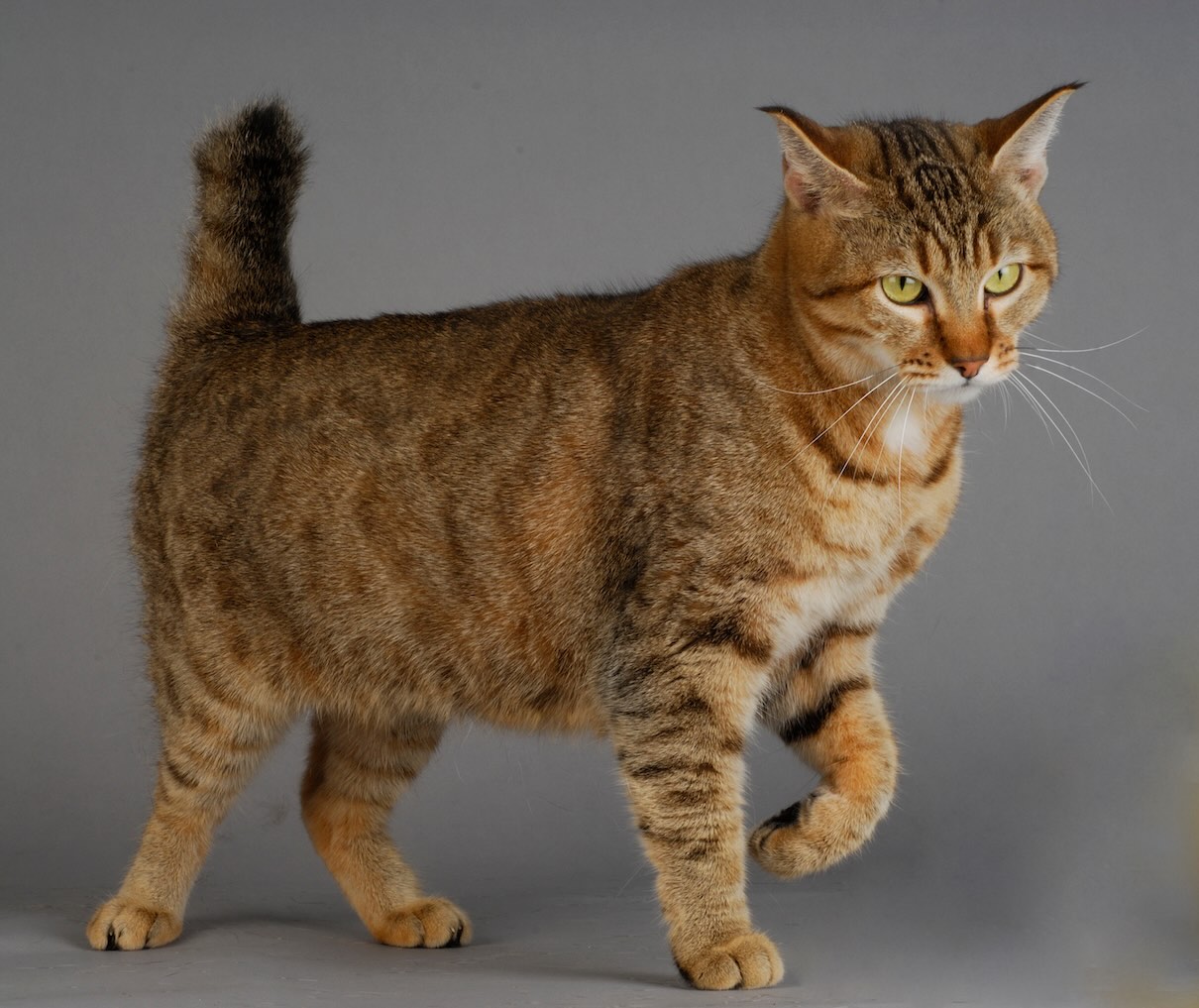
Photo by Adobe/coulanges
- Size: 9–17 pounds
- Lifespan: 13–15 pounds
- Temperament: Social, adventurous, laid-back
The Pixiebob is a muscular, brawny cat with a look that resembles the wild coastal red bobcat found in the Pacific Northwest, Fisher says. The breed, which can be long- or short-haired, is known for having a bobbed tail and is often polydactyl, she adds.
The Pixiebob originated in the 1980s when breeder Carol Ann Brewer began mating various spotted cats with short tails in Washington state, Fisher says. Brewer named the breed after one of the original cats, a female named Pixie, and the breed’s distinctive stubby tail, she says. TICA officially recognized the Pixiebob in 1995.
“A Pixiebob is very distinctive-looking,” says Fisher. “The breed has become very popular because of its unique look.”
The Pixiebob is a brown spotted tabby ranging in shades from tawny to reddish brown, she says. The cat breed’s spots should be small and muted by heavy ticking, and their eye color is brown or green.
And then there’s that tail. At minimum, the Pixiebob’s tail is 2 inches, with a maximum length reaching to the cat’s hock, Fisher says.
6. Savannah Cat
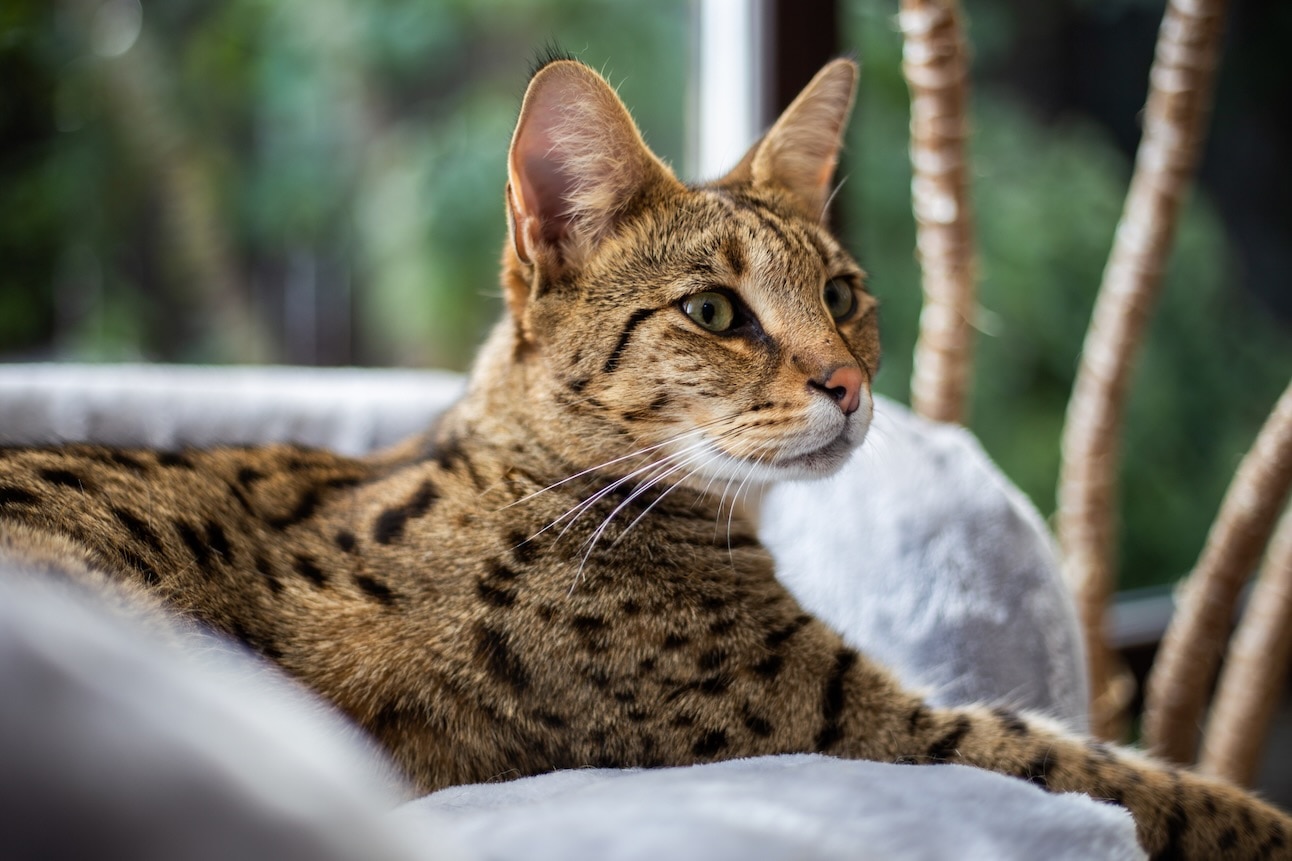
Photo by Hennadii Naumov/iStock / Getty Images Plus via Getty Images
- Size: 11–20 pounds
- Lifespan: 12–15 years
- Temperament: Playful, adventurous, loyal
The Savannah is a tall, lean spotted cat breed. Their intriguing ancestry includes the serval, a long-legged spotted wild cat native to Africa, Fisher says.
The first known Savannah cat was born in 1986 to a domestic mother and a serval father. TICA is the only organization to officially recognize the breed.
Both affectionate and outgoing, the Savannah has an exceptionally long neck, lengthy legs, and tall ears for a domestic cat, she says. This cat breed is very active and needs exercise every day. They’ll love daily interactive playtime, running on a cat wheel, and even taking leashed walks.
Recommended Products

The Savannah’s markings are made of bold, solid dark-brown to black spots, which can be round, oval, or elongated. Stripes run from the back of the cat’s head over the shoulder blades, fanning out slightly over the back, says Fisher.
7. Serengeti
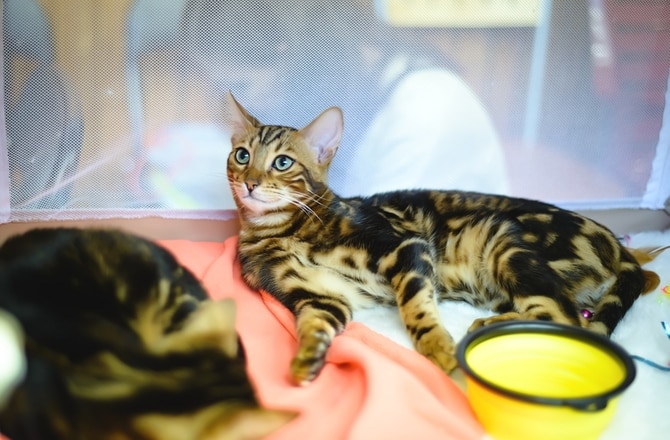
Photo by Dizfoto/iStock / Getty Images Plus via Getty Images
- Size: 8–15 pounds
- Lifespan: 8–15 years
- Temperament: Friendly, confident, chatty
The Serengeti is another spotted cat bred to look like one of their wild counterparts and is one of TICA’s newest additions.
“The breed is totally man-made—the original intent was to create what the Savannah is today, but without using any wild blood,” Fisher says.
The Serengeti cat was created in the 1990s by Karen Sausman of California, who wanted to develop a breed modeled on the African serval, Fisher says. However, the Serengeti has no actual serval blood; the breed’s ancestors include the Bengal and Oriental Shorthair breeds, Fisher adds.
The Serengeti’s black spots appear in a widely spaced, random pattern. Their coat comes in a range of golden brown or gray shades and even solid black, but even the solid black cats sport barely visible “ghost” spots, Fisher says. Other striking features include the cat’s gold or amber eyes and their ears, which are large and round tipped.
Agile and alert, the Serengeti has a self-assured, friendly temperament. The cats can be quite vocal and love being with their people, says Fisher. If properly introduced and socialized, the Serengeti gets along well with other pets, she adds.
Attributions