Cat Vaccinations: A Complete Guide to Cat Vaccines


Photo by Chewy
Cat vaccinations are a key part of keeping your cat healthy, protecting against several serious—and sometimes fatal—diseases.
Understanding what vaccines cats need, following a cat vaccine schedule, and knowing how often cats need vaccines can help pet parents make informed decisions.
Key Takeaways
- Cat vaccinations protect against serious diseases like rabies or those prevented by the FVRCP vaccine, helping keep cats healthy and prevent outbreaks.
- Core vaccines are recommended for all cats, while noncore vaccines depend on lifestyle and risk factors.
- Kittens need a series of shots followed by boosters, and adult cats require vaccines every one to three years based on risk.
- Vaccines are safe and effective, but mild side effects can occur. Contact your veterinarian if symptoms seem severe or persistent.
What Vaccines Do Cats Need?
Vaccinations help prevent disease—not treat it—and are divided into core and noncore vaccines.
Core Vaccines for Cats
All cats should receive these to protect against serious, contagious diseases:
- Rabies vaccine for cats: This vaccine is required in many areas and protects against a virus that spreads through bites and is almost always fatal. It’s typically given starting at 12 weeks, then boosted at 1 year and every one to three years.
- FVRCP vaccine for cats: This combination vaccine protects against feline viral rhinotracheitis (herpesvirus), calicivirus, and panleukopenia (distemper). It’s typically given starting at 6–8 weeks, with boosters every three to four weeks until 16–20 weeks, followed by a booster at 1 year and then every three years.
Noncore Vaccines for Cats
Recommended based on lifestyle, environment, and risk:
- Feline leukemia virus (FeLV): This virus spreads through close contact and can lead to serious illness. It’s recommended for all kittens (two doses), then continued based on risk; at-risk cats may need boosters every two to three years.
- Chlamydophila felis: This vaccine may be recommended for cats in multi-cat or high-density environments.
- Bordetella bronchiseptica: This vaccine is sometimes used for kittens or cats in high-risk environments, such as shelters or boarding facilities.
Cat Vaccine Schedule Basics
- Kittens start vaccines at 6–8 weeks, with boosters every three to four weeks until 16–20 weeks.
- Adult cats with unknown history are treated as unvaccinated (typically two doses, three to four weeks apart).
- Boosters are given every one to three years, depending on vaccine type and risk.
Vaccines work by safely exposing the immune system to weakened or partial disease agents, helping your cat build protection against future infections.
How Often Do Cats Need Vaccines?
How often cats need vaccinations depends on their age, health, lifestyle, and risk of exposure. Kittens need a series of vaccines to build immunity, while adult cats receive boosters at regular intervals.
- Kittens: Start vaccines at 6–8 weeks, with boosters every three to four weeks until 16–20 weeks
- Adult cats: Typically receive boosters every one to three years, depending on the vaccine and risk factors
- Indoor vs. outdoor cats: Cats who go outside or live with other cats may need more frequent or additional vaccines
Your veterinarian will recommend a cat vaccine schedule tailored to your pet’s needs, ensuring they stay protected without over-vaccinating.
| Age | Vaccine | Dosage |
|---|---|---|
| 6–8 weeks | FVRCP, FeLV | First dose, Start FeLV no earlier than 8 weeks |
| 10–12 weeks | FVRCP, FeLV | Second dose if started at 6–8 weeks (or first dose if starting here) |
| 14–16 weeks | FVRCP, Rabies, FeLV | Third dose, Single dose (required by law), Second dose (if FeLV series started at 10–12 weeks) |
| 16–20 weeks | FVRCP | Final dose |
| Age | Vaccine | Dosage |
|---|---|---|
| 8–9 weeks | Bordetella, Chlamydia | Single dose (typically given intranasally), First dose (sometimes included as part of the FVRCP combo vaccine or as a separate vaccine) |
| 10–12 weeks | Chlamydia | Second dose (or first dose if starting here) |
| 14–16 weeks | Chlamydia | Second dose (if started at 10–12 weeks) |
| 1 year | Bordetella, Chlamydia | Booster, depending on risk |
| Vaccine | Frequency |
|---|---|
| FVRCP (core) | Every three years |
| Rabies (core) | Every one to three years |
| Bordetella (noncore) | Every six to 12 months |
| Chlamydia (noncore) | Annually |
| FeLV (noncore) | Every two to three years |
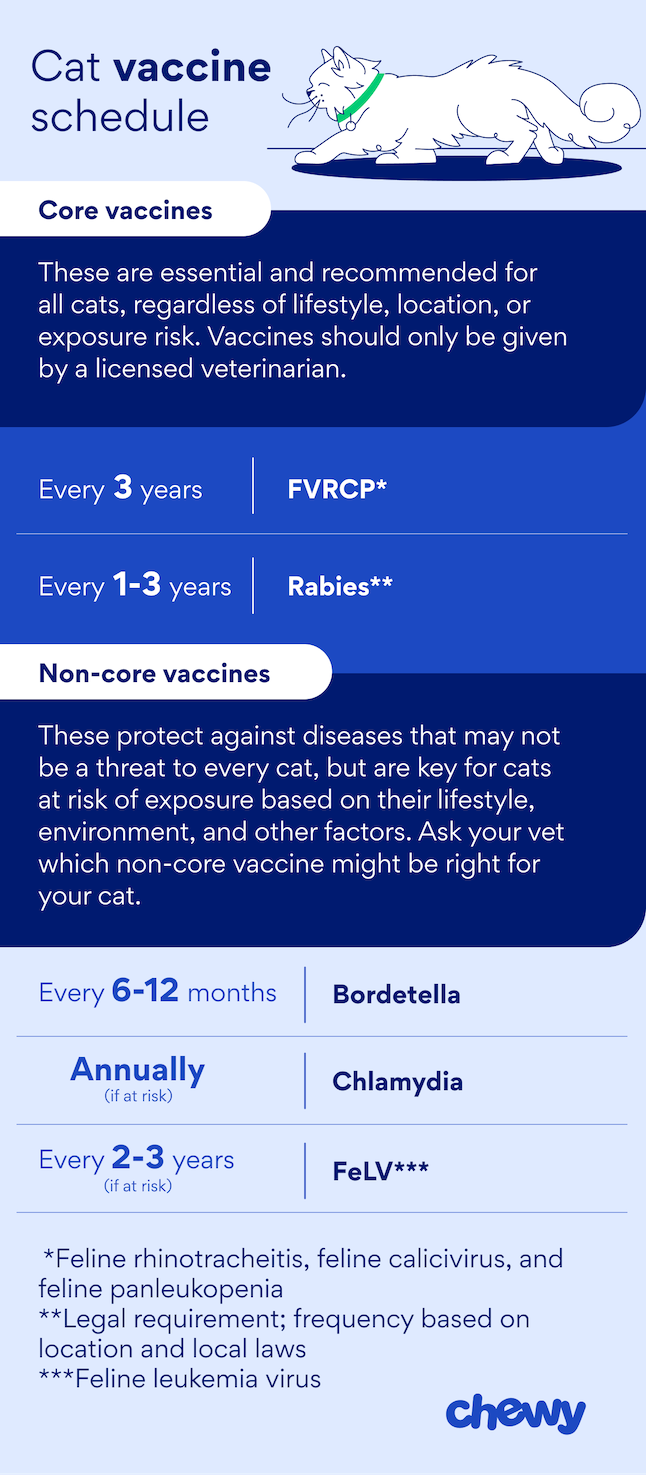
Photo by Chewy
Specifics may vary. Older kittens and cats who are behind on vaccines or have an unknown history can usually catch up with two visits spaced three to four weeks apart.
Where Are Cats Vaccinated?
Cats typically receive vaccines in specific areas of the body to reduce the risk of complications and make any potential reactions easier to treat.
- Right front leg: Often used for core vaccines like FVRCP
- Right rear leg: Common site for rabies vaccines
- Left rear leg: May be used for FeLV (feline leukemia) vaccines
Veterinarians use these locations so that, in the rare event of a vaccine-related reaction at the injection site, it can be identified and managed more easily.
What Are Common Side Effects of Vaccines in Cats?
Most cats tolerate vaccines well, but mild side effects can occur as the immune system responds.
- Mild soreness or swelling at the injection site
- Low-grade fever
- Decreased appetite
- Lethargy or reduced activity
These signs are usually mild and resolve within 24–48 hours.
Less commonly, more serious reactions can occur:
Contact your veterinarian right away if you notice any of these symptoms.
To help your cat recover, veterinarians may recommend:
- Offering a favorite treat or small meal to encourage eating
Recommended Product

- Keeping your cat comfortable and allowing extra rest
Recommended Product

How Much Does It Cost To Vaccinate a Cat?
The cost of cat vaccines typically ranges from $20–$60 per vaccine, but the total cost can vary depending on your cat’s age, your location, and which vaccines are needed.
Costs may also be higher at full-service veterinary clinics, where exams and additional care are included, compared to low-cost clinics or vaccine events.
To help reduce costs:
- Wellness plans may bundle exams and vaccines into a monthly fee.
- Low-cost clinics or vaccine clinics often offer discounted services.
- Some animal shelters or local organizations provide affordable vaccination programs.
Talk to your veterinarian about the best options for your cat. They can help you balance cost with appropriate care.
FAQs About Cat Vaccinations
When do cats get their first shots?
Most cats get their first shots as kittens at 6–8 weeks old. This is usually the FVRCP vaccine, which protects against common respiratory diseases. Some kittens may also receive their first FeLV vaccine at 8 weeks old, depending on their risk factors.
Do indoor cats need vaccines?
Yes, all cats need vaccines—even indoor cats who don’t spend time outside or interact with other cats. They can still be exposed to viruses carried into the home on shoes and clothing, or through insects and other pests. There’s also always a risk an indoor cat could escape outside, so routine vaccination helps keep them protected.
What happens if a cat misses a vaccine?
If a cat misses a vaccine, they may be at increased risk of serious disease. If they’re only slightly overdue, they may just need a booster. However, if significant time has passed, they may need to restart the vaccine series. This can apply to vaccines such as FVRCP, FeLV, and Chlamydophila.