Olive Leaf Extract for Cats: What You Need to Know


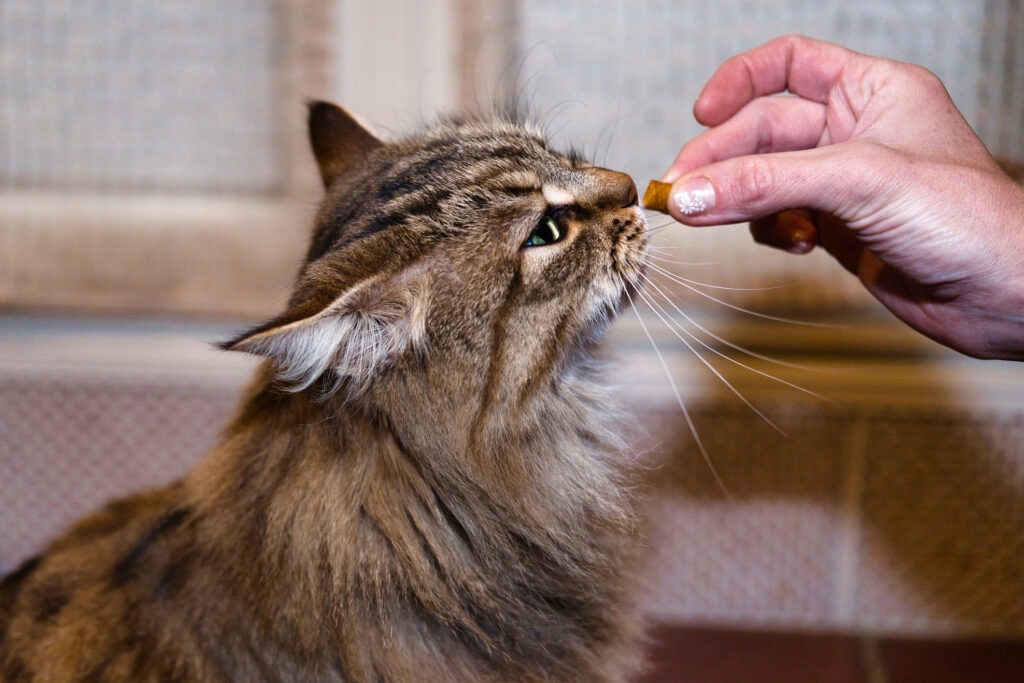
Photo by Beyond the Road/iStock/Getty Images
Olive leaf extract is a plant-based supplement made from olive tree leaves. The extract contains a compound called oleuropein, which has been shown in human and lab studies to modulate inflammation, act as an antioxidant, and help support healthy blood sugar levels and blood pressure.
In cats, however, there is very little direct research about its benefits, so before you give your cat olive leaf extract, it’s a good idea to check with your veterinarian.
Key Takeaways
- Olive leaf extract contains compounds such as oleuropein and hydroxytyrosol, which have antioxidant and anti-inflammatory properties.
- Research on olive leaf extract has mainly focused on humans and rodents, and evidence of reliable health benefits in cats is lacking.
- In humans, it’s been shown to help modulate inflammation and support healthy blood sugar levels and blood pressure.
- Olive oil can interact with multiple medications, so it’s always a good idea to check with your vet before giving your cat olive leaf extract.
How Does Olive Leaf Extract Work in Cats?
Olive leaf extract contains plant compounds call polyphenols, particularly oleuropein and hydroxytyrosol. These have been studied for anti-inflammatory and antioxidant activity, as well as for other biological effects, including the ability to reduce or modulate blood sugar levels in diabetes and support healthy blood pressure.
Additionally, olive leaf extract can interact with harmful intestinal bacteria, and one study showed that it improved heart health in rodents.
The evidence for benefits of olive leaf extract is based on human trials, rodent research, and lab studies. Unfortunately, cat-specific research is lacking, so there isn’t direct evidence that it can benefit cats.
Potential Side Effects of Olive Leaf Extract in Cats
Olive leaf has wide-ranging and sometimes powerful biological actions. Because of this, it’s best to use olive leaf extract in cats under the supervision of a veterinarian and only for a specific purpose. Don’t give your cat an olive leaf extract formulated for people, which may provide too large a dose for a feline.
The side effect profile of olive leaf extract in cats hasn’t been well studied. However, as with any other supplement, if your cat is taking olive leaf extract, watch for any changes in their behavior or health. If your cat is already on medications, your veterinarian may also recommend bloodwork before and shortly after starting the supplement.
If you see any of the following symptoms, stop giving your cat the supplement:
How to Give Your Cat Olive Leaf Extract
If your vet has a specific reason to consider olive leaf extract, use only the exact product they recommend and follow their directions closely. Don’t guess at amounts, split human capsules, or mix and match brands, because nutraceutical dosing and potency may not be standardized.
What to Do If Your Cat Takes Too Much Olive Leaf Extract
If you think your cat swallowed too much olive leaf extract, call your veterinarian, an emergency hospital, or the Pet Poison Helpline (855-764-7661) right away. Keep the package nearby so you can share the ingredient list and concentration. Since supplement strength can vary, it’s safest to treat any possible overdose as a time-sensitive urgent situation.
FAQs About Olive Leaf Extract for Cats
Is olive leaf extract the same thing as olives or olive oil?
No. Olive leaf extract comes from the leaves of the olive tree, while olives are fruit and olive oil is made from that fruit, so they are different ingredients.
Is there proof that olive leaf extract helps cats?
There is no solid proof that it helps cats. Cat-specific research is lacking, so it’s best to use it cautiously and only with veterinary guidance.
Could olive leaf extract interact with my cat’s medicine?
Yes. Research on interactions is lacking, which is a good reason to check with your veterinarian before giving any herbal supplement.
Why do people still ask about it if the evidence is limited?
Olive leaf compounds are studied in lab, human, and rodent research, and the ingredients sound promising. However, promising research is not the same as a proven feline benefit.
Attributions
This article was created with assistance from AI tools. The content has been reviewed for accuracy and edited by a human.
References
- Menezes RCR, Peres KK, Costa-Valle MT, et al. Oral administration of oleuropein and olive leaf extract has cardioprotective effects in rodents: A systematic review. Rev Port Cardiol. 2022;41(2):167-175. doi:10.1016/j.repc.2021.05.011. https://pubmed.ncbi.nlm.nih.gov/36062705/
- Nutraceuticals. Accessed April 14, 2026. https://vetmed.tamu.edu/news/pet-talk/nutraceuticals/
- Feline Nutrition. Accessed April 14, 2026. https://vetmed.tamu.edu/news/pet-talk/feline-nutrition/