Brewer’s Yeast for Cats: What You Need to Know


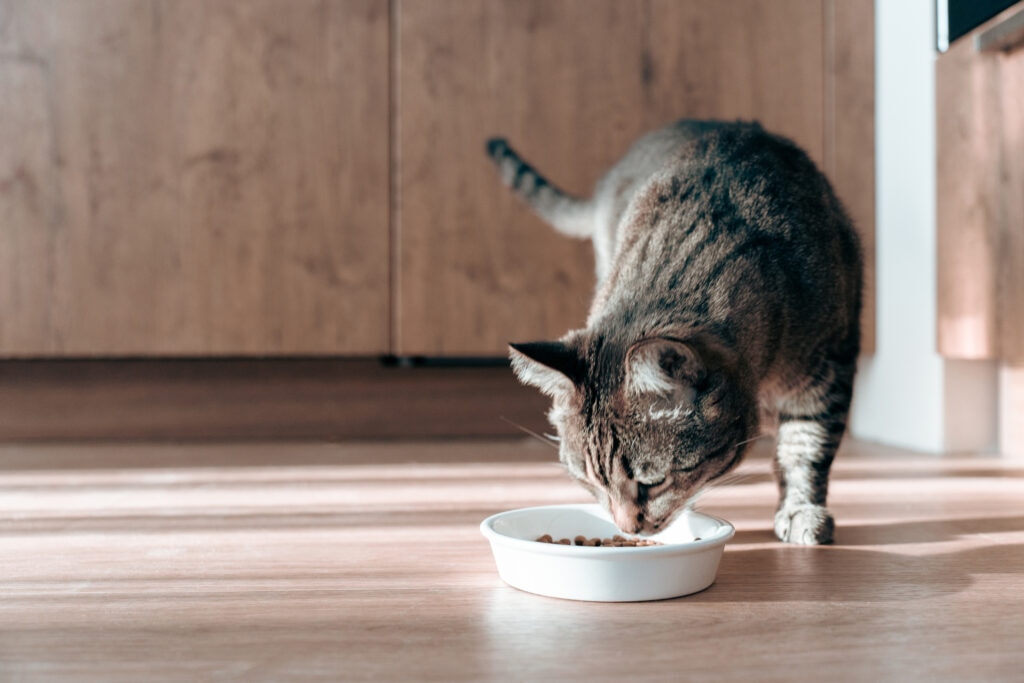
Photo by Domestic tabby cat approaches a bowl of food, bright sunlight falls on the floor and on the cat. High quality photo
Brewer’s yeast is a dietary supplement derived from the yeast used to brew beer. Actually a one-celled fungus called Saccharomyces cerevisiae, brewer’s yeast has a rich flavor that is sometimes used to enhance the flavor of cat food to make it more palatable.
Although it hasn’t been studied closely in cats, brewer’s yeast is also marketed as a health-promoting supplement that supports a healthy coat and skin and is packed with a range of B vitamins.
Here’s what you need to know about brewer’s yeast in cats.
Key Takeaways
- Brewer's yeast is created as a byproduct of the beer brewing industry.
- It is sometimes added to cat food to increase palatability and also marketed as a dietary supplement to support a healthy coat and skin.
- There have not been studies in cats specifically showing long-term safety data or proof of broad health benefits.
- If your cat is on a prescription diet or has ongoing health issues, check with your veterinarian before adding brewer’s yeast to their diet.
What Is Brewer’s Yeast?
Brewer’s yeast is a dried, inactive yeast ingredient that may be included in some cat foods or sold as a supplement. When added to cat food, it is typically used to increase the flavor and nutrient content.
Brewer’s yeast is also available as a stand-alone supplement and combined with other ingredients in a variety of supplement products.
Can Cats Have Brewer’s Yeast?
Brewer’s yeast is generally well tolerated in cats in small amounts if it fits their overall diet plan and your veterinarian agrees.
However, most cats don’t need it as long as they eat a complete and balanced cat food. If your cat is on a prescription diet, takes medications, or has a medical condition requiring a specific nutrition plan, ask your veterinarian before making any changes or adding a supplement.
How Brewer’s Yeast Is Used in Cat Food
Brewer’s yeast is mainly used to make cat food more palatable. In one study, cats showed a stronger preference for food containing dried yeast. The same study found no significant differences in stool quality or nutrient digestibility in cats fed the diet with yeast.
In most studies, brewer’s yeast was included in the diet rather than given as a separate pill or powder. Since that was the case, any effects observed may be due to another ingredient in the diet rather than the yeast alone.
Benefits of Brewer’s Yeast in Cats
Brewer’s yeast may make some foods more appealing to cats, and it may fit into a well-formulated diet without causing obvious problems in healthy adult cats.
In terms of health benefits, brewer’s yeast is packed with healthy B vitamins, protein, amino acids, and minerals including selenium, potassium, chromium, zinc, iron, and magnesium.
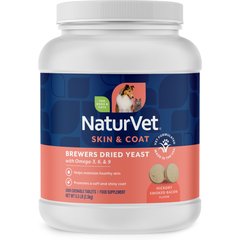
Recommended Product
Potential Downsides
Long-term safety data for using brewer’s yeast in cats is lacking. The studies that have been conducted were short-term and in a small population of cats, so they don’t tell us much about prolonged use.
If your cat vomits, has diarrhea, eats less, or seems off after starting a new food or supplement, stop giving it and call your veterinarian.
How to Give Your Cat Brewer’s Yeast
If your veterinarian agrees that brewer’s yeast is a good idea for your cat, choose a cat food that includes it or purchase a vet-approved powder supplement. Treats and supplements should always be fed as a small part of a complete and balanced diet, so use it as an add-on to your cat’s regular food and not as a meal replacement.
Keep a close eye on your cat any time you start a new supplement or food. Pay close attention to how your cat eats, how their stool looks, whether their weight stays steady, and if they are experiencing any potential side effects.
If you notice any concerning changes, stop giving the supplement and check in with your veterinarian.
What to Do If Your Cat Eats Too Much Brewer’s Yeast
If your cat eats more brewer’s yeast than intended, call your veterinarian or an emergency hospital for advice, and have the package nearby so you can relay important details about the ingredients and the amount your cat ate. If your cat develops vomiting, diarrhea, or another concerning change, get help promptly.
FAQs about Brewer’s Yeast in Cats
Does brewer’s yeast improve skin or coat condition?
There is no evidence showing that brewer’s yeast improves skin or coat condition in cats. Studies performed in cats were short feeding studies, and did not address skin or coat issues.
Is brewer’s yeast a probiotic?
No. Brewer’s yeast is an inactive yeast ingredient, not a live microorganism. One study in cats looked at fecal microbiome diversity and did not find an overall change over 14 days.
Can I give brewer’s yeast every day?
Maybe, but only if your veterinarian thinks it’s a good idea. Because treats and supplements should make up only a small part of your cat’s diet, brewer’s yeast should not replace meals.
What does the evidence show?
Mostly studies involving brewer’s yeast in cats have been short feeding studies in healthy adult cats. They suggest possible improved palatability. Other possible benefits would be due to the ingredients contained within brewer’s yeast.
Attributions
This article was created with assistance from AI tools. The content has been reviewed for accuracy and edited by a human.
References
- Davenport GM, Block SS, Adolphe JL. Effects of extruded pet foods containing dried yeast (Saccharomyces cerevisiae) on palatability, nutrient digestibility, and fecal quality in dogs and cats. Transl Anim Sci. 2023;7(1):txad107. doi:10.1093/tas/txad107. https://pubmed.ncbi.nlm.nih.gov/37745285/
- Kilburn-Kappeler LR, Paulk CB, Aldrich CG. Diet production and utilization of corn fermented protein compared to traditional yeast in healthy adult cats. J Anim Sci. 2023;101:skad272. doi:10.1093/jas/skad272. https://pubmed.ncbi.nlm.nih.gov/37587023/
- Kilburn-Kappeler LR, Doerksen T, Lu A, et al. Evaluation of corn fermented protein on the fecal microbiome of cats. J Anim Sci. 2024;102:skae268. doi:10.1093/jas/skae268. https://pubmed.ncbi.nlm.nih.gov/39276154/
- World Small Animal Veterinary Association. Feeding Treats to Your Cat. Accessed April 14, 2026. https://wsava.org/wp-content/uploads/2024/06/Feeding-treats-to-your-cat-v2.pdf
- World Small Animal Veterinary Association. Global Nutrition Guidelines. Accessed April 14, 2026. https://wsava.org/global-guidelines/global-nutrition-guidelines/
- Texas A&M University College of Veterinary Medicine & Biomedical Sciences. Recognizing Pet Emergency Signs. Accessed April 14, 2026. https://vetmed.tamu.edu/news/pet-talk/recognizing-pet-emergency-signs/
- Texas A&M University College of Veterinary Medicine & Biomedical Sciences. Preventing Pet Intoxication. Accessed April 14, 2026. https://vetmed.tamu.edu/news/pet-talk/preventing-pet-intoxication/