
Beauceron
Updated April 9, 2026
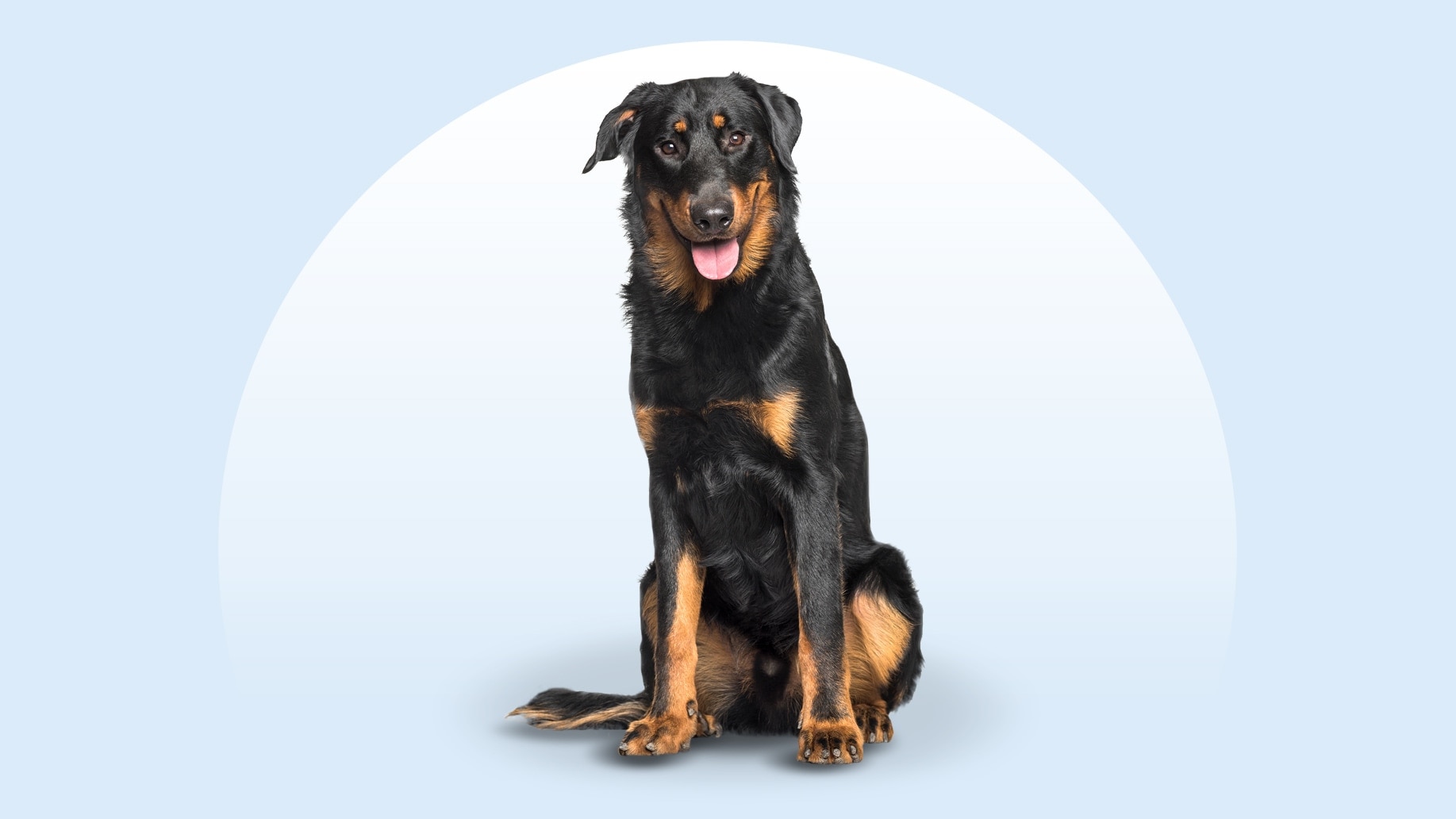
Beauceron
Updated April 9, 2026
Loyal and energetic, a Beauceron lives for the thrill. These pups adore adventures, and they’ll thrive with a pet parent who likes hiking, camping, and being on the go.
Adventurous, Friendly, Smart
70–110 pounds
24–27.5 inches
10–12 years
Black and Rust, Black and Tan, Gray Black and Tan, Harlequin
If you’re worried that huge, hulking dog coming toward you is going to topple you and walk on by, never fear: This friendly, furry creature is a Beauceron, and they’re here to give you a kind, warm welcome.
That doesn’t mean they’re not ready for adventure, though; they are, and they’d be delighted if you’d join them—or better yet, take them somewhere they’ve never been before. Whether it’s a hiking trail, the beach, or a campsite, this clever pup will thrive in a new landscape, as long as you’re there to be their bestie.
Recommended Products


Beauceron Characteristics
Beauceron Appearance
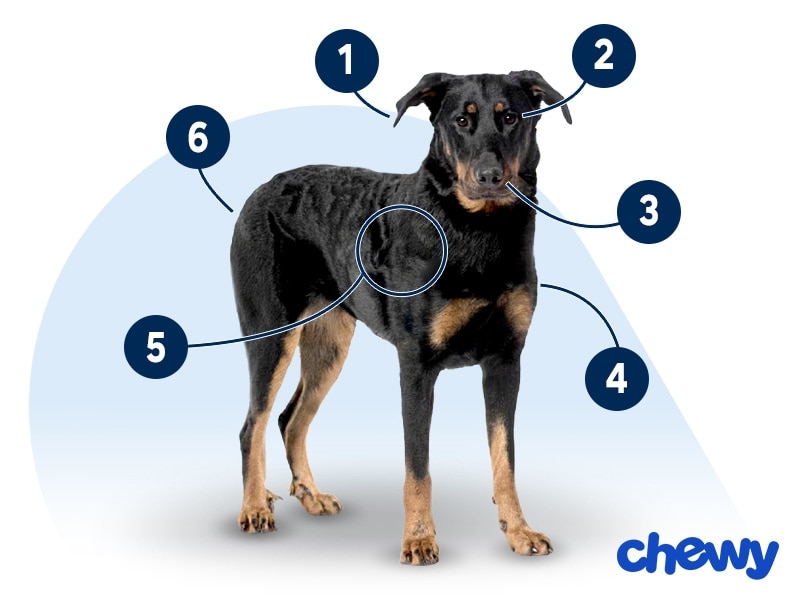
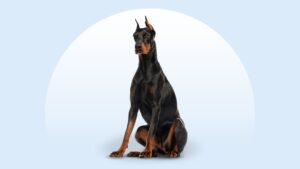
The Beauceron’s dark, expressive eyes are alert, hinting at their quick mind. They have either a dark coat that’s highlighted with tan or red accents, or a black-and-tan coat with gray accents. They’re sometimes mistaken for a Doberman Pinscher, but Beaucerons tend to be stockier and have slightly longer fur.
- Ears
While it was once common to crop ears, nowadays it’s better to leave them as nature intended. Many groups, including the American Veterinary Medical Association, oppose ear cropping, and many countries as well as U.S. states have banned the practice.
- Eyes
The Beauceron dog’s oval eyes are dark brown with an expressive quality.
- Nose
The Beauceron nose is always black.
- Coat Length
The Beauceron breed is double-coated with a downy undercoat and a short outer coat that is medium length. The coat has a slight fringe on the thighs and tail, and it tends to be longer around the neck.
- Coat Color
Beauceron colors are either fully black with tan or rust-colored markings on different parts of the body (including the face, chest, and legs), or harlequin or merle (uneven speckled flecks) in shades of black and tan, with patches of blue-gray.
- Tail
Their tail is slightly fringed and hangs down, forming a soft J. When active or alert, the Beauceron may carry their tail higher.
Beauceron Temperament
This high-energy, intelligent dog loves to get out and see the world. They know there’s more than just sitting in your living room (or backyard, for that matter), and they’re excited to see what it’s all about.
Friendly and gentle, giant Beaucerons tend to get along well in families, and their exceptional loyalty will make them well-loved by all.
They’ll probably be equally accepting of guests—and horribly embarrassed if their giant size gets in the way. A little bit of training can help them learn when to sit or stay down so they are on their very best behavior in front of new people.
This pup is highly intelligent, which means they’re also easy to train. But those smarts can also lead to anxiety if they don’t have enough mental stimulation.
So, be sure to keep in mind their physical and mental exercise—and invest in some puzzle toys and interactive games for when you’re all stuck inside on a rainy day.
Related Breeds


How to Care for a Beauceron
The Beauceron dog breed doesn’t need a lot of grooming, but they do need a lot of exercise.
Grooming
Training
Diet
Exercise
Environment
Beauceron Health
Beauceron life expectancy is 10–12 years. Here are some health issues to be aware of.
- Allergies: Beaucerons may be prone to environmental or food allergies (though food allergies are exceptionally rare). If your pup is scratching or licking their skin, ears or paws excessively, talk to your vet about possible allergies. For severe allergies, your dog might need to see a veterinary dermatologist for allergy testing (intradermal skin testing).
- Bloat and gastric dilatation-volvulus (GDV): Beaucerons are prone to a life-threatening condition called bloat. It occurs when the stomach gets distended with air and/or food. Sometimes the stomach twists on itself, cutting off blood supply to the organs. This is GDV, and symptoms include abdominal distension, restlessness, and dry heaving. If you notice these signs, go to the vet immediately.
- Copper-associated hepatitis: In this rare condition, copper accumulates in the liver, leading to inflammation and damage. Lack of appetite, fatigue, and gastrointestinal or neurological issues may be symptoms. Treatment usually includes medication.
- Dilated cardiomyopathy: Dilated cardiomyopathy is a genetic condition where the heart enlarges, possibly resulting in heart failure. Diagnosis is based on an echocardiogram, and treatment is often daily medication. (Avoid grain-free diets, or those that contain peas or pea protein in the first five ingredients, as these have been associated with dilated cardiomyopathy in large- and giant-breed dogs.)
- Hip dysplasia: Hip dysplasia is when the ball and socket of the hip and thigh bones don’t properly fit. It’s an inherited condition that can be made worse if a pup is overweight. It eventually leads to arthritis and pain. More severe cases may require surgery, but the condition is often treated with medications, joint supplements, special diets, weight management, and/or physical therapy.
- Progressive retinal atrophy (PRA): PRA leads to blindness in dogs, and while there is no cure, pups who lose their eyesight tend to adapt well and can still live full, happy lives.
Beauceron History
The Beauceron’s origin dates back to France in the Middle Ages, and they were first referenced in writing in a Renaissance manuscript from 1578.
Also known as the Berger de Beauce or the Bas Rouge, the Beauceron is one of two French shepherd dog or sheepdogs. The other breed, which has longer hair, is the Briard.
These pups have a long history of helping people. They served in the trenches in World War I; they were messenger dogs for the French army; and they’ve been herders and guardian dogs for sheep and cattle. They’ve served as police dogs, too.
They were recognized by the American Kennel Club in 2007.
Beauceron breeders tend to charge thousands of dollars. If you choose this route, pick a responsible breeder.
Beauceron adoption is another path to consider. Seek out a large- or giant-breed dog rescue, like Big Dogs Huge Paws; keep an eye out at your local shelter; or search Chewy’s database of adoptable dogs in your area.