Cairn Terrier
Updated January 22, 2026
Cairn Terrier
Updated January 22, 2026
Cairn Terriers may be small, but they’re packed with energy and a feisty personality. Easily mistaken for lapdogs, these pups prefer adventure to being held (but they’ll affectionately snuggle at the end of a long day). If you’re looking for a spirited, bouncy friend, this might be your perfect pup.
Cheery, Curious, Sporty
13–14 pounds
9.5–10 inches
13–15 years
Black, Cream, Gray, Red, Silver, Wheaten, Brindle, Gray Brindle, Red Brindle, Cream Brindle, Black Brindle
Meet the Cairn Terrier—an active, feisty little dog who doesn’t really care who you are or what you look like. But if you’ve got a pulse, they’d like to be your friend.
That’s not to say they’re not discriminating: They’ll gravitate toward the people they’re happiest with (and that’ll probably be you). Just think of the dog Toto from “The Wizard of Oz,” prancing down the Yellow Brick Road with Dorothy, and you can imagine the bouncy, scrappy Cairn Terrier personality.
Cairn Terrier Characteristics
Cairn Terrier Appearance
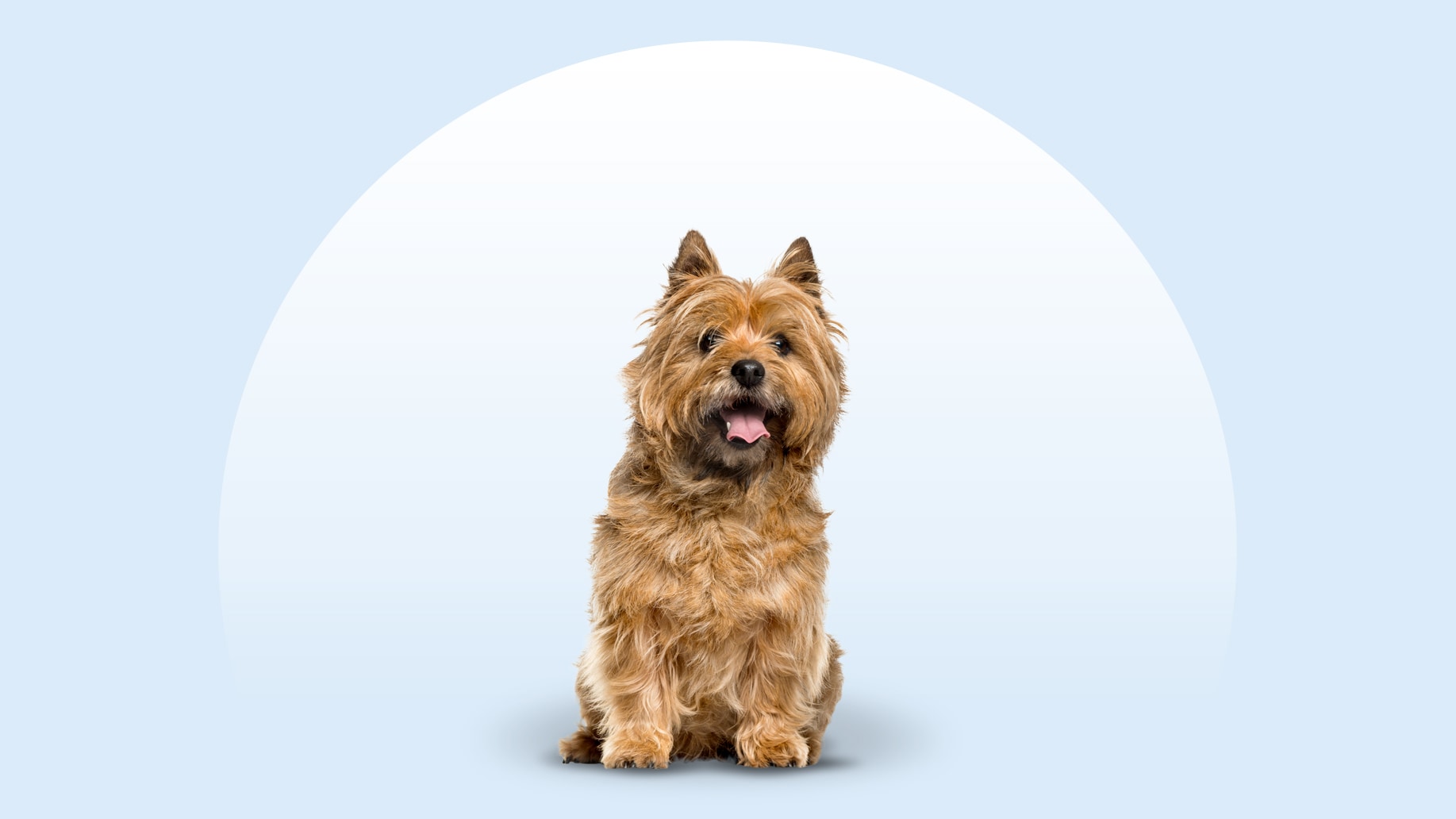
Cairn Terriers have a scruffy, wiry coat that pokes out in all directions, with a soft and furry undercoat below. With lively eyes and a black button nose, they’re always on the lookout for new adventures.

- Ears
Cairn Terriers have small, upright pointed ears set wide apart.
- Eyes
They have alert, medium-sized hazel or dark hazel eyes, bordered by shaggy eyebrows.
- Nose
They have a black button nose.
- Coat Length
The Cairn Terrier breed has a medium-length double coat, with a hard top coat and short, soft undercoat.
- Coat Color
Cairn Terrier colors include black, cream, gray, red, silver, wheaten (variegated from light to dark), and brindle (subtle tiger stripes).
- Tail
They have a relatively short, straight tail.
Cairn Terrier Temperament
A whole lot of personality is packed into the compact Cairn Terrier. These friendly dogs love making new friends wherever they go, and they won’t mind if their new pals have two legs or four. Any trip to the dog park will probably end with another doggy playdate planned.
Their scrappy personality allows Cairns to get a little rough-and-tumble (they’re not losing sleep over being a little bit silly), and their goal is to have fun.
When outside, you’ll want to keep an eye on them—if they see a squirrel or bunny, they’re likely to take off in a chase. So make sure they’re always on a leash or safely within a fenced-in area.
Energetic and curious, Cairn Terriers are always up for a game of fetch, a tussle with their favorite tug toy, or just a walk around the neighborhood, followed by snuggles at home.
Sure, they can be a little chatty—but it usually stems from boredom. So, if your Cairn is being a little louder than usual, it might be that they need more of your attention … and more exercise. So, grab a ball and theirleash, and get out in the world with your pal.
Related Breeds





How to Care for a Cairn Terrier
Cairn Terriers need regular grooming, ample exercise, and consistent training. Fortunately, these bright dogs are a quick study, so learning new things should be a cinch.
Grooming
Training
Diet
Exercise
Environment
Cairn Terrier Health
The average Cairn Terrier lifespan is about 13–15 years. Here are some health issues to be aware of.
- Cushing’s disease: Cushing’s disease is an endocrine disease where the body produces too much cortisol; it’s common in middle-aged and senior dogs. Symptoms are a pot-bellied appearance, drinking lots of water, and skin issues, among others. A blood test can help your vet diagnose it. Treatment is usually daily medication.
- Diabetes: Cairn Terriers are more prone to developing diabetes mellitus, when the pancreas fails to produce enough insulin, resulting in elevated blood-sugar levels. It’s potentially life-threatening, so note any changes in thirst, peeing, appetite, or weight. It can be treated with daily medication, injections, and a strict low-carbohydrate, high-protein diet.
- Globoid cell leukodystrophy (GCL): Also known as Krabbe disease, this genetic disorder is a fatal disease in dogs that affects the nervous system. Symptoms include lack of appetite, behavioral changes, the inability to control when they pee, and more; see your vet immediately if you suspect something is off.
- Hypothyroidism: Common in Cairn Terriers, hypothyroidism includes symptoms like lethargy, hair loss, skin and ear infections, and weight gain. A blood test can diagnose it, and treatment is a daily oral medication.
- Kidney dysplasia: Kidney dysplasia is the abnormal development of one or both kidneys. It’s a hereditary condition, and depending on the severity, treatment may include medication, fluid therapy, kidney support supplements, a special diet, and more.
- Liver shunts: This is an abnormal series of blood vessels that circumnavigate a dog’s liver and can cause stunted growth, poor muscle development, disorientation, and seizures. Your vet can make the diagnosis after bloodwork and an abdominal ultrasound are performed, and you can manage the condition with diet changes, antibiotics, other medications, and surgical correction.
- Luxating patella: Cairn Terriers can develop a luxating patella, where the kneecap slips out of place. A bunny hop, skip, or limp could be a symptom. It may be treated with supplements and meds, if mild, though surgery may be necessary.
Cairn Terrier History
The Cairn Terrier originated in Scotland in the 17th century. They lived predominantly in the Western Highlands, particularly on the Isle of Skye, where they patrolled game preserves and farms.
For many years, Cairn Terriers were lumped together with other terriers and collectively called Scotch Terriers. It wasn’t until the late 1800s that they were recognized as their own distinct breed.
In those days, large mounds of rocks, or “cairns,” were used to mark a boundary or grave. Rodents and other vermin would take up residence underneath the cairns, and it was the Cairn Terrier’s job to dig and evict the critters.
This was usually a one-dog job, but sometimes multiple dogs would work together and frighten away larger creatures, such as foxes and otters.
Nowadays, this pup’s tenacity is better suited to catching balls and figuring out puzzle toys with their family.
The American Kennel Club recognized the Cairn Terrier in 1913. In 1939, the whole world was introduced to the breed when a Cairn Terrier played Toto in “The Wizard of Oz.”
Cairn Terrier puppies tend to cost thousands of dollars. If you choose this route, pick a responsible breeder.
You can also consider Cairn Terrier adoption, as there are many of these adorable pups patiently waiting for their forever families. Look for a Cairn Terrier rescue, keep an eye out at your local shelter, or search Chewy’s database of adoptable dogs in your area.