Schipperke
Updated July 27, 2026
Schipperke
Updated July 27, 2026
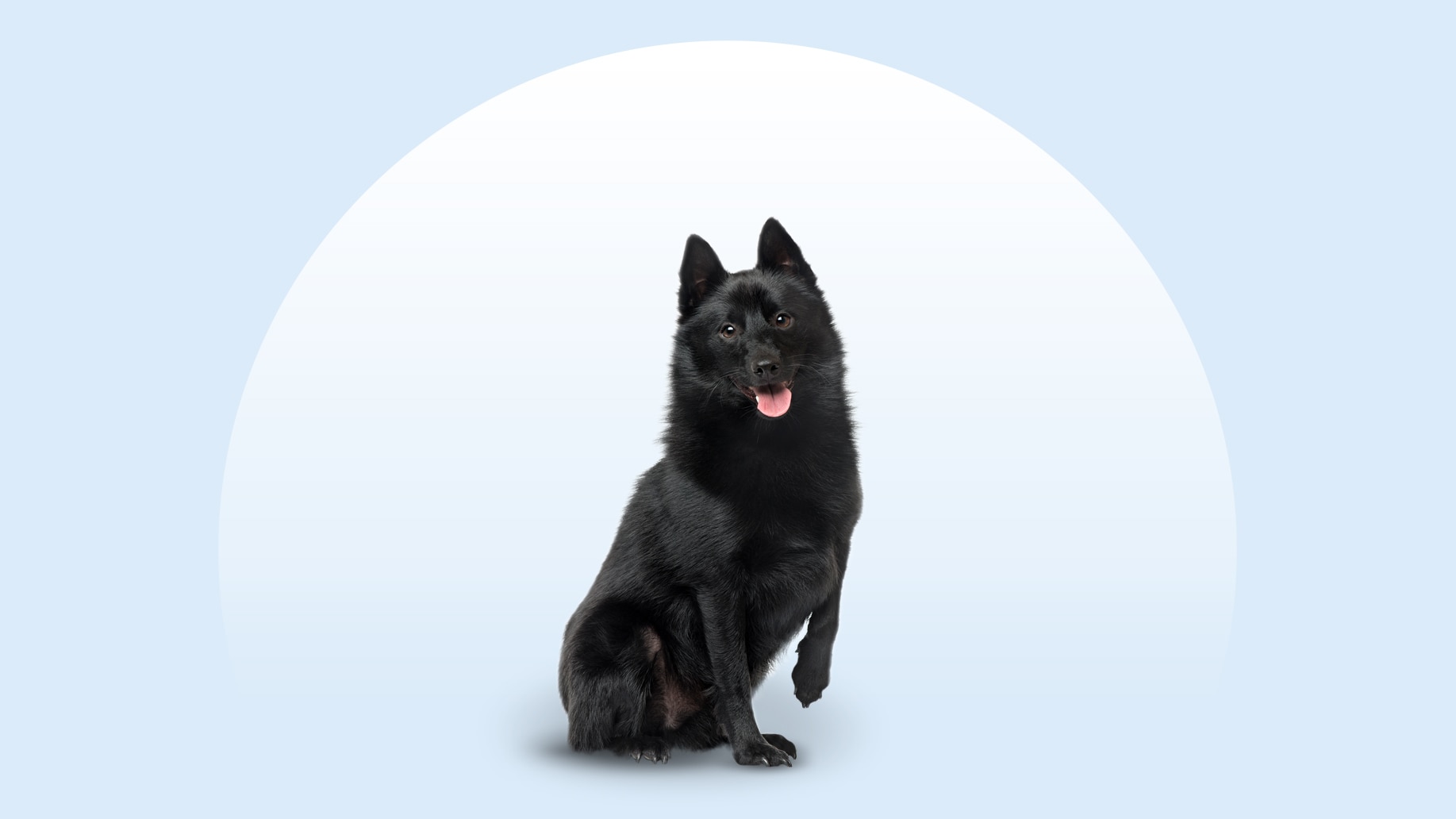
Lively and curious, the Schipperke looks like a little fluffy black cloud that you can’t wait to snuggle. But they’re also brave, confident, and bold, so give them some independence and they’ll come running to you for hugs at the end of the day.
Brave, Loyal, Spirited
10–16 pounds
10–13 inches
12–16 years
Black
Schipperke sounds like a German sausage or something you’d order on vacation in Berlin, right up there with a schnitzel or spätzle. However, this tiny, boisterous pup hails from Belgium—and looks more like a black fox than a wiener dog.
Dynamic and boisterous Schipperkes are fluffy, confident canines who have a clever mind. Their curious spirit lends itself to adventure, just like they had on Belgian boats back in the 17th century. Did we mention they’re a loyal friend, too?
Schipperke Characteristics
Schipperke Appearance
The Schipperke (pronounced “skipper-kee”) is a small dog who believes they’re a giant—and they have the boisterous demeanor to match. With a sturdy frame and curious eyes, most Schipperkes are solid black with fluffy fur.
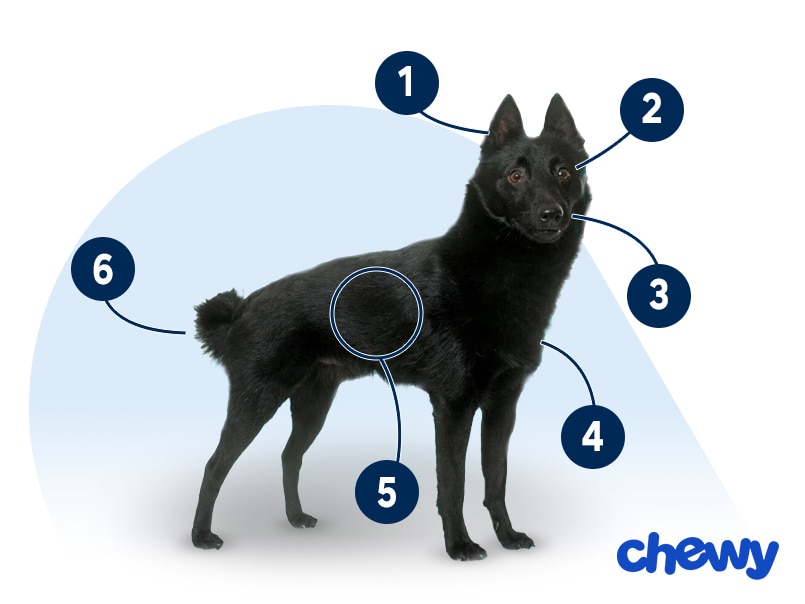
- Ears
Schipperkes have small, triangular ears that stand at attention.
- Eyes
The Schipperke’s small, oval eyes are dark brown, curious, and alert.
- Nose
Schipperke dogs have a small, black, and pointy nose.
- Coat Length
The Schipperke coat length varies across their body. Hair is shorter around the face and legs, and medium-length on the body. They are double-coated and have a thick undercoat beneath their fluffier outer coat.
- Coat Color
A solid black coat is standard, though other colors are possible.
- Tail
While it was once common to dock a Schipperke’s tail, nowadays many of these pups have their tails long and fluffy. Many groups, including the American Veterinary Medical Association, oppose tail docking, and many countries as well as U.S. states have banned the practice.
Schipperke Temperament
Want a best friend with oodles of personality who’ll keep you busy and entertained? Enter the feisty and fluffy Schipperke.
These dogs love being close to family members, and they’re usually welcoming enough to tolerate anyone in the family (even cats!).
Schipperkes are known to like the sound of their own voice, but an excessive barking habit can be curbed with positive reinforcement. It’s also important to socialize Schipperke puppies so they get to know—and trust—new people.
Because they’re quick on their feet, always keep this curious and agile breed on a leash while exploring the world. Lively and charming, they can also be a little bit independent-minded sometimes, so keep training sessions brief and fun so you don’t lose the attention of this quick-thinking, fast-moving dog.
Related Breeds






How to Care for a Schipperke
The Schipperke’s small stature makes them easy to bathe and brush. Daily exercise, a healthy diet, and obedience training will add up to a happy dog.
Grooming
Training
Diet
Exercise
Environment
Schipperke Health
The average Schipperke lifespan is 12–16 years. Here are some health issues to be aware of.
- Cataracts: Cataracts are a common eye problem, and they can be hereditary. The most common symptom is a cloudy eye. Surgery is the go-to treatment.
- Hypothyroidism: Common in this breed, hypothyroidism includes symptoms like lethargy, hair loss, skin and ear infections, and weight gain. A blood test can diagnose low thyroid hormone, and treatment is a daily oral medication.
- Legg-Calve-Perthes disease: This rare and likely genetic disease causes bone death in the head of the femur and significant changes to the hip joint. It usually develops in a pup’s first year, causing pain and limping. Almost all cases require surgery, but most Schipperkes make a full recovery.
- Luxating patella: Schipperkes can develop a luxating patella, where the kneecap slips out of place. A bunny hop, skip, or limp can be a symptom. It may be treated with joint supplements and medication if mild, though surgery may be necessary.
- Mucopolysaccharidosis IIIB: This genetic disease is unfortunately fatal, but it’s also rare. Symptoms include tremors, difficulty balancing, trouble walking, and other related issues. See your vet immediately if your dog has any of these issues.
- Progressive retinal atrophy (PRA): PRA leads to blindness in dogs, and while there is no cure, pups who lose their eyesight tend to adapt well and can still live full, happy lives.
Schipperke History
Originating from a now-extinct black sheepdog called a Leauvenaar, Schipperkes can trace their heritage back to the 1600s.
Hailing from Belgium, Schipperke is Flemish for “little captain.” These pups earned this name for their nautical presence, tracking down rodents and serving as guardian dogs on ships in Belgian dockyards. Shopkeepers also relied on Schipperkes to watch over theirmerchandise.
After the first Schipperke arrived in America in 1888, the American Kennel Club recognized the breed in 1904. The Schipperke Club of America was established in 1929.
Comedic actress Lucille Ball, who owned many of these feisty little dogs, helped to make them more popular.
Schipperke puppies can cost several thousand dollars. If you choose this route, pick a responsible breeder.
You can also look into Schipperke adoption, as there are many patiently waiting for their forever homes. Look for a Schipperke rescue like SRN; keep an eye out for the breed at your local animal shelter; or search Chewy’s database of adoptable dogs in your area.