Pembroke Welsh Corgi
Updated June 18, 2026
Pembroke Welsh Corgi
Updated June 18, 2026
Pembroke Welsh Corgis are adventurous social butterflies best for doting pet parents who are able to keep up with their bouncy energy and desire for attention. Happy-go-lucky Corgis are very smart, too, and do best with a good amount of training and socialization.
Cheery, Friendly, Sporty
Up to 30 pounds
10–12 inches
12–13 years
Black and Tan, Fawn, Red, Sable
Imagine being so popular that the internet named a whole movement after you—well, a body movement.
The sploot may make the Pembroke Welsh Corgi one of the most unserious dogs out there, but their popularity is no joke. These short-stack superstars are outgoing, happy dogs who’ve found fame across the ages, from Buckingham Palace to TikTok videos.
Why the obsession? With a seemingly always-beaming smile, these delightful pups are social butterflies who can charm just about anyone.
Pembroke Welsh Corgi Characteristics
Pembroke Welsh Corgi Appearance
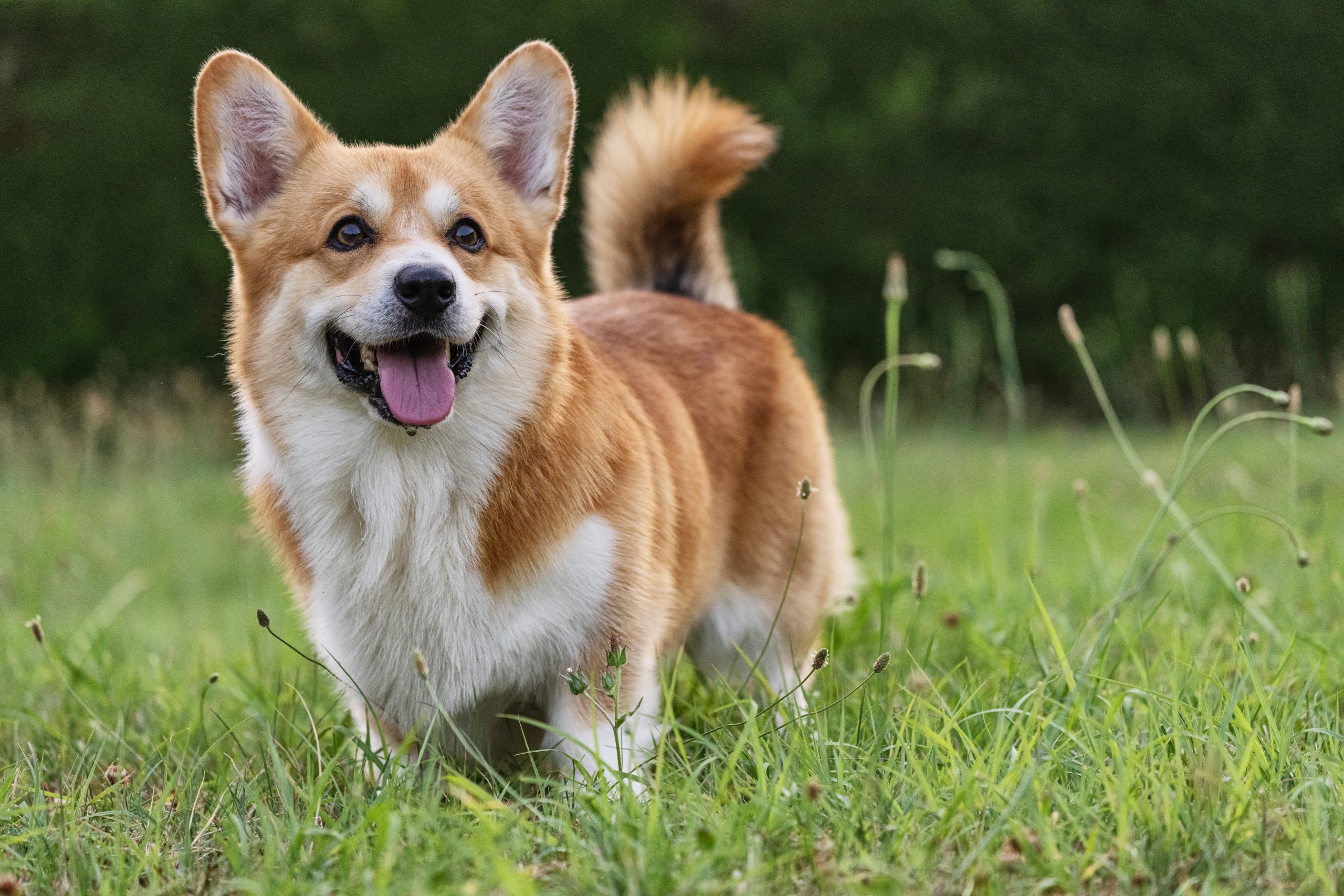
With their perky ears and large, expressive eyes, a Pembroke Welsh Corgi puppy could be mistaken for a plushie. As they get older, they grow into their adorably long and slinky body but retain their goofy smile. Short and stocky, Corgis are surprisingly agile and fast.
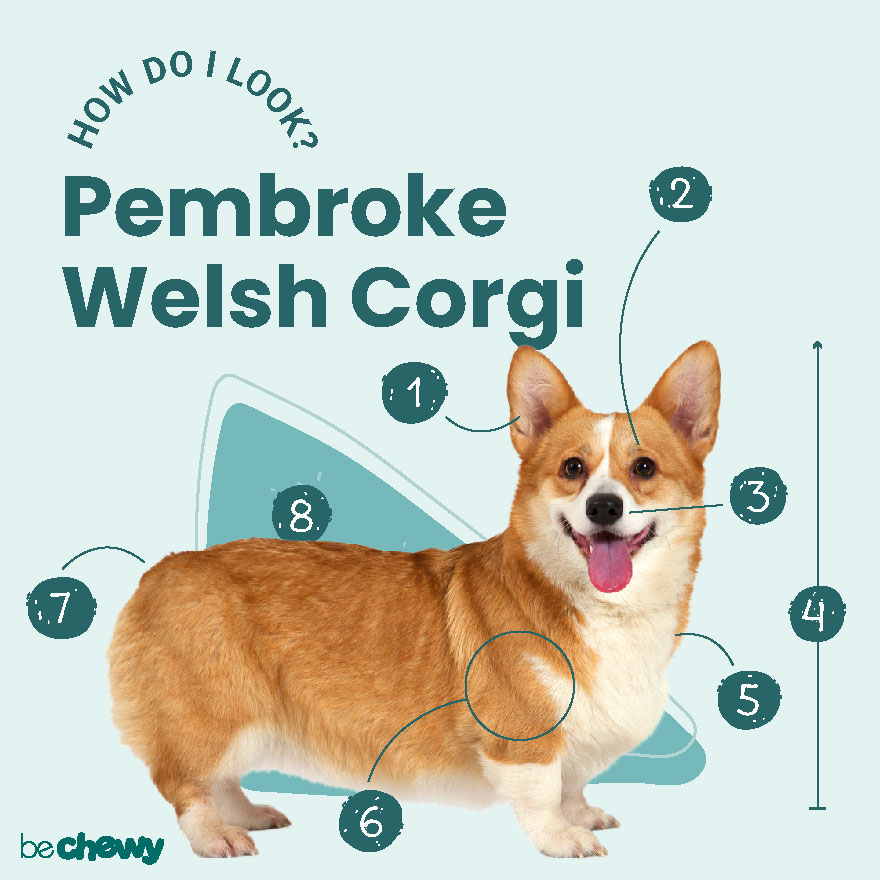
- Ears
Pembroke Welsh Corgi ears are alert, medium-sized, and tapered round.
- Eyes
Their brown eyes are oval-shaped.
- Nose
Pembroke Welsh Corgi dogs have black noses.
- Coat Length
Pembroke Welsh Corgis have double coats: a short, thick, and weather-resistant undercoat and coarser, longer topcoat. Their fur is medium-length and slightly thicker around the neck, chest, and shoulders.
- Coat Color
Pembroke Welsh Corgi colors are black and tan, fawn, red, or sable, all with white markings.
- Tail
While it was once uncontroversial to dock a Pembroke Welsh Corgi tail, nowadays many of these pups have their tails intact—just as nature intended. Many groups, including the American Veterinary Medical Association, oppose tail docking, and many countries as well as U.S. states have banned the practice.
Pembroke Welsh Corgi Temperament
Bold and adventurous, the Pembroke Welsh Corgi dog breed loves life. If you’re looking for a pup who makes the most of each day, this pup is it.
This happy-go-lucky dog wants to go out and explore the world, but they won’t explore too far without their favorite person (you!). You’ll have a full calendar with playdates, and you’ll need to accept that you’re going to be stopped on your neighborhood walks so everyone can say hello to your dog. Corgis are friendly dogs who will be more than happy to oblige, cheerily shaking their famous little bum.
These energetic pups love to play, too, and they’re as active as their sturdy stature will let them be. They might not run marathons, but they’re surprisingly agile for their short-stack frame.
Related Breeds








How to Care for a Pembroke Welsh Corgi
Keeping a Pembroke Welsh Corgi dog well-groomed is a relatively easy task. You’ll spend more time training these bright, energetic canines.
Grooming
Training
Diet
Exercise
Environment
Pembroke Welsh Corgi Health
The typical Pembroke Welsh Corgi life expectancy is 12–13 years. Here are some health issues to be aware of.
- Cataracts: Cataracts are a common eye problem, and they can be hereditary. The most common symptom is a cloudy eye. Treatment is surgery.
- Degenerative myelopathy: This is a neurological disease that affects the spinal cord; it causes problems with breathing, vocalizing, and eating, and it slowly weakens then paralyzes the back legs. Keeping your pup at a healthy weight and active as long as possible may help slow the progression. There is no treatment to reverse it, but physical therapy may help. If you notice anything unusual with your pup, like lameness or stumbling, visit your veterinarian.
- Elbow and hip dysplasia: Elbow and hip dysplasia are genetic conditions that develop during puppyhood when the joints don’t align well and become looser than normal. Treatment might involve weight loss, reduced activity, joint supplements, physical therapy, pain meds, or, in severe cases, surgery.
- Patent ductus arteriosus (PDA): PDA is a congenital heart defect in dogs. It’s when a blood vessel near the heart doesn’t completely close after birth, and it can lead to heart failure. A heart murmur is usually the first sign, and a veterinary cardiologist can confirm the condition with an echocardiogram. It can often be corrected with surgery.
- Von Willebrand disease: Corgis are susceptible to von Willebrand disease, a bleeding disorder where the blood doesn’t clot properly. Your veterinarian can test your dog for this. There’s no cure, so your vet may recommend a stress-free lifestyle that avoids places where your dog may get bruised or scratched.
Pembroke Welsh Corgi History
Pembroke Welsh Corgis date back to the medieval period, when the kings of Europe showed off their luxurious carpets, textiles, and tapestries to demonstrate their wealth.
At the time, these royals often urged Flemish weavers (considered the most skilled) to relocate to their kingdoms. So, in 1107, a bevy of weavers arrived with dogs who would herd their sheep. These pups are what we now know as Pembroke Welsh Corgis.
Best known as Queen Elizabeth II’s favorite breed, they’ve skyrocketed in popularity and are more popular than their equally adorable cousin, the Cardigan Welsh Corgi. (The two have been separate breeds since the 1800s.)
The American Kennel Club recognized the Pembroke Welsh Corgi in 1934, and the breed is No. 15 on its most popular list for 2024.
Pembroke Welsh Corgi puppies tend to cost thousands of dollars. If you choose this route, pick a responsible breeder.
You may also consider Pembroke Welsh Corgi adoption, as there are many waiting for a forever home. Look for a Pembroke Welsh Corgi rescue, such as Southeast Corgi Rescue; keep an eye out at your local animal shelter; or search Chewy’s database of adoptable dogs in your area.