Coton de Tulear
Updated July 15, 2026

Coton de Tulear
Updated July 15, 2026
Easygoing and lovable, Cotons de Tulear are cheery little companions for pet parents who are eager to always have a best friend by their side. They might also be a better fit for some people with allergies thanks to their “hypoallergenic” coat.
Bright, Charming, Sidekick
8–15 pounds
9–11 inches
15–19 years
White
Don’t like to be alone? Good news: The Coton de Tulear doesn’t either. So, if you’d like a little white cloud following you around the house, you’re in luck. If you’re OK with a constant companion who’s hilariously quirky and delightfully kind, this might be your perfect pup.
While they’re energetic and enjoy their playtime, Cotons de Tulear are also content to curl up and cuddle while you work. Just don’t leave this lap dog behind when it’s time for a coffee break—these charmers will ensure the drive-thru barista never forgets your name again.
Coton de Tulear Characteristics
Coton de Tulear Appearance
Cotons de Tulear may look like stuffed animals, but rest assured, they’re real dogs. When in motion, their long white coat sweeps the ground, and their jaunty tail leaves a wispy jet stream of hair in their wake.
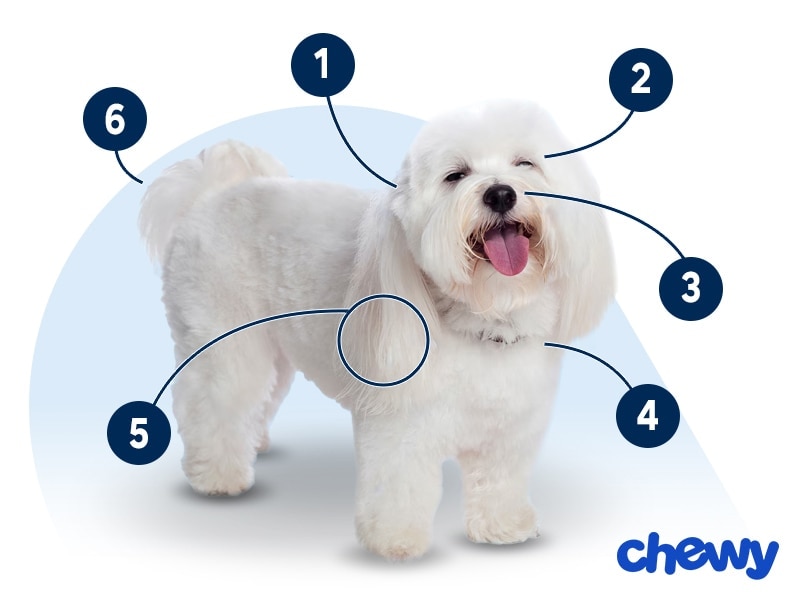
- Ears
Coton de Tulear ears are triangular and hang down from the top of the head on both sides. They’re covered in long hair.
- Eyes
Dark brown or black, their eyes resemble little espresso beans; they’re round and rimmed in black.
- Nose
The Coton’s cute little button nose is solid black.
- Coat Length
The Coton de Tulear breed is named after their soft, dense, fluffy coat, which looks and feels like spun cotton. (Coton de Tulear means “cotton of Tulear” in French.) The coat is about 4 inches long and may be straight or slightly wavy.
- Coat Color
Cotons are solid white, although they may have a few light gray or light tan hairs on the ears. Coton de Tulear puppies may be born with prominent colors, including brown, rust, yellow, or black, but these typically fade by the time they’re adults.
- Tail
When Cotons are relaxed, their tail hangs low and curves out at the tip. But when they’re on the move, it perks up jauntily.
Coton de Tulear Temperament
Easygoing and lovable, these little pups have a reputation for charming just about anyone.
Cotons live to be someone’s best friend, so they’ll do best with a pet parent looking for an everyday canine sidekick. They’d love to accompany you to brunch, to work, and even just to get the mail. There is no task too large or too small for a Coton de Tulear to tag along.
A little bit the joker, they have an adorable sense of comedic timing and may try to “talk” to you with their very cute vocalizations. It’s not quite a bark—they’re just really trying very hard to speak “human.”
That’s not to say they’ll never bark, but they’re also not super yappy. Cotons might just let you know your dinner guests have arrived (and that they’re ready for their starring role as the best part of the night—yes, even better than the grand meal you’veprepared).
As friendly dogs, Cotons enjoy all the company and attention, but at the end of the day, they’ll be happy to be curled up next to you. With a Coton by your side, you’ll never be lonely—and you’ll have a friend who’s always eager to bring on the cheer.
Related Breeds








How to Care for a Coton de Tulear
Cotons de Tulear have moderate exercise and training needs, but they need a bit more dedication to grooming.
Grooming
Training
Diet
Exercise
Environment
Coton de Tulear Health
The average Coton de Tulear life expectancy is 15–19 years. Here are some health issues to be aware of.
- Allergies: Cotons de Tulear can have allergies caused by an overactive immune system. Symptoms may include itchy skin, fur loss, scratching, obsessive licking, redness, or recurring skin and/or ear infections. See your vet to figure out what could be causing your dog’s allergic reactions.
- Degenerative myelopathy: Degenerative myelopathy is a neurological disease that affects the spinal cord; it causes problems with breathing, vocalizing, and eating, and it slowly weakens then paralyzes the back legs. Keeping your pup at a healthy weight and active as long as possible may help slow the progression. There is no treatment to reverse it, but physical therapy may help. If you notice anything unusual with your pup, like lameness or stumbling, visit your veterinarian.
- Dental disease: Small dog breeds like the Coton de Tulear are more at risk of dental disease. The best prevention is daily toothbrushing and a yearly professional cleaning by a vet.
- Intervertebral disc disease (IVDD): IVDD is a neurological condition caused by a bulging or slipped disc pushing on the spinal cord. It can be very painful, and your dog may be suddenly paralyzed or unable to use their back (or, less often, front) legs. Keeping your Coton at a healthy weight helps prevent IVDD, but you also need to make sure their bottom and back are always supported when you pick them up. They also need to avoid stairs as much as possible.
- You can set up ramps or stairs so they don’t have to jump on the furniture, and use a harness instead of a collar on walks so that you don’t put stress on their neck.
- Luxating patella: Cotons can develop a luxating patella, where the kneecap slips out of place. A bunny hop, skip, or limp could be a symptom. It may be treated with supplements and meds, if mild, though surgery may be necessary. Keeping your dog at a healthy weight can help prevent worsening of this condition.
- Progressive retinal atrophy (PRA): PRA leads to blindness in dogs, and while there is no cure, pups who lose their eyesight tend to adapt well and can still live full, happy lives.
Coton de Tulear History
The Coton de Tulear is named for their cottony coat (“coton” means cotton in French) and the seaport town of Tulear in Madagascar.
The Cotons of this island nation off the southeastern coast of Africa weren’t just any old lapdog. They were the royal dog of Madagascar, kept as companions by the noble and ruling classes.
It’s not known how they came to be on this island in the middle of the Indian Ocean, but one popular theory suggests that some small white dogs—possibly Maltese—survived a shipwreck and swam ashore, where they lived in the wild and mated with local dogs.
The island’s elites adored these pups and kept them a secret for decades, until the 1960s when French tourists brought them to Europe.
Their popularity exploded on the continent, and in the 1970s, Cotons made their way across the pond to North America. The official parent club, the United States of America Coton de Tulear Club, was formed in 1993. Even so, it wasn’t until 2014 that the American Kennel Club officially recognized Cotons.
A Coton de Tulear puppy tends to cost thousands of dollars. If you choose this route, pick a responsible breeder.
You can also adopt a Coton de Tulear, as there are many deserving pups patiently waiting for their forever families. Seek out a Coton de Tulear rescue like Lady Grace (or even just a small dog rescue), keep an eye out at your local shelter, or search Chewy’sdatabase of adoptable dogs in your area.