Leonberger
Updated December 15, 2025
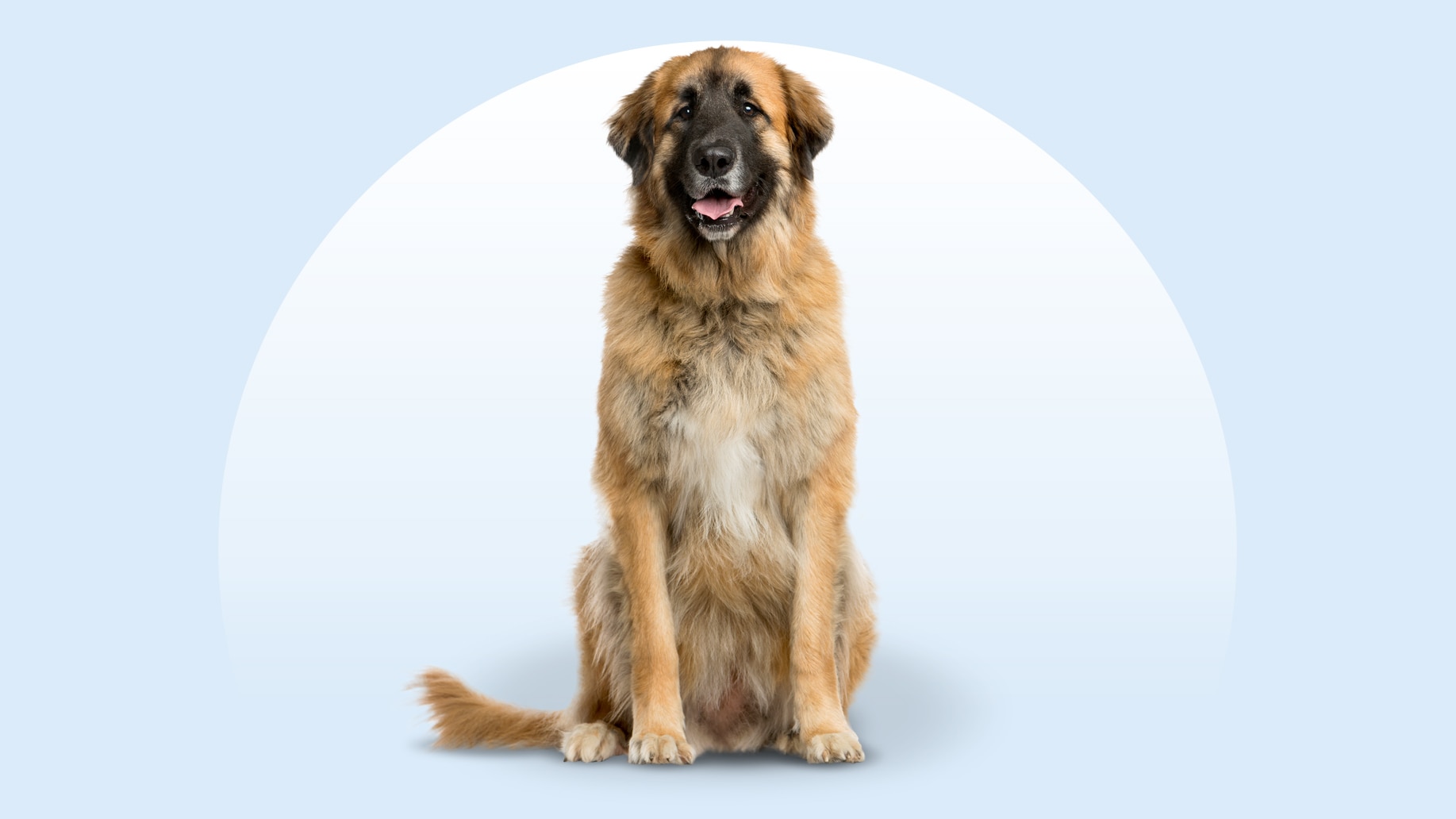
Leonberger
Updated December 15, 2025
Leonbergers are gentle giants, known for their adventurous spirit and friendly demeanor. They thrive in homes with pet parents who appreciate their loyal and affectionate nature, while offering them lots of space to roam.
Active, Adoring, Empathetic
90–170 pounds
26–32 inches
7 years
Yellow, Sandy, Reddish Brown, Red
Looking for a high-energy bestie who’s ready to play all day? Meet the Leonberger.
Tell them it’s time for an adventure, and these regal dogs will be wagging their tail in the backseat of your car before you can check the weather app for rain—though you needn’t bother. There could be a downpour, and the Leonbergerwouldn’t mind; with that water-resistant coat, a little wet weather is no big deal.
Leonbergers need a person who’s all-in on them. In return, you’ll have an adoring, easygoing friend who’s always got your back.
Leonberger Characteristics
Leonberger Appearance
Here’s a fun fact: The Leonberger dog breed is sexually dimorphic, meaning males and females look different.
Male Leonbergers have a sturdy, muscular build with a mane-like scruff around their neck that gives the breed its nickname of “gentle lion.” Females are much more trim and don’t have that rough mane.
But both sexes have a richly colored coat, a regal bearing, and a black mask marking their face.
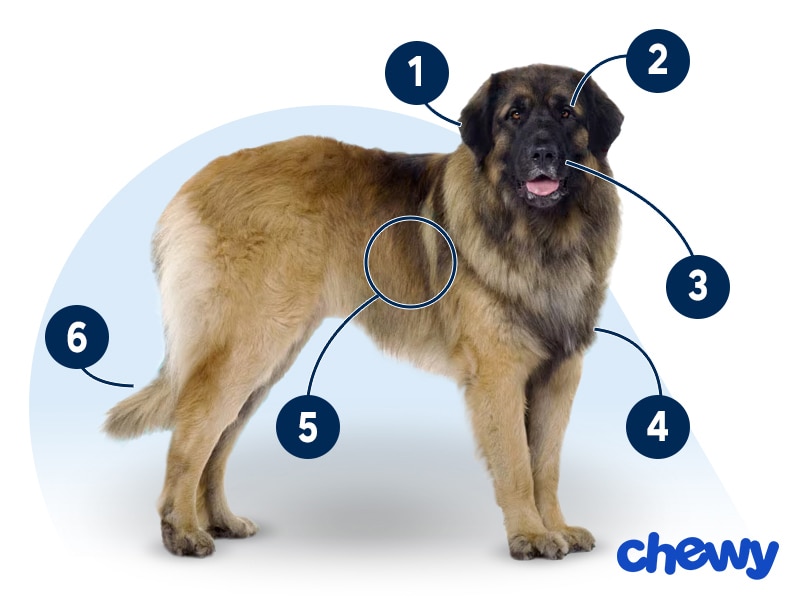
- Ears
A Leonberger’s triangular ears hang flat against the sides of the head and come forward slightly when the dog perks up.
- Eyes
Leonberger eyes are medium-sized, oval or almond in shape, and range from light brown to a warm, dark brown.
- Nose
Their large nose is always black.
- Coat Length
Leonberger dogs have a medium to long double coat. It’s waterproof, with a soft, dense undercoat and medium-soft to coarse outer coat.
- Coat Color
Leonberger colors are warm yellow, red, sandy, or reddish-brown, with black tips on the outer coat. If the outer coat is dark, the undercoat will be a lighter color. All Leonbergers have a black mask of fur on their face.
- Tail
They have a furry tail that hangs straight down when relaxed and rises when alert.
Leonberger Temperament
The Leonberger is known as the “gentle lion” for good reason. These pups are playful, tender and affectionate. And they’re not independent dogs; they prefer to be included in all your fun.
Leonbergers are very loyal and sensitive to your mood; if you need a hug, they’ll likely want one, too. Their gentleness and sensitive nature make them great family dogs who do well with kiddos.
But still supervise playtime with little ones—this giant dog weighs well over 100 pounds, and they have a strong tail. One happy wag in the wrong direction could topple a tiny tot.
And don’t mistake their tender side as a couch potato pup. The Leonberger loves a good adventure—and they need two hours of exercise a day. They need a pet parent who’s devoted to making sure they exert all that energy.
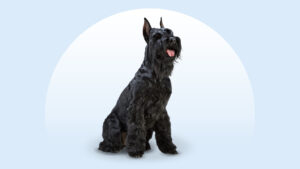
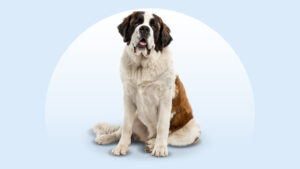
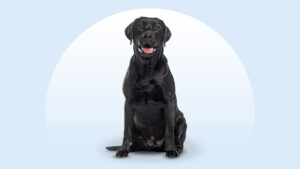
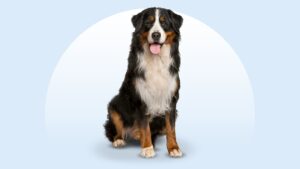
Related Breeds


How to Care for a Leonberger
The Leonberger breed is a big dog with big needs. With their thick double coat, they’ll need your help corralling all that fluff, and these happy pups need lots of exercise and training as well.
Grooming
Training
Diet
Exercise
Environment
Leonberger Health
The Leonberger lifespan is about 7 years—big dogs just don’t live as long as smaller pups, in general. Here are some health issues to be aware of.
- Bloat and gastric dilatation-volvulus (GDV): Bloat is when the stomach gets distended with air and/or food. A serious complication of bloat is when the stomach twists on itself (gastric dilatation-volvulus) and cuts off blood supply to the organs. Symptoms include abdominal distension, restlessness, and dry heaving. If you notice these signs, go to the vet immediately.
- Cataracts: Cataracts are a common eye problem, and they can be hereditary in Leonberger dogs. The most common symptom is a cloudy eye, and surgery is the go-to treatment.
- Dilated cardiomyopathy: Dilated cardiomyopathy is a genetic condition where the heart enlarges, possibly resulting in heart failure.
- Elbow and hip dysplasia: Elbow and hip dysplasia are genetic conditions that develop during puppyhood when the joints don’t align well and become looser than normal. Signs include limping, and treatment might involve weight loss, reduced activity, joint supplements, physical therapy, or, in severe cases, surgery.
- Ectropion and entropion: Leonbergers are prone to both entropion, in which the eyelid folds inward, and ectropion, which causes the lower lid to fold outward. These conditions don’t usually affect vision, but they can cause irritation and discomfort. In severe cases, they can damage the cornea. Your vet may recommend a topical ointment to lubricate the eyes or, in severe cases, surgery.
- Polyneuropathy: This is a serious nerve disorder that affects multiple peripheral nerves. There are different types, but some symptoms include paralysis, spatial disorientation, and weakness. Unfortunately, there is no cure, but the disease can sometimes be managed with diet changes and physiotherapy. Hospitalization may be required.
- Progressive retinal atrophy (PRA): PRA leads to blindness in dogs. There’s no cure, pups who lose their eyesight tend to adapt well and can still live full, happy lives.
Leonberger History
Unlike most other working dogs, the Leonberger was actually bred to be a companion for European royalty.
Heinrich Essig, a 19th-century politician and entrepreneur, crossed large working breeds—such as Saint Bernards and Newfoundlands—in Leonberg, Germany, and the Leonberger breed was born.
Napoleon III, Tsar Alexander II, and King Edward VII were big fans, as were composers Richard Wagner and Sergei Rachmaninoff.
The breed was recognized by the American Kennel Club in 2010.
Leonberger puppies tend to cost between $2,000–$4,000. If you choose this route, pick a responsible breeder.
You can also adopt a Leonberger. Look for Leonberger rescue dogs via places like Leonberger Rescue Pals, keep an eye out at your local shelter, or search Chewy’s database of adoptable dogs in your area.