Schnoodle
Updated April 15, 2026

Schnoodle
Updated April 15, 2026
What’s part Poodle, part Schnauzer, and completely cute? A Schnoodle. As a Schnauzer-Poodle mix, Schnoodle dogs range in size from super small companions to big, athletic dogs. This hybrid pup is recognized by their wavy or curly coat and their brainy, enthusiastic personality.
Alert, Loyal, Energetic
Miniature: 15 pounds
Standard: 25 pounds
Giant: 50 pounds or more
Miniature: 10–15 inches
Standard: 18–20 inches
Giant: 20–28 inches
10–16 years
White, Cream, Brown, Red, Black, Gray
Are you looking for a curly-coated bestie with loyalty and love to give? You’ve found your match in a Schnoodle.
Schnoodles are a diverse group of dogs. They typically come in three different sizes thanks to their parent breeds:
- Miniature Schnoodles are about 15 pounds.
- Standard Schnoodles are 25 pounds on average.
- Giant Schnoodles can weigh 50 pounds or more.
Your Schnoodle’s size depends on whether they have a Toy, Miniature, or Standard Poodle parent, and whether they are crossed with a Miniature, Standard, or Giant Schnauzer parent.
Regardless of size, Schnoodles often have a teddy bear appearance and fun-loving personality. Schnoodles love to play games, learn new tricks, and explore the outdoor world with you. So, be prepared for oodles of adventure when you bring home a Schnoodle.
Schnoodle Characteristics
Schnoodle Appearance
The Schnoodle dog is just as cute as the name sounds, with a shaggy or curly coat that begs to be petted. Peering out from the soft fuzz of fur are a pair of expressive eyes, and the face is framed by folded ears that perk up at the first sign of an unusual sound.
Because Schnoodles are a Poodle-Schnauzer mix and not a breed with a set standard, their appearance can vary as widely as their size. But in general, they share some common characteristics:

- Ears
Schnoodles typically have folded ears that lie flat against the head.
- Eyes
Schnoodles have large, round eyes that are black, brown, or hazel.
- Nose
The nose is square in shape, and often black or brown.
- Coat Length
The Schnoodle has a medium-length coat with a wiry texture. It’s usually wavy or curly, but the coat can sometimes be straight.
- Coat Color
Schnoodles are often white or gray, but you might also see a cream, red, brown, or black Schnoodle. The coat can be solid, parti, or with phantom or sable markings.
- Tail
A Schnoodle’s tail is medium in length and usually has a slight upward curl.
Schnoodle Temperament
The Schnoodle personality is best described as bright, clever, and social.
Because both parent breeds were bred to work alongside humans (the Poodle as a hunting dog and the Schnauzer as a farm worker), it’s no surprise that these dogs are people-oriented. You can expect your Schnoodle to be at your side no matter what you’re doing.
This eager interest can be endearing, but it also means Schnoodles need consistent structure, boundaries, exercise, and mental stimulation, says Shir Limazati, a certified dog trainer based in Chicago.
Schnoodles of all sizes need a job to do that fulfills the breed’s energy. They can channel this drive into dog sports, games of fetch, and learning new tricks.
While Schnoodle dogs love the company of their favorite people, they might be more wary of new faces. This means socializing your Schnoodle puppy is particularly important. With plenty of opportunity to meet and greet new friends, Schnoodles can be very sociable and affectionate adults.
Related Breeds
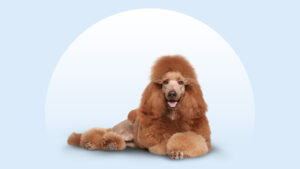
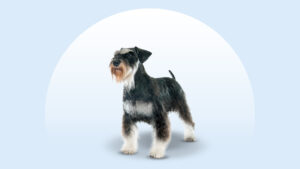
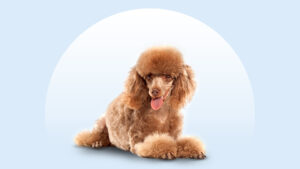
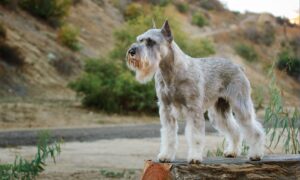



How to Care for a Schnoodle
Caring for a Schnoodle means filling your schedule with grooming sessions and exercise routines.
Grooming
Training
Diet
Exercise
Environment
Schnoodle Health
The life expectancy of a Schnoodle is usually 10–16 years, with Mini Schnoodles usually living longer than Giant Schnoodles.
They can inherit health problems common to either parent breed, including:
- Dental disease: Regular dental care is an important part of caring for any dog’s health, but Miniature Schnoodles are particularly susceptible to dental disease. Brush your dog’s teeth every day and keep up with vet appointments to support their long-term dental health.
- Heart problems: Schnoodles might inherit congenital heart problems from either parent breed. Schnauzers are sometimes known for developing dilated cardiomyopathy (DCM), which causes an enlarged, weakened heart. Miniature Poodles are predisposed to a heart defect that causes mitral valve disease. Both of these conditions can lead to congestive heart failure. If your Schnoodle develops shortness of breath, exercise intolerance, or coughing, it could indicate a developing heart problem.
- Orthopedic problems: Patellar luxation is particularly common with small dogs and causes the kneecap to slip out of place, resulting in a persistent limp or momentary skip in your dog’s step. Hip dysplasia and elbow dysplasia are caused by malformed joints that don’t fit together as they should. In most cases, a Schnoodle with orthopedic problems may benefit from rest; medications to control inflammation or pain; and joint supplements.
- Bloat: Standard Poodles and Giant Schnauzers can both be prone to bloat. This occurs when the dog’s stomach fills with gas, fluid, or food to the point of being abnormally distended. The condition can cause discomfort, retching, vomiting, and lead to the twisting of the stomach (known as gastric dilation-volvulus, or GDV). Bloat and GDV can be fatal, so it’s important to seek emergency vet care right away if you suspect these conditions.
Schnoodle History
The Schnoodle is a hybrid dog breed that results from crossing a Poodle with a Schnauzer. The mixed breed isn’t recognized by the American Kennel Club, but Poodles and Schnauzers are longstanding breeds with deep histories.
Poodles got their start as bird dogs in Germany, where they worked with hunters to retrieve waterfowl. Over the centuries, the original Standard Poodle was bred down into smaller versions: the Miniature Poodle and the Toy Poodle. All three types of Poodles have been recognized by the AKC since 1887.
Schnauzers are another German dog breed first bred to work on farms. Standard Schnauzers were eventually bred into the larger Giant Schnauzer and smaller Miniature Schnauzer, and Standards were the first to be recognized by the AKC in 1904.