A Beginner’s Guide to Grooming a Dog With Clippers at Home

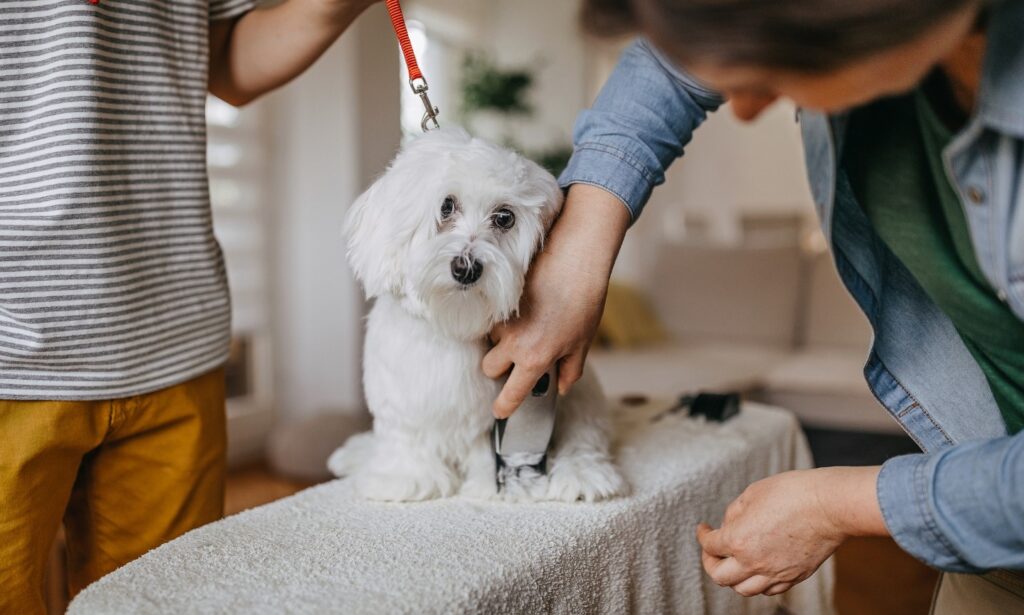
Photo by iStock.com/mixetto
Dog clipper grooming is usually a task best handled by a professional, but trips to the groomers can be inconvenient and costly. As a result, many dog owners with long-haired pups wonder, “Can I start grooming my dog with clippers at home?”
While it’s recommended to let a professional groomer clip your dog’s fur, circumstances may lead to tackle the task yourself. With the right tools, supplies, and professional guidance—tapping into my 36 years of experience as a pet groomer—it can be possible to groom your dog with clippers at home. Here’s what to know before you start, including how often to trim, how to choose dog clippers and blades, and when to leave it to a pro.
Key Takeaways
- For pups who need regular trimming (and not all dogs do!), you should trim your pup's fur every four to eight weeks.
- Long-haired breeds such as Poodles, Shih Tzus and Lhasa Apsos, plus some sporting breeds, may need regular haircuts.
- Many thick, double-coated dogs like Pomeranians, Huskies, and Chows, are not good candidates for clipping.
- It's important to know that higher blade numbers cut the coat shorter, and lower ones leave your dog's fur longer.
- At-home dog grooming with clippers should only be done on clean, dry, and fully brushed fur.
How Often Should I Trim My Dog’s Hair?
Not all dogs need regular trimmings. But for those who do, it is recommended that their hair is cut every four to eight weeks.
The dogs that need regular haircuts include breeds that have long hair, such as Poodles, Shih Tzus, Lhasa Apsos, as well as sporting breeds, such as spaniels. Using a clipper to give the dog a haircut keeps them tidy and reduces the chances of long hair becoming tangled.
It is not recommended that dogs with thick, double coats, such as Pomeranians, Huskies, Chows and similar types, have their hair clipped. It is not unusual for normal hair growth patterns in these dogs to be disrupted if they are clipped, especially if the hair is clipped short. This phenomenon is called “post clipping alopecia.”
Choosing Clippers for Your Dog
If you decide learning how to trim dog hair yourself is something you want to try, consider investing in professional quality tools.
Professional groomers know how to choose the best dog clippers—and a quality clipper, properly maintained, should give you reliable service for many years. Groomers rely on clippers such as the Wahl KM10. These clippers typically come with a number 10 blade to get you started.
Choosing the Right Blades
In the pet grooming industry, clipper blades are numbered to denote size. The higher the number, the shorter the hair will be when clipped. For example, a number 40 blade is used by veterinarians to perform extremely close surgical clipping. Conversely, a number 4 blade will leave a velvety, plush length on most coats and is a common choice for pet groomers when they want to clip a dog but not too short.
A good option for people wanting to clip their pet at home is to purchase a set of guide combs. Using guide combs is safer than using just a clipper blade because the comb keeps the blade away from the dog’s skin. These can be used over the blade that comes with the clipper, allowing you to leave longer coat where desired.
I use the Wahl Stainless Steel Attachment Combs Kit with excellent results. These can be used on either of the clippers mentioned above.
Steps for Clipping Your Dog’s Fur
Here are the steps to follow if you want to incorporate clipping into your pet’s overall grooming routine.
Step 1:
Give your dog a bath and dry them off completely. Clipping a clean, dry coat will give you the best results and be kinder to your grooming equipment.
Step 2:
Brush your dog completely, and make sure you can get a dog comb through every bit of hair. Once that is done, you are ready to use your clippers and guide comb.
If you cannot brush the tangles out and your pet is very matted, I suggest you have your pet professionally groomed to remove the tangles this time, then get on a regular, frequent schedule of home grooming. Clipping a matted coat is a skill best left to someone with experience, because the possibility of injuring your dog increases dramatically.
Step 3:
Find a place to work where your pet can be secured and you are both comfortable. Keep in mind that dogs are moving targets and grooming tools are sharp, so it’s important to find a way to keep your pet as still as possible while you work.
If you are working with your dog on an elevated surface, make sure they cannot jump off and hurt themselves, and never leave them unattended. Something like this bathing tether might work if you have a smooth surface to secure it to. Some people may find clipping their dog in a dry bathtub works, because it keeps the dog confined to a small space and cleaning up the cut hair is a breeze. But if you decide that grooming your pet at home is something you want to do regularly, investing in a grooming table will make your work much easier, and safer, too.
Step 4:
Start with your number 10 blade and clip the pet’s sanitary area. This means clipping long hair away from the rectum and away from the vulva or penis to prevent urine from gathering in long fur.
When clipping the hair, make sure to keep the blade flat against the body. If the blade is tilted so that the cutting edge meets skin, you may accidently cause a cut or irritation. Use the shortest of the guide combs over your blade if it makes you nervous to use the clipper blade on these delicate areas.
The number 10 blade also can be used to trim the hair from the bottom of the paw pads. Painful mats can form between the large pad and the toes, so clipping this hair is a good idea. It also decreases the amount of dirt and moisture your dog will bring in after a trip outside.
If you choose to trim the hair that grows near the inside corner of your dog’s eyes, the number 10 blade can handle that, too.
Step 5:
Next, decide how long you want your pet’s hair to be and choose a corresponding comb guide. They are clearly marked to show how much hair will remain after clipping but this can vary with coat texture and thickness. Do a test clip on your dog’s underbelly to see if you like the length before moving on to work on the back or sides. You can always choose a shorter guide, so start a little longer than you think to see how it looks on your dog’s coat.
Most groomers clip with the lay of the coat. In other words, from the head toward the tail and from shoulders and hips toward the toes. Some pet owners find they get good results clipping against the lay of the coat. This will make the hair a little shorter than the length marked on the guide combs, but you may find you get more even results clipping this way.
Step 6:
Once you have groomed your dog with clippers to the desired length, brush and comb again to find any uneven spots, then re-clip those areas. You will need a set of scissors to trim up around your dog’s head, feet and tail. Something with a rounded tip will do the job nicely.
Step 7:
Store your dog grooming clipper, scissors, brushes and combs in a dry place, out of reach of your dog. For some reason, brushes are sometimes considered to be prized chew toys!
Step 8:
To maintain your pets coat at home, keeping the hair thoroughly brushed and combed at least once a week is crucially important. (Read our guide to brushing dogs here.) A tangle-free coat will keep your dog comfortable and will be easier and safer to groom with clippers every four to eight weeks or as needed.
Pro Tips for Grooming Your Dog With Clippers
- If your dog is not accustomed to the sound and feel of a clipper already, you can desensitize them by stroking them all over with the clipper turned off. Once that is accepted, turn the clipper on and let the pet sniff and see it. Repeat the stroking all over while not actually clipping any hair. Most pets soon accept the strange new sensation and then you can begin to cut the hair.
- When working around sanitary areas and the “tuck up” area (the skin where the hind leg joins the body) be especially careful to avoid nicking the skin.
- When clipping your pet’s ears, hold the ear flat and always work from the center, toward the edges. Canine ears have some little folds and flaps of skin that can easily become injured by the clipper blade.
- To aid in clipping your dogs’ fur, and to prevent static while you work, a light coat spray such as Groom works great. Lightly spritz the coat while you brush and comb to achieve best results.
- After clipping your dog, use a soft brush such as an old toothbrush to remove any hair residue from the blade. Then follow the instructions that came with your clipper to oil the blade before storing it. This is a crucial step in maintaining your clipper blade so it will be ready for action the next time you want to clip your pet.
While getting to the groomer may not always be an option, rest assured that dog clipping can be done at home. With the right tools and safety tips in mind, you can groom your dog at home—all without having to step a foot (or paw!) outside your house.
FAQs About Dog Clipper Grooming
Can I groom my dog with clippers at home?
It’s possible to groom your dog with clippers at home if you have the right tools and take time to prepare your dog and their coat properly. Your dog’s coat should be dry, clean, and fully brushed out. If your pet’s fur is matted, then it’s best to leave their grooming to a professional groomer.
How often should I trim my dog’s hair?
Not all dogs need regular haircuts. For dogs who do, it’s ideal to have to dog clipper grooming done every four to eight weeks.
Which dogs should not be clipped with clippers?
Dogs with thick, double coats, such as Pomeranians, Huskies, Chows, and similar breeds are generally not good candidates for grooming with clippers because clipping these coats can disrupt their normal hair growth patterns.
Do I clip a dog’s coat wet or dry?
For best results, dog clipper grooming should be done on a clean, completely dry, and fully brushed coat. Doing so will help keep your dog grooming clippers and blades in good order.
What clipper blade should I use on my dog?
Clipper blades on dog grooming tools are numbered by size, and higher numbers cut the coat shorter. A number 10 blade on a dog clipper, for example, is a common starter blade, while a number 40 is for close surgical trims that are best handled by a professional groomer. Using guide combs keeps the blade safely away from the dog’s skin.
Are guide combs helpful for grooming a dog with clippers at home?
Guide combs are highly recommended for at-home dog clipping and upkeep between professional grooming visits. Guide combs fit neatly over the blade and help to keep the blade away from the dog’s skin, while also leaving a slightly longer coat on your pet.
Attributions