Are Turtles Reptiles?


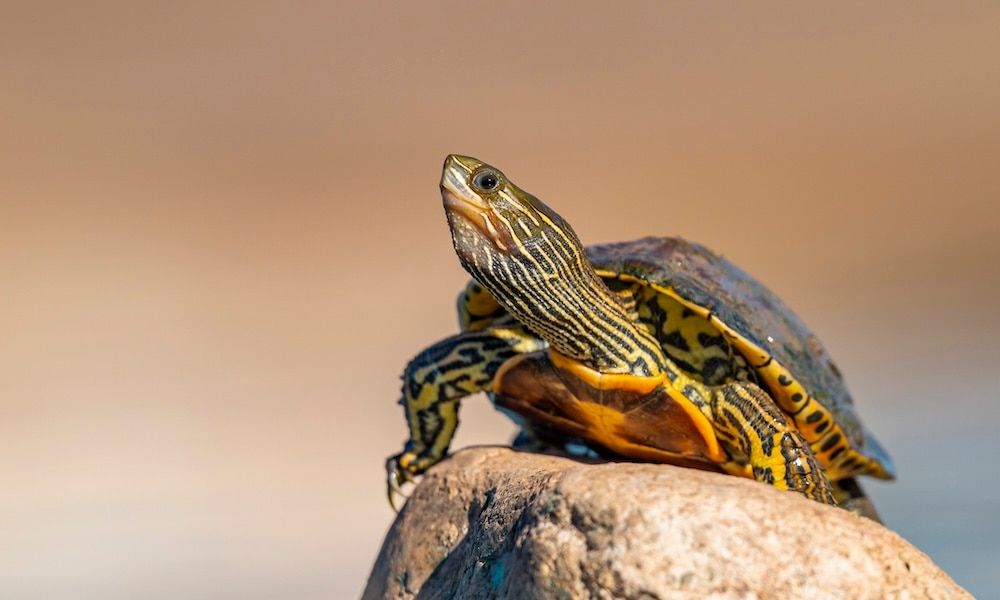
Photo by Selim Kaya/iStock/Getty Images Plus
Turtles are some of the most recognizable animals in the world, known for their protective shells and slow, steady movements. And because many aquatic turtles spend a lot of time in water, people often wonder whether they’re reptiles or amphibians.
Turtles are reptiles. They share many important characteristics with other reptiles, including scaly skin, cold-blooded metabolism, and egg-laying reproduction. In this article, we’ll explain how turtles are classified, what makes them reptiles, and how they differ from amphibians.
Key Takeaways
- Turtles are reptiles belonging to the scientific class Reptilia.
- Like other reptiles, turtles are cold-blooded, breathe air with lungs, and lay eggs.
- Some turtles live mostly in water, but they are not amphibians.
- Turtles have unique features, including a shell made of a carapace and a plastron.
What Are Reptiles?
Reptiles are a group of vertebrate animals in the class Reptilia. This group includes many animals, such as snakes, lizards, crocodiles, and turtles.
Reptiles are found in a wide range of environments, from deserts and forests to oceans and freshwater habitats.
Common Characteristics of Reptiles
Most reptiles share several key traits, including:
- Ectothermic (cold-blooded) metabolism, meaning their body temperature depends on the environment
- Dry, scaly skin that helps prevent water loss
- Lungs for breathing air, even in aquatic species
- Internal fertilization
- Most species lay eggs on land
These characteristics help scientists determine which animals belong in the reptile group.
Turtles belong to the following biological classification:
- Kingdom: Animalia
- Phylum: Chordata
- Class: Reptilia
- Order: Testudines
The order Testudines includes all turtles, tortoises, and terrapins. These animals share a unique body structure and evolutionary history that separates them from other reptiles.
What Makes Turtles Unique Among Reptiles?
While turtles share many traits with other reptiles, they also have several distinctive features.
The Turtle Shell
One of the most recognizable turtle features is their shell. The shell is actually part of the turtle’s skeleton and consists of two main sections:
- Carapace: the upper shell
- Plastron: the lower shell
Unlike a protective covering that can be removed, the shell is fused with the turtle’s ribs and spine.
Aquatic and Terrestrial Adaptations
Different types of turtles are adapted to different environments.
Some species are fully aquatic, while others live primarily on land.
Examples include:
- Sea turtles, who live in the ocean
- Freshwater turtles, found in ponds, lakes, and rivers
- Tortoises, who live on land
Long Lifespans
Many turtle species are known for their impressive longevity. Some turtles can live for several decades, and a few tortoises have been known to live over 100 years.
Types of Turtles
The word “turtle” is sometimes used broadly to describe several related reptiles. Scientists often divide these animals into a few main groups.
Sea Turtles
Sea turtles are marine reptiles who spend nearly their entire lives in the ocean. They have streamlined shells and flippers that help them swim long distances.
Freshwater Turtles
Freshwater turtles live in habitats like ponds, lakes, and rivers. These turtles typically divide their time between swimming in water and basking on land.
Tortoises
Tortoises are land-dwelling turtles. They usually have dome-shaped shells and strong legs adapted for walking on land rather than swimming.
Turtles vs Amphibians
Because many turtles spend so much of their time in water, people sometimes assume they are amphibians. However, reptiles and amphibians have several important differences.
Reptile Traits
Reptiles, including turtles:
- Have dry, scaly skin
- Lay eggs with protective shells
- Do not undergo metamorphosis
Amphibian Traits
Amphibians, such as frogs and salamanders:
- Have moist, permeable (allows moisture) skin
- Often lay eggs in water
- Undergo metamorphosis, such as tadpoles developing into frogs
These differences clearly separate turtles from amphibians.
The Evolution of Turtles
Turtles are one of the oldest groups of reptiles still alive today. Fossil evidence shows that turtles have existed for more than 200 million years.
Early turtles gradually evolved their distinctive shells, which likely helped protect them from predators. Over millions of years, turtles adapted to a wide range of environments, from oceans to deserts.
Why Turtle Classification Matters
Understanding how turtles are classified helps scientists study animal evolution and relationships between species. Classification also plays an important role in wildlife conservation.
By understanding turtle biology and ecology, researchers and conservationists can better protect threatened turtle species and their habitats.
So are turtles reptiles? Yes. Turtles belong to the class Reptilia and share many important traits with other reptiles.
Although many turtles spend time in water, they are very different from amphibians. Their unique shells, ancient evolutionary history, and wide variety of species make turtles some of the most fascinating reptiles on Earth.
Attributions
This article was created with assistance from AI tools. The content has been reviewed for accuracy and edited by a human.