How To Walk a Ferret—And When It’s Safe To Go Outside

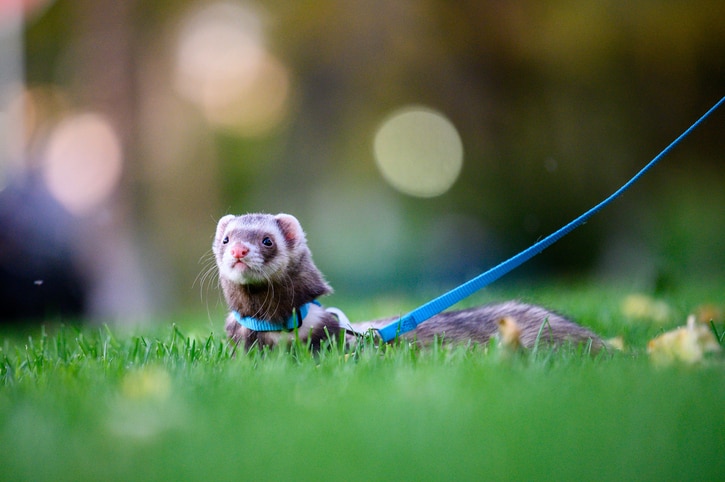
Photo by Wirestock/iStock/Getty Images Plus
Ferrets are curious, energetic little explorers, so it’s no surprise many pet parents wonder if they can join you outside for a walk.
Yes—ferrets can go outside safely with the right setup. Time outdoors can be mentally and physically enriching for ferrets, and it might even give the neighborhood dogs a run for their money when it comes to cuteness.
Key Takeaways
- Ferrets can go outside, but only if they’re on a harness, supervised, and in safe areas.
- Harness training is essential before taking your ferret on their first walk.
- Always use a secure, ferret-specific harness instead of a collar, which your ferret can slip out of.
- Avoid walking your ferret in extreme temperatures. They’re sensitive to heat and cold.
- Keep walks with your ferret short and safe, and head home if they’re showing signs of discomfort, like vocalizations or refusing to move.
Can Ferrets Go Outside?
Yes, ferrets can go outside, as long as you take a few precautions to keep them secure and comfortable while they explore.
A safe outdoor space is key to a positive experience. Before heading out, make sure you:
- Check for other animals. Dogs, cats, and birds of prey can pose a risk. If you spot them nearby, it’s best to wait and try again later.
- Avoid pesticides, fertilizers, and toxic plants. These can be harmful if your ferret sniffs or licks them. Stick to areas you know are pet-safe, and steer clear of unfamiliar plants.
- Harness-train your ferret ahead of time. Practicing indoors first helps your ferret feel comfortable and keeps them secure outside.
- Choose a calm, quiet location. Low-traffic areas help prevent stress and overstimulation.
- Ensure your ferret is up to date on vaccinations. Your veterinarian can confirm what your ferret needs, but core vaccinations typically include rabies and canine distemper.
When Ferrets Should Not Go Outside
While it’s generally safe to walk your ferret if you follow the guidelines above, there are a few situations where you should avoid walks altogether.
Skip the walk if:
- It’s too hot outside. Ferrets are prone to heatstroke, so if it’s 75 F or above, save the walk for another day. Also, pavement can become too hot when exposed to direct sunlight and burn your ferret’s paws, so stay off pavement in direct sun.
- It’s too cold outside. Ferrets have relatively low body fat and lose heat quickly, so avoid walks if it’s below 65 F, since they’re at risk for hypothermia.
- Your ferret is very young. Their immune systems are still developing when they’re very young, making them more vulnerable to infections and environmental stress. Wait until your ferret is at least 16 weeks old and fully vaccinated before attempting a walk.
- Your ferret has a health issue. Respiratory illnesses, adrenal disease, mobility challenges, and other conditions can make walks tricky, so check with your veterinarian before heading outside.
What You Need To Walk Your Ferret
Setting yourself up with the right supplies makes the experience smoother and safer—for both you and your ferret.
Before you start training, you’ll need:
- A ferret-specific harness and leash: Choose a set designed for a ferret’s size to help prevent them from slipping out. Avoid collars—ferrets can easily wriggle free.
- Treats for training: Yummy treats can help your ferret associate the harness and leash with positive experiences.
Recommended Product

- Travel carrier: A sturdy carrier is helpful to have on walks in case your ferret feels overwhelmed or tired.
Recommended Product

- Portable water bottle or bowl: Bring a bottle or bowl to keep your ferret hydrated, especially in warm weather.
Recommended Products


How To Walk a Ferret
Now that you have the right gear, it’s time to focus on harness training—so your ferret can learn to walk safely and confidently on a leash.
How To Train a Ferret To Walk on a Leash
To train your ferret to walk on a leash, you’ll need to teach them to wear a harness first.
But ferret harness training doesn’t have to be difficult. Before your first walk, practice at home to help your ferret feel comfortable.
- Introduce the harness slowly. Let your ferret sniff and investigate it before putting it on.
- Check the fit. The harness should be snug enough that your ferret can’t slip out, but not too tight.
- Start with short wear times. Put the harness on for a few minutes indoors and reward calm behavior with treats.
- Add the leash. Let your ferret drag the leash first, then gently guide them around your home.
- Keep sessions short and positive. Aim for five to 10 minutes at a time.
How To Walk a Ferret Outside
Once your ferret is comfortable walking indoors, you can start introducing outdoor walks. Here’s how:
- Pause and let them adjust. When you first step outside, don’t rush. Let your ferret sniff and explore.
- Let your ferret lead. Allow them to choose their path while you guide them away from unsafe areas.
- Start in a quiet, enclosed area. A yard or low-traffic park area during off-hours works best.
- Use treats and praise. Positive reinforcement helps your ferret feel confident and secure.
- Keep the first outing short. Start with five to 10 minutes, then gradually work up to about 20 minutes as your ferret becomes more comfortable.
Safety Tips for Walking Your Ferret
Even if your ferret is a pro at walking, it’s still up to you to keep them safe. To help protect your ferret:
- Supervise closely. Ferrets are quick and curious, so stay attentive and ready to react.
- Avoid extreme temperatures. Skip walks when it’s over 75 F and under 65 F to prevent overheating or hypothermia.
- Watch for predators. Birds of prey, cats, and dogs can pose serious risks. Head inside or use a carrier if needed.
- Avoid toxic plants or chemicals. Hazards include lilies, tulips, azaleas, daffodils, lawn treatments, pesticides, and antifreeze.
- Bring water and monitor for stress. Watch for panting, lethargy, or hiding—signs your ferret needs a break.
- Keep walks short. Aim for around 20 minutes or less to prevent overstimulation and fatigue.
Do Ferrets Enjoy Going on Walks?
Yes, many ferrets enjoy going on walks, especially those who are naturally curious, confident, and comfortable exploring new environments. Ferrets who are more cautious, easily startled, or strongly attached to their indoor routine may not enjoy outdoor adventures as much.
Benefits of outdoor time include:
- Mental stimulation from new sights and smells
- Physical exercise
- Enrichment beyond their usual environment
- Safe exposure to natural sunlight
That said, not every ferret will enjoy walks—and that’s OK.
Signs Your Ferret Doesn’t Like Walks
Not every ferret is a fan of the outdoors, so it’s important to read their body language to know how they’re feeling.
Watch out for:
- Freezing or refusing to move
- Excessive hiding
- Vocalizing or trying to escape
If you notice these signs, end the outing early and place your ferret in their carrier for a calm, safe trip home.
Other Ways To Keep Your Ferret Active
If outdoor walks aren’t the right fit for your ferret, there are plenty of other ways to keep them active, curious, and entertained.
- Outdoor playpens: Use a sturdy playpen with narrow bar spacing and a secure top to prevent escapes and keep out predators like birds. Place it in a shaded area for comfort, and always supervise outdoor playtime.
Recommended Product

- Indoor play sessions: Tunnels, ball pits, and dig boxes can provide excellent mental and physical stimulation, especially for ferrets who prefer staying indoors. Ferrets love to chew on things, so you should only let your ferret play when supervised.
Recommended Products


- Interactive toys: Interactive toys help keep your ferret mentally engaged and satisfy their natural curiosity.
Recommended Products



FAQs About How To Walk a Ferret
Do ferrets need a harness to go outside?
Yes. A well-fitting harness with a leash is essential. Never use a collar, as ferrets can easily slip out.
Can ferrets walk on a leash?
Yes, most ferrets can learn to walk on a leash when properly trained indoors first with positive reinforcement.
Do ferrets need to stop to sniff on walks?
Yes. Sniffing is mentally stimulating and enriching for your ferret and helps them explore their environment.
How long can you walk a ferret outside?
Once your ferret is used to walking, they can be outside up to 20 minutes, depending on their comfort level and the weather.
What temperature is safe for ferrets to be outside?
Generally, temperatures between 65 F and 75 F are safest, but avoid extremes on either end. Your vet can also help you decide, depending on where you live.
Can baby ferrets go outside on walks?
No. Ferrets should not go outside until they’re 16 weeks old and have all their vaccinations. You might also have trouble finding a harness that fits before they reach their full adult size.
Attributions
This article was created with assistance from AI tools. The content has been reviewed for accuracy and edited by a human.