Syrian Hamster Care Sheet


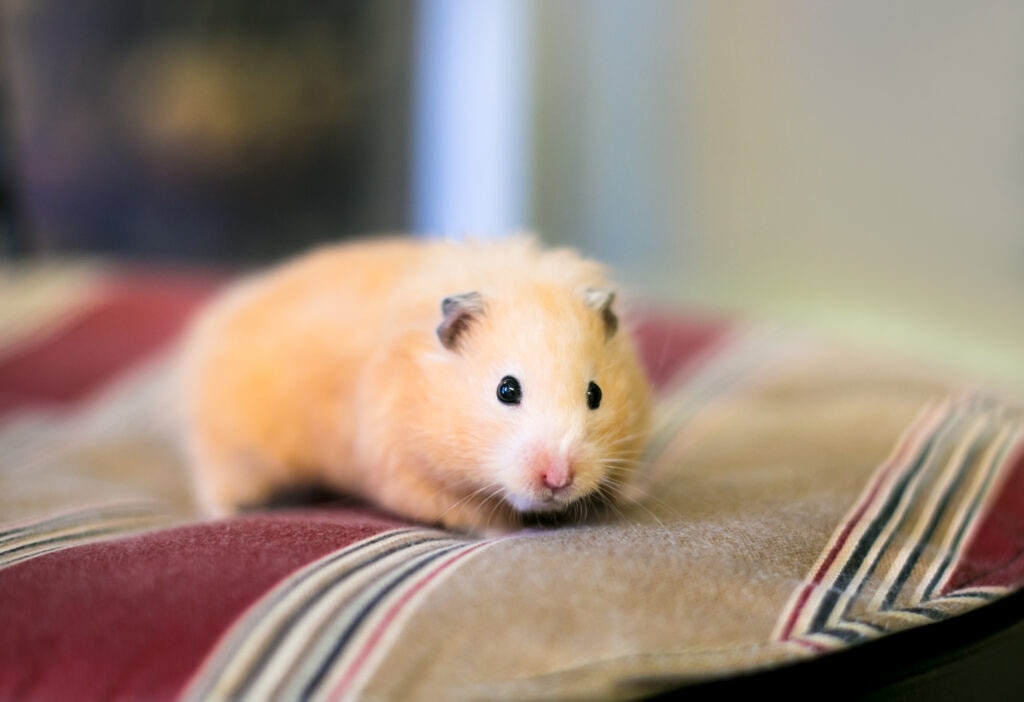
Photo by Mary Swift/iStock/Getty Images Plus
Syrian hamsters are one of the five main hamster species kept as pets in the United States. If you’re thinking about getting one of these cute cuddly creatures, learn what you need to give them a fun and healthy life.
Syrian Hamster Overview
- Hamster teeth emerge when pups (baby hamsters) are about a week old.
- Syrian hamsters can live 2–3 years with proper care.
- As adults, they’ll reach 4–7 inches long and weigh anywhere from 4 to 10 ounces.
Fun Facts About Syrian Hamsters
- Syrian hamsters grow fast and reach sexual maturity at 4 weeks old.
- Hamsters are born blind, and even as adults they have limited vision and are unable to see color.
- Because of their limited vision, Syrian hamsters use their whiskers and sense of smell to learn and explore their environments.
Syrian Hamster Cages
Even for small creatures, Syrian hamsters need lots of space for foraging, exploring, nesting, and playing. At a minimum, hamster cages should be 24 inches long, 12 inches wide, and 12 inches high.
Recommended Products
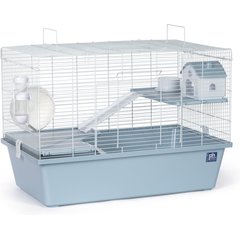
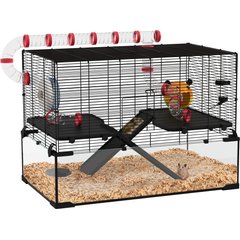
For female Syrian hamsters, you can start with at least a 40-gallon tank (36″L x 18″W x 18″H cage), since they are more restless than their male counterparts and need a larger cage.
Cages should have a solid base with a secure, escape-proof lid. The space between the cage bars should be no larger than a quarter-inch. Hamsters are escape artists, so make sure you take every possible security measure!
Line the bottom of the cage with at least 2 inches of paper-based bedding, recycled newspaper, aspen shavings, or unused paper towels. The bedding should be soft enough for your Syrian hamster to dig through.
Recommended Products
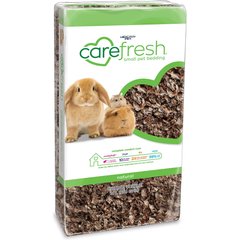
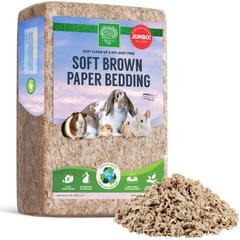
Avoid pine and cedar wood shavings, as they release harmful chemicals.
Your Syrian hamster needs regular, ongoing stimulation to prevent boredom, but don’t crowd their cage too much. Keep some toys in rotation, like chew toys, running wheels, and hideout boxes.
Recommended Products

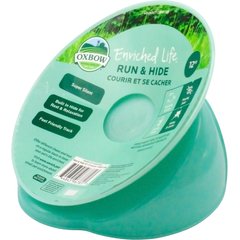
Choose toys with various materials and textures so your Syrian hamster continues to learn and develop while playing.
Cleaning and Maintenance
Spot-clean your hamster’s cage daily by removing uneaten food and any soiled bedding. Clean the food bowl and water bottle daily.
Thoroughly clean your hamster’s cage every week. Throw away old bedding and worn toys.
Place your hamster in a separate secure enclosure. Then remove everything from the cage so you can clean it and its accessories separately. Disinfect the cage, toys, food bowl, water bottle, and accessories with a mild detergent or small animal cage cleaner, then rinse well.
Recommended Product

Let everything completely dry before putting in new bedding and the clean toys and accessories. Return your hamster to their clean and organized habitat.
Syrian Hamster Food
Hamsters eat a variety of foods including seeds, grains, and pellets. Feed your pet high-quality commercial hamster food once a day and supplement their diet with fruits and vegetables.
Recommended Products


You can give your Syrian hamster a small amount of cooked animal protein like unseasoned chicken. Hamster treats may also be fed in small amounts, including dark leafy greens and carrots. Boiled eggs and superworms are also good sources of protein.
Recommended Products


Avoid avocados, onions, and fruit pits and seeds, as these can be harmful to your pet.
Even though hamsters are nocturnal, don’t feel like you have to feed them at odd hours of the day. Feed your pet when it works best for you; your hamster will adjust to your schedule.
Syrian Hamster Handling
Not all hamsters enjoy being held. In most cases, your Syrian hamster may prefer not to be handled, but you can slowly teach them to enjoy handling. It may take some time, so be patient with the process.
First, wait for your pet to be active, which is usually at night. Move slowly and put your hand inside the cage so your hamster knows you’re there. Give them a moment to sniff your hand and engage with you. If they back away or don’t approach you, pull your hand back and try again later.
If your hamster shows they are interested, slowly pick them up with both hands, with their face toward you. Cradle the bottom of their body with one hand for support, but be gentle and don’t squeeze too tightly.
Try to regularly handle your hamster as soon as possible so they can get used to human touch. You can also give them a space to run and play outside their cage, such as in a playpen.
Recommended Product

Syrian Hamster Health
Take your Syrian hamster to a veterinarian once a year for their annual checkup. You may need to take them more often if they show any signs of illness or injury.
Healthy Syrian hamsters should have a clean hair coat, clean nostrils and ears, and an alert, curious personality. If you notice anything out of the ordinary, call your vet right away.
Potential signs of illness include:
- Shaking or shivering
- Hair loss
- Weight loss or poor appetite
- Matted or dirty coat
- Discharge from ears, eyes, or nose
- Bumps or lumps
- Wheezing, sneezing, or labored breathing
- Diarrhea (wet tail)
- Excessive salivation
Syrian Hamster Supply Checklist
- Appropriately sized cage
- Bedding
- Food dish
- Water bottle
- Food and treats
- Exercise wheel and hideout box
- Chew toys
- Cleaning supplies
FAQs About Syrian Hamsters
Is a Syrian hamster a good pet?
Syrian hamsters are among the most popular pet hamsters and they make great pets.
How long do Syrian hamsters live?
Syrian hamsters live an average of 2–3 years with proper care.
Do Syrian hamsters like to be held?
If you properly socialize your hamster, they can naturally enjoy being held and handled gently.
How much do Syrian hamsters cost to adopt?
The cost of Syrian hamsters depends on where you’re adopting your hamster from and the supplies you’re getting to care for them. It can cost you upwards of $25 just for adoption, plus hundreds of dollars over time in supplies and care costs.
Click here for a printable PDF version of this care sheet!
Attributions