Ragdoll Cat
Updated February 3, 2026
Ragdoll Cat
Updated February 3, 2026
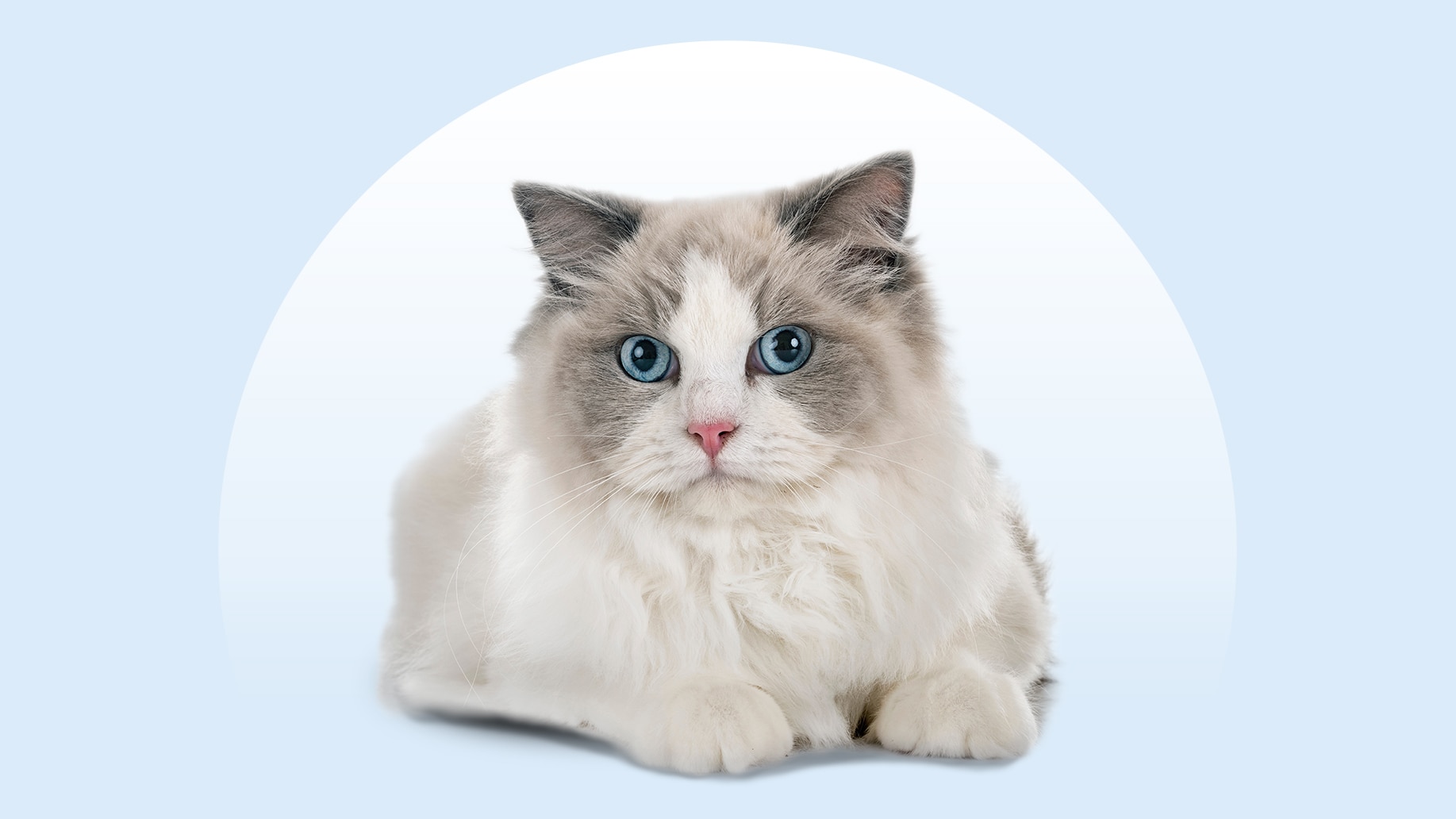
Ragdolls are some of the friendliest—and floppiest—cats around. When picked up, many of these adorable kitties will go limp in your arms, just like the name implies. With brilliant blue eyes and gentle personalities, they're the perfect for anyone seeking an extra-cute, cuddly best friend.
Affectionate, Docile, Gentle
10–20 pounds
13–18 years
Boundaries? Never heard of ’em. Ragdoll cats often stick to you like Velcro, greeting you at the door and shadowing your every move. Named for their tendency to relax when held, these large cats make affectionate companions for kids (and adults!) of all ages.
True to their ultra-relaxed nature, you’ll often find these doglike cats lounging on their backs, happily awaiting belly rubs. Whether it’s a game of fetch or an all-night snuggle sesh, Ragdolls are happiest when right by your side.
Ragdoll Cat Characteristics
Ragdoll Cat Appearance
Ragdolls aren’t all fluff—they’re actually one of the largest domestic cat breeds, with males weighing up to 20 pounds. They have brilliant blue eyes, silky fur, and a bushy tail that’s reminiscent of a feather duster, and they’re as sweet as they are striking.
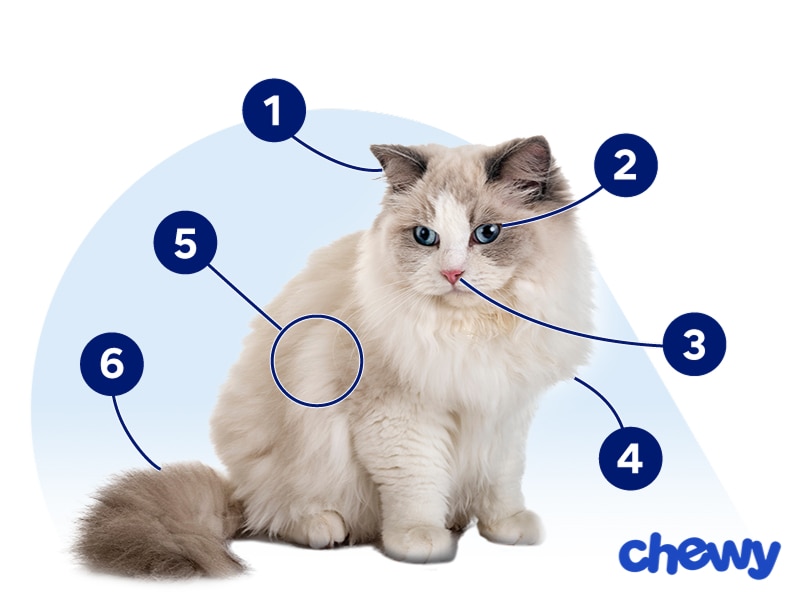
- Ears
Ragdolls have broad, medium-sized ears with gently rounded tips.
- Eyes
Their large blue eyes vary in intensity and are a defining feature of the breed.
- Nose
Ragdoll cats' noses can be pink, chocolate brown, or gray.
- Coat Length
The Ragdoll cat breed features a semi-long coat that pet parents often describe as rabbitlike in its softness.
- Coat Color
Most Ragdoll kittens are born solid white, with their coloring gradually appearing and darkening over the first few years. Ragdolls are “pointed,” meaning their ears, face, legs and tail are darker than the rest of their body. Ragdoll colors include seal, blue, chocolate, lilac, red, and cream, and come in various patterns: colorpoint (solid points), mitted (white paws and chin), and bicolor (white inverted V on face and white legs).
- Tail
Ragdoll cats have a long, fluffy tail that can easily dust your furniture as they walk by.
Ragdoll Cat Temperament
“Ragdolls are the dogs of the feline world,” says Monique Fitzpatrick, DVM, a veterinarian in Granby, Connecticut. “They like to follow their pet parents around and will wait for them by the door.”
Friendly and affectionate, Ragdolls don’t exactly know the meaning of “personal space.” They’ll claim a permanent spot on your lap, supervise your daily activities, and expect you to save a spot for them in bed. Basically, these cats thrive on pets and cuddles—the more, the better.
As furry extroverts, Ragdolls are comfortable around strangers and particularly good with children, says Dr. Fitzpatrick. They also tend to do well with other pets because they enjoy playing with a pal.
When it comes to expressing themselves, Ragdolls may mew or chirp when they want something.
While Ragdolls are generally easygoing, they’re not shy about making their presence known. Don’t be surprised if your cat taps your shoulder with their paw while you’re working or watching TV. They love attention and prefer when it’s focused on them.
Related Breeds


How to Care for a Ragdoll Cat
Caring for Ragdoll cats is fairly standard, though their semi-long coats require consistent brushing.
When possible, start grooming habits early with your Ragdoll kitten to get them used to the routine, says Walter F. Burghardt Jr., DVM, PhD, DACVB, a veterinarian at Behavior Clinic for Animals in San Antonio.
Grooming
Diet
Exercise
Environment
Ragdoll Cat Health
With proper care, the average Ragdoll lifespan is typically 13–18 years, with some reaching their early 20s.
Their lifespan depends on several factors, including genetics, regular vet visits, nutrition, weight management, and a dash of good luck. Understanding the breed’s common health issues can help you stay one step ahead.
These are the health issues Dr. Fitzpatrick sees most often in Ragdolls:
- Hypertrophic cardiomyopathy (HCM): HCM in cats occurs when the heart muscle walls thicken abnormally, which can lead to blood clots, heart failure, and death. Dr. Fitzpatrick notes that genetic testing is available.
- Urinary tract issues: Male Ragdolls are particularly vulnerable to urinary problems like crystals, blockages, and feline idiopathic cystitis (though females can be affected, too). Boost water intake with fountains and wet food to help prevent these conditions.
- Obesity and joint problems: Ragdolls can easily gain excess weight, which can put stress on their joints, increase inflammation, and lead to arthritis. Offering joint supplements may help protect cartilage and reduce pain.
- Dental disease: Because Ragdolls are at higher risk of dental issues, such as gingivitis and periodontal disease, regular brushing and dental checkups are vital. Dr. Burghardt says feeding dental-specific food, such as Science Diet Oral Care and Prescription Diet T/D, is an effective preventive step.
- Polycystic kidney disease (PKD): This inherited condition causes cysts to develop in the kidneys. There’s no cure, but early detection allows for better management.
- Allergies: Ragdolls can develop environmental and food allergies. Watch for excessive scratching, skin irritation, or digestive upset, and schedule a vet visit if needed.
Ragdoll Cat History
The origins of Ragdoll cats are a little murkier than other breeds—and definitely filled with more drama. The breed is said to have been developed by Ann Baker, a breeder in Riverside, California. She set out to create a cat with a specific look and temperament.
The breed traces back to a long-haired white female cat from Baker’s neighborhood named Josephine, a seal-mitted male called Daddy Warbucks, and a solid black cat named Blackie.
But here’s where things get a little eccentric: Baker allegedly claimed that Josephine was hit by a car and taken to a medical center for treatment. There, Baker said, Josephine’s genes were altered as part of a secret government experiment.
According to Baker, kittens born after the accident exhibited typical Ragdoll cat traits, whereas those born before did not. Interesting theory.
From there, Baker trademarked the name “Ragdoll” and created her own registry. This move prevented other breeders from registering their cats with organizations such as the Cat Fanciers’ Association (CFA).
But some breeders eventually broke away from Baker, and working with cats from her original lines, they developed the Ragdoll cat breed standards, which the CFA and The International Cat Association (TICA) recognize today.
These days, the sweet and floppy Ragdoll continually tops the CFA’s list as one of the most popular cat breeds.