Cat Not Using the Litter Box? Here’s Why (And What You Can Do)


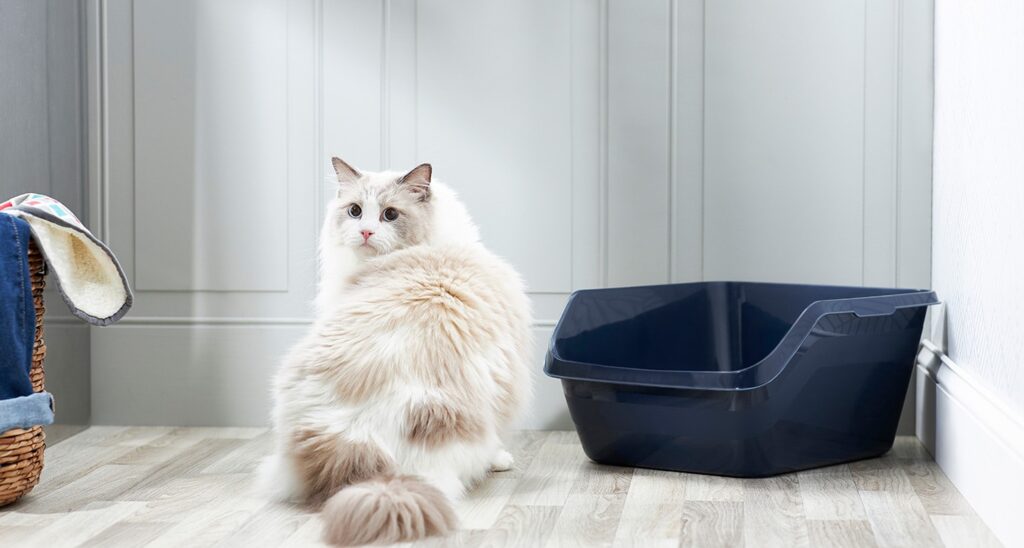
Photo by Chewy Studios
A cat not using the litter box definitely can be frustrating—and unsanitary. Instead of doing their business where they’re supposed to, your cat is pooping outside the litter box, peeing outside the litter, or both.
“Some may only urinate [outside the box], while some may only defecate [outside the box],” says Rachel Barrack, DVM, CVA, CVCH, owner of Animal Acupuncture in New York City. “Some cats abruptly refuse the litter box altogether.”
It’s important to resolve the issue quickly—and that means figuring out what is causing it in the first place. Potty accidents can be a sign of underlying health issues for cats. So even if you think you know the reason behind your cat not using the litter box, “it is recommended that you schedule an appointment with your veterinarian to rule out any underlying medical conditions,” Dr. Barrack says.
Key Takeaways
- Consult your vet first to rule out medical issues if your cat stops using the litter box.
- Make gradual changes to litter box location, type, or litter to avoid upsetting your cat.
- Clean the litter box daily and use odor-eliminating litter to keep it fresh.
- Ensure the litter box is large enough for your cat to move comfortably.
- Provide multiple litter boxes in multi-cat households to prevent access issues.
6 Reasons Your Cat Stopped Using the Litter Box
1. A Medical Problem
If it hurts to urinate and/or defecate, cats can be reluctant to use the litter box, says Dr. Barrack.
“Urinary tract infections (UTIs), feline interstitial cystitis, bladder or kidney stones, and constipation can all be a cause of your cat not using the litter box,” she says. “Also, older cats may have developed arthritis or another condition that makes getting into and out of the box challenging.”
Solution: Consult Your Vet
Dr. Barrack advises consulting your vet right away if your normally well-trained cat of any age abruptly stops using the litter box. They can test for and diagnose any possible medical reasons why your cat has stopped using the litter box, as well as provide recommendations for treatment.
2. The Litter Box Is Different
Did you move the litter box to a new area, buy a new box, or switch litter? It might seem like a minor thing to us, but “cats develop preferences to certain litter and boxes,” Dr. Barrack says.
For example, if you switched from an open litter box to one with a hood, the hood may be off-putting to your kitty.
“Many cats do not like [hooded litter boxes] because their instincts tell them that a contained space is dangerous,” Dr. Barrack says. “Even if there is no immediate threat, the fact that there is no space for them to escape in case of an emergency is enough to make a cat uncomfortable and avoid using the litter box.”
These switches can be especially problematic if you make them all at once, potentially leading to your cat peeing outside the litter box.
Solution: Make Gradual Changes
You can avoid this litter box problem by making subtle changes.
“If you’ve found a new and better spot for the litter box, move it a few feet every couple of days until it’s in the desired location,” Dr. Barrack says.
The same goes for when you purchase a new brand or type of cat litter.
“Try mixing it with the old litter, adding less and less of the old litter with each litter pan cleaning,” Dr. Barrack says.
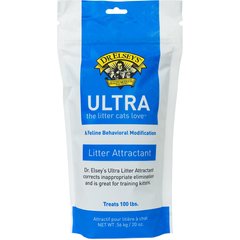
Dr. Elsey’s Precious Cat Ultra Litter Attractant can also be used to entice your cat to use the new litter.
Recommended Product
3. The Litter Box Smells
The reason why your cat stopped using the litter box may be right under their cute, little (and very sensitive) nose: It stinks!
Cats like a clean litter box. If their designated space is not up to their standards, they may choose to eliminate elsewhere.
Solution: Clean the Litter Box Regularly
“The pan should be scooped out every single day, and then washed out and refilled with fresh litter at least once a week,” Dr. Barrack says.
You also can try a cat litter with strong odor-eliminating attributes. Chewy Clumping Clay Litter, for example, is formulated to effectively eliminate any odors your cat leaves behind. For an extra odor-eliminating boost, try Arm & Hammer’s Cat Litter Deodorizer Powder.
Recommended Products


4. The Litter Box Is Too Small
If your cat is peeing outside the litter box, take a good look at the size of both your cat and the box. Did you buy it when your cat was a kitten? Has your cat recently put on some weight? Cats can outgrow their litter box and then refuse to do their business in a space that’s too small for them to get comfortable.
Solution: Try a Larger Litter Box
“Make sure [the litter box] is large enough—about one and a half times the length of your cat is a good rule,” Dr. Barrack says. “They should be able to easily turn around in it. If they can’t, you should get a bigger box.”
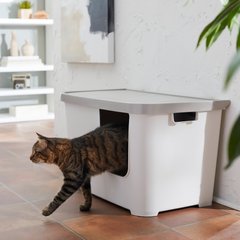
Frisco’s Multi-Function Covered Litter Box measures 29 inches long, making it an ideal choice for bigger cats.
Recommended Product
5. Other Cats Are Preventing Litter Box Access
Are other cats in your home gatekeeping the litter box?
“Multi-cat households develop a hierarchy, and cats can pick on each other by preventing litter box usage to establish dominance,” Dr. Barrack says.
Solution: Provide Multiple Litter Boxes
Dr. Barrack suggests making sure that each cat in the household has their own box, plus one extra. Place them in different parts of your home.
6. Stress
Cats can pick up on household stress, whether it’s in the form of a new member of the family (human or pet), a move, or a new job that requires you to be away more.
They may regress in litter box habits when they feel stressed or their routine changes.
Solution: Keep a Consistent Routine
If you and your veterinarian determine stress is the cause of your cat not using the litter box, try to establish a routine for your kitty moving forward.
“If things are hectic at home, make an effort to keep your cat’s life as consistent as possible as far as feeding, playtime, and sleeping goes. A few extra cuddles can’t hurt, either!” Dr. Barrack says.
By running through this checklist of common causes and staying in close communication with your vet, you can get to the bottom of why your cat stopped using the litter box—the first step toward a solution that works for you both.
Attributions