Treeing Walker Coonhound
Updated December 15, 2025

Treeing Walker Coonhound
Updated December 15, 2025
The Treeing Walker Coonhound is an energetic, intelligent scent hound known for their professional-level hunting skills and friendly nature. They thrive on daily exercise, mental stimulation, and human companionship, making them loyal, active family dogs best suited for engaged pet parents.
Friendly, Energetic, Intelligent
50–70 pounds
20–27 inches
12–13 years
Bringing home a Treeing Walker Coonhound is like signing up for a nonstop adventure.
Say goodbye to quiet, ambling strolls down the block: These social butterflies insist on greeting everyone and following every scent they discover. Their powerful nose rules the walk, and their famous “hound song” carries for miles.
Daily exercise is essential, from long walks and hikes to games of chase in the backyard. At home, Treeing Walker Coonhounds switch gears into affectionate cuddle bugs who thrive on family time and won’t hesitate to claim your couch as their favorite spot.
Treeing Walker Coonhound Characteristics
Treeing Walker Coonhound Appearance
The Treeing Walker Coonhound is an athletic, medium-to-large hound dog built for speed and stamina. With a sleek, muscular frame and smooth coat, they stand tall and proud.
The breed has distinctive floppy ears, expressive eyes, and a long nose. A high-set tail completes their alert, confident look.
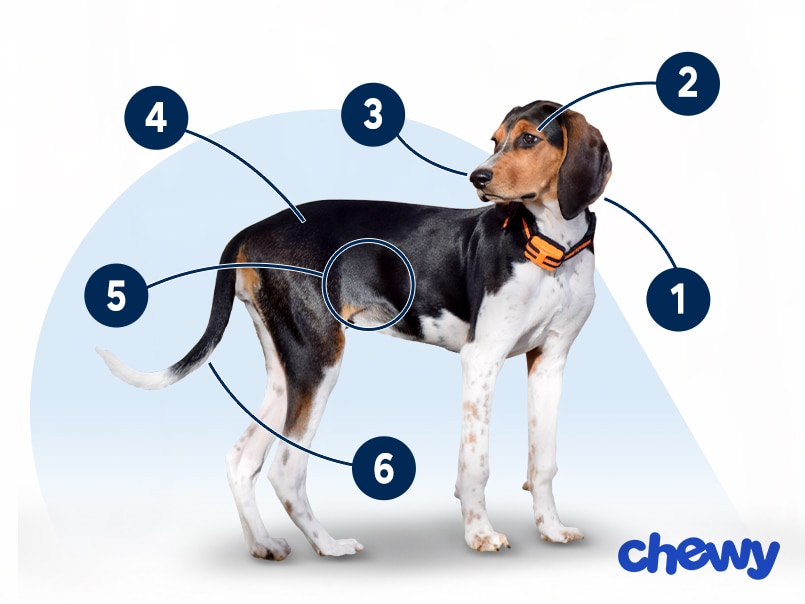
- Ears
The ears are long, wide, and set low, hanging close to the head.
- Eyes
Large, round, and dark, the eyes are soft and expressive, showing an intelligent and kind demeanor.
- Nose
A Treeing Walker Coonhound’s nose is broad and black, with wide-open nostrils for maximum scent detection. (It’s essential to their tracking skills!)
- Coat Length
The coat is short, dense, and glossy, lying close to the body for low-maintenance and weather resistance.
- Coat Color
Treeing Walker Coonhound dogs can be black or white, but they’re most commonly tricolor (a combination of black, white, and tan).
- Tail
Moderately long and carried upright with a slight curve, the tail is never tucked and serves as a confident flag when on the move.
Treeing Walker Coonhound Temperament
The Treeing Walker Coonhound temperament is typical of a hound dog: energetic, social, intelligent, playful, and adventurous.
Affectionate with family and typically friendly toward strangers, they thrive on attention and companionship—but also display independence from their hunting heritage.
Bred to work in a pack, Treeing Walker Coonhounds typically get along well with other dogs, especially when everyone is socialized from puppyhood and introduced properly. But their strong prey drive means caution is needed with smaller pets like cats. They might see these critters as something to chase.
Treeing Walker Coonhound dogs are social butterflies who eagerly make friends wherever they go, which makes them wonderful companions. Their natural talents shine in hunting, tracking, and scent work, but they’re just as happy when given other engaging outlets like long walks, games, or dog sports to channel their stamina and drive.
“The Treeing Walker Coonhound has a distinctive temperament that reflects their hunting heritage,” says Danielle Champ, vice president of the Treeing Walker Breeder and Fanciers Association (TWBFA). “They are very loyal, friendly, people pleasers, independent, and very smart.”
Related Breeds






How to Care for a Treeing Walker Coonhound
Treeing Walker Coonhounds need daily exercise, mental stimulation, and doting companionship to stay happy. With the right training and balance of activity and affection, they become loyal, playful family members who thrive in active homes.
Grooming
Training
Diet
Exercise
Environment
Treeing Walker Coonhound Health
The typical Treeing Walker Coonhound lifespan is 12–13 years.
“Treeing Walker Coonhounds are generally healthy,” says Champ. “With responsible breeding and good everyday care, most do very well. They’re not a high-risk breed, but because some issues can be genetic or activity-related, pet insurance is a smart safety net for many families.”
- Hip dysplasia: Large, athletic breeds like Treeing Walker Coonhounds are susceptible to hip dysplasia, a genetic condition where the hip joints don’t fit together properly. This leads to a loose joint, pain, and arthritis. Treatment varies based on severity, ranging from joint supplements to surgery.
- Ear infections: Treeing Walker Coonhounds have long, floppy ears that trap heat and moisture. Keeping their ears clean is the best way to prevent ear infections, so talk to your vet about what they recommend.
- Bloat and gastric dilatation-volvulus (GDV): Deep-chested breeds like Treeing Walker Coonhounds are at risk for bloat, a condition where their stomach distends with food and/or gas. Sometimes this progresses into gastric dilatation-volvulus, which is when the stomach twists and cuts off blood flow to abdominal organs. This is a life-threatening emergency, so take your dog to the vet immediately if they show signs of bloat or GDV (restlessness, a distended abdomen, excessive drooling, retching).
- Hypothyroidism: Some Treeing Walker Coonhounds are prone to underactive thyroid that can cause weight gain, lethargy, and skin issues. Middle-aged dogs are most affected, and treatment involves daily medication.
- Eye issues: Treeing Walker Coonhounds can inherit eye issues like cataracts or progressive retinal atrophy that may affect vision and, over time, lead to blindness. The best defense is routine vet eye exams throughout life.
Treeing Walker Coonhound History
The Treeing Walker Coonhound was originally bred to hunt raccoons: The word “treeing” describes how they’d corner their prey in a tree for their human hunting companions. According to the TWBFA, the breed is descended from early foxhounds and was fine-tuned to create the quick, agile hunter we know today.
The American Kennel Club recognized the Treeing Walker Coonhound in 2012.