Bluetick Coonhound
Updated October 14, 2026
Bluetick Coonhound
Updated October 14, 2026
The Bluetick Coonhound is a striking large-sized breed known for their distinctive blue mottled coats. Bred for hunting, they possess a keen sense of smell and strong prey drive. Despite their hunting instincts, they are affectionate, loyal companions who thrive in active households.
Athletic, Loyal, Energetic
45–80 pounds
21–27 inches
11–12 years
Blue Ticked, Blue Ticked and Tan
If you’ve never met a tent you didn’t want to sleep in, a trail you didn’t want to run, or a road trip you didn’t want to drive, then the up-for-anything Bluetick Coonhound might be your canine soulmate.
The rough-and-tumble outdoorsman of the dog world is ready for adventure, whether in the city or country. Bred for hunting, Bluetick Coonhounds are high-energy, hardworking dogs and want a job to do.
But it’s not all work and no play—these sweet-natured pups make devoted family dogs, as long as you can meet their needs.
Bluetick Coonhound Characteristics
Bluetick Coonhound Appearance
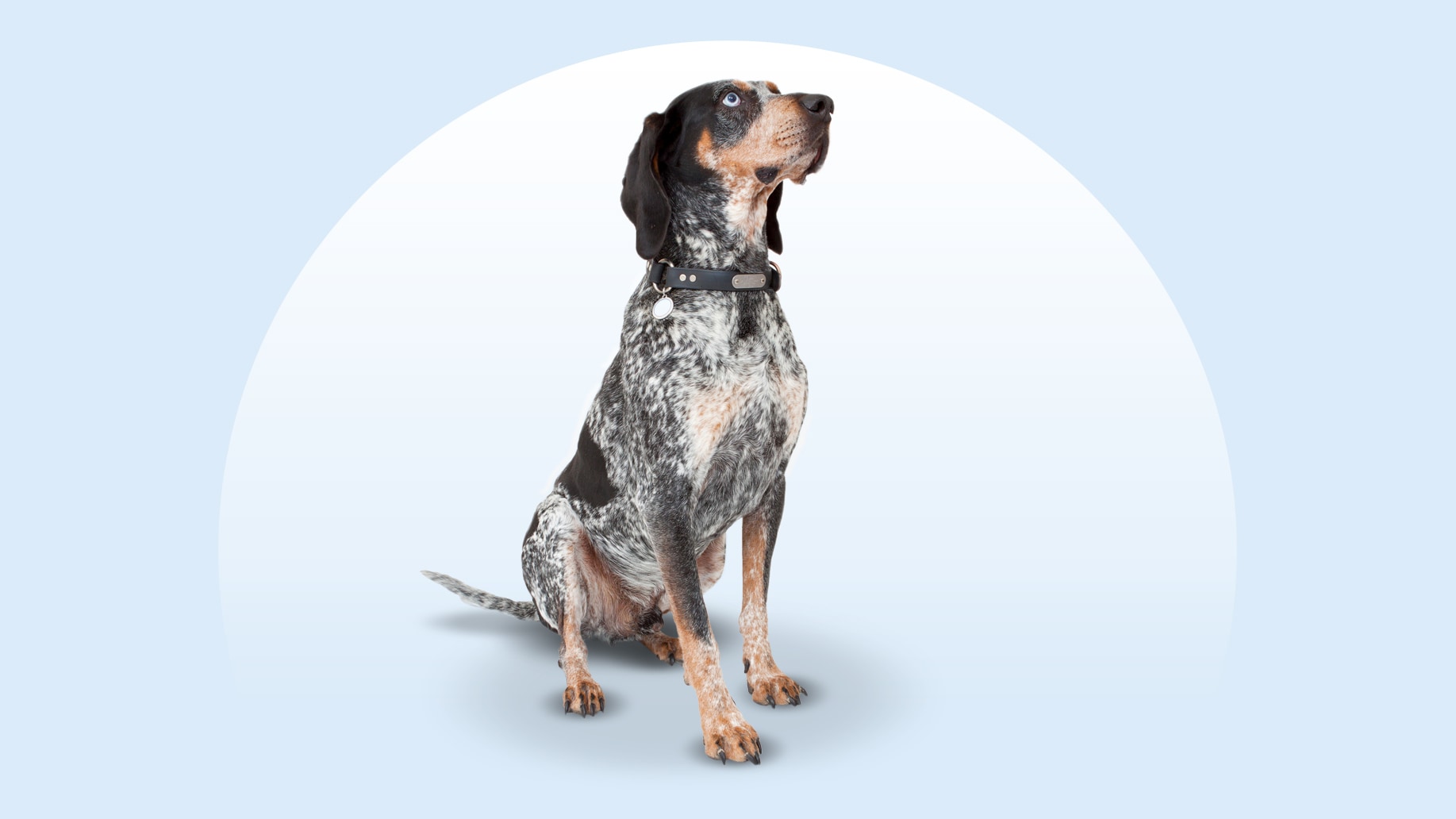
Athletic, sleek and strong, the Bluetick Coonhound breed has distinctive colors that give the illusion of navy blue. That color impression results from black ticking on a white background covering most of their bodies, including their perky tail.
Their sweet eyes and delightfully droopy ears create a charming face that’s always seeking out love and companionship.

- Ears
Their long, droopy ears flap when running and playing.
- Eyes
They have soulful, round eyes that are typically brown.
- Nose
Bluetick Coonhounds have large, black noses with well-opened nostrils.
- Coat Length
Their coats are weather-resistant, short and slightly coarse to the touch.
- Coat Color
The Bluetick Coonhound is named for the breed's blue ticked coat, which is dark ticking against a white coat, giving these pups a dark blue appearance. They may also have tan markings.
- Tail
Their tails are long and tapered and carried well up while in motion.
Bluetick Coonhound Temperament
Intelligent and goofy, Bluetick Coonhounds are full of personality and verve. They’re also sweet-natured and kind—a truly winning combination.
Rambunctious scent hounds, they’re sticklers for smells and will take off after anything they find even mildly interesting, so a good leash and a fenced yard are musts.
They also have a strong prey drive, which means they’re not going to get along with teeny family members, like hamsters or guinea pigs.
With everyone else, though, they’ll likely be an absolute angel, as long as they have space to get all their energy out and plenty of opportunities to thrive in the great outdoors—with you as their sidekick, of course.
They may be independent-minded at times, but they’re not loners. These dogs love people, and they need to be around them to be their best selves.
If you’re gone for most of the day, doggy daycare or a dog walker is a great way to keep this pup’s spirits up.
Related Breeds




How to Care for a Bluetick Coonhound
Bluetick Coonhounds don’t require as much grooming as other breeds, but you’ll definitely bond with lots of exercise and training.
Grooming
Training
Diet
Exercise
Environment
Bluetick Coonhound Health
The average Bluetick Coonhound lifespan is 11–12 years. Here are some health issues to be aware of.
- Bloat and gastric dilatation-volvulus (GDV): Bluetick Coonhounds are prone to a life-threatening condition called bloat. It occurs when the stomach gets distended with air and/or food. A serious complication of bloat is when the stomach twists on itself, cutting off blood supply to the organs. This is called gastric dilatation-volvulus, and symptoms include abdominal distension, restlessness, excessive drooling, and dry heaving. If you notice these signs, go to the vet immediately.
- Cataracts: Cataracts are a common eye problem, and they can be hereditary. The most common symptom is a cloudy eye. Surgery is the go-to treatment.
- Coonhound paralysis: Bluetick Coonhounds exposed to raccoon bites or saliva may contract coonhound paralysis, an immune reaction to raccoon saliva that inflames the dog’s nerves. It can affect their gait and breathing, so you should take your pup to the vet immediately if they’ve interacted with a raccoon.
- Elbow and hip dysplasia: Elbow and hip dysplasia are genetic conditions that develop during puppyhood when the joints don’t align well and become looser than normal. Signs include limping, and treatment might involve weight loss, reduced activity, joint supplements, physical therapy, pain medication, or, in severe cases, surgery.
- Hypothyroidism: Common in this breed, hypothyroidism in dogs includes symptoms like lethargy, hair loss, skin and ear infections, and weight gain. A blood test can diagnose it, and treatment is a daily oral medication.
Bluetick Coonhound History
Before becoming their own breed, the Bluetick Coonhound was simply considered a type of English Coonhound.
Back in Louisiana, the Marquis de Lafayette was said to have given French hounds to George Washington during the Revolutionary War. Those hounds were then bred with English Foxhounds to create the breed we know today: a pup capable of picking up scents that are hours, or even many days, old.
Today, the Bluetick Coonhound is the mascot of the University of Tennessee. The American Kennel Club recognized the Bluetick Coonhound in 2009.
Bluetick Coonhound puppies can cost thousands of dollars. If you choose this route, pick a responsible breeder.
You can also look into adopting a Bluetick Coonhound, as there are many of these pups already patiently waiting for their forever homes. Check out a Coonhound rescue, keep an eye out at your local animal shelter, or search Chewy’s database of adoptable dogs in your area.