
Black and Tan Coonhound
Updated July 31, 2026
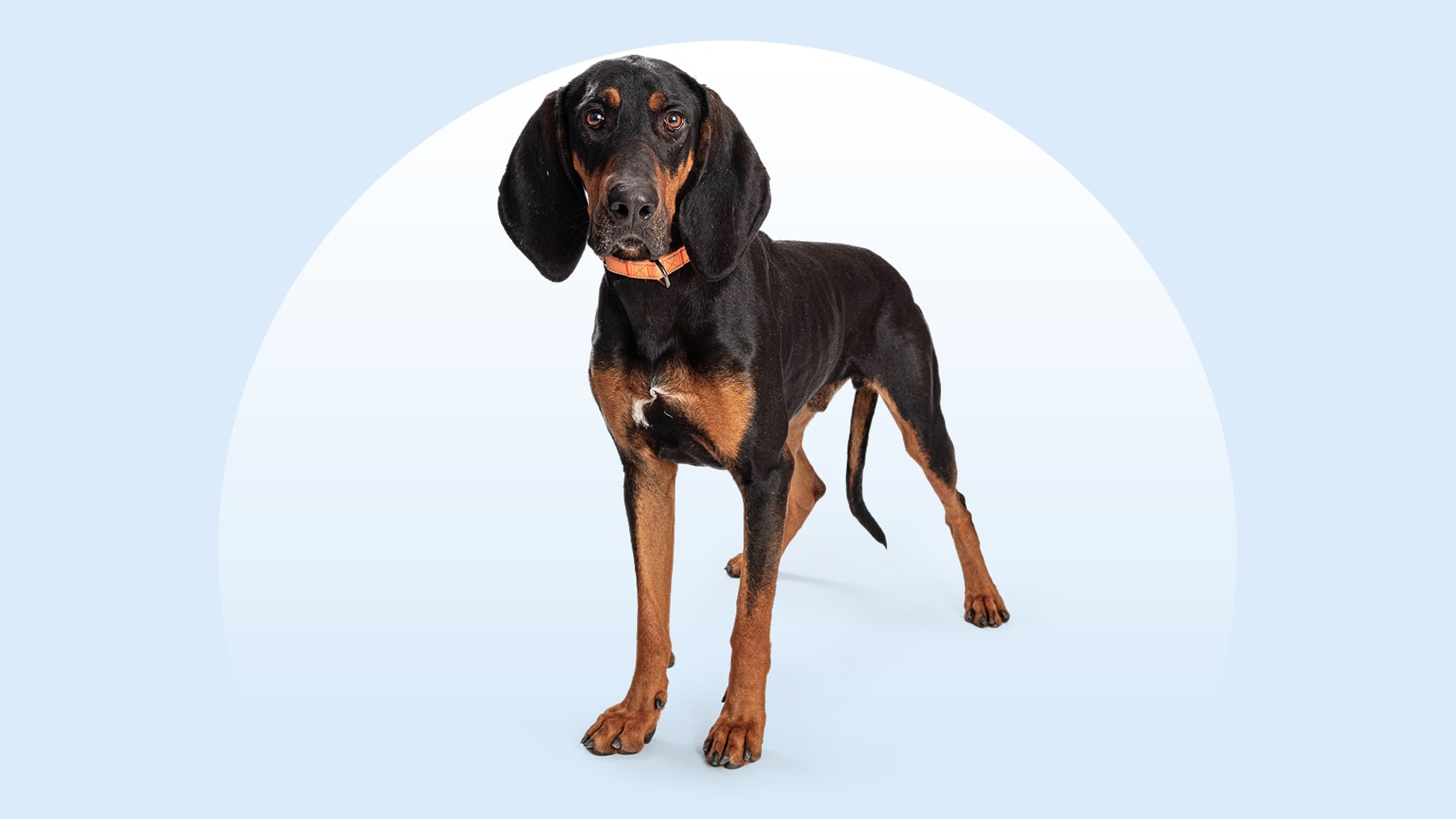
Black and Tan Coonhound
Updated July 31, 2026
The Black and Tan Coonhound is a large hunting dog best known for their distinctive black-and-tan coat—hence the name. Their nose is their greatest asset, helping them follow even faint scent trails. They’re easygoing, friendly companions who have no trouble keeping up with an active family.
Good-Natured, Easygoing, Inquisitive
65–110 pounds
23–27 inches
10–12 years
Black and Tan
If you love being active outdoors, a Black and Tan Coonhound might become your new best friend. When they’re not exploring the great outdoors, they’re probably hogging the whole couch. These dogs are not small!
Bred for hunting, Black and Tans love having a job to do—but they’re also happy socializing with their favorite people. And with one of these pups by your side, you’ll likely be treated to their signature “song” several times a day.
Black and Tan Coonhound Characteristics
Black and Tan Coonhound Appearance
The Black and Tan Coonhound is a muscular, athletic dog with a distinctive black-and-tan coat. Their long, droopy ears complement their expressive eyes and sensitive nose.
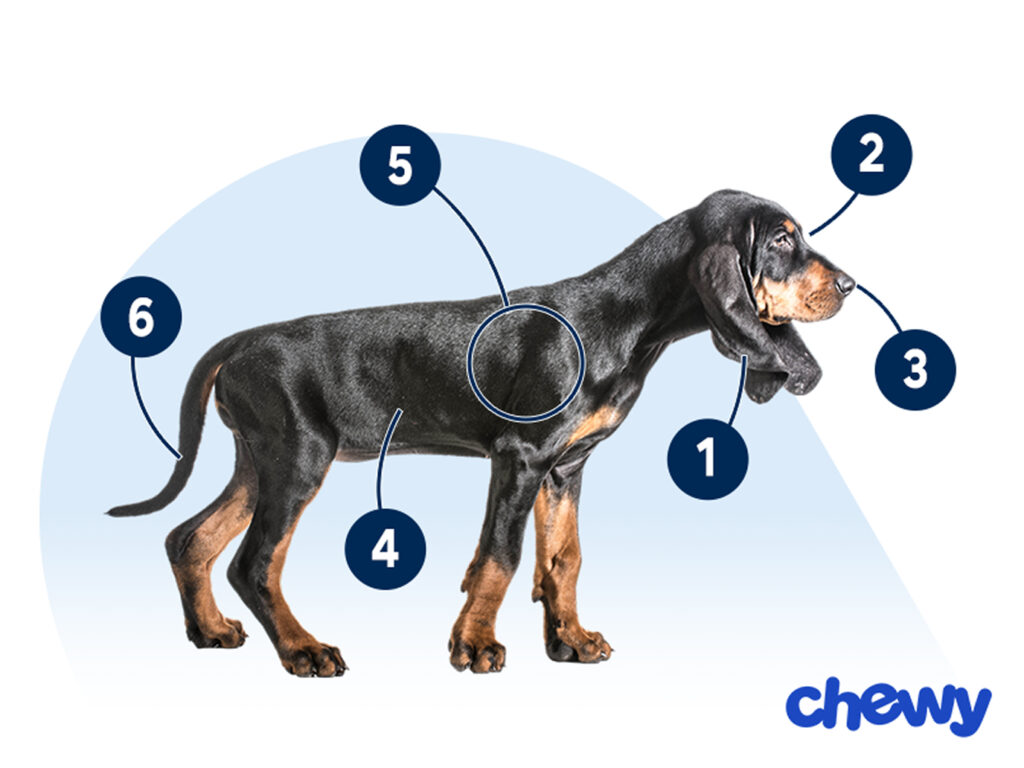
- Ears
Their ears are long, hang past the tip of the nose, and are set at eye level or lower.
- Eyes
Their eyes are round, dark brown or hazel, and not deeply set.
- Nose
Black and Tan Coonhounds have a large nose with wide-open nostrils that help them follow a trail.
- Coat Length
Their coat is short, dense, and weather-resistant.
- Coat Color
Black and tan is the standard color for these pups, usually with a black body and tan markings on the face, muzzle, chest, and legs.
- Tail
Their tail is long and tapered and is carried at approximately a right angle to the back when they’re in action.
Black and Tan Coonhound Temperament
Black and Tan Coonhounds are easygoing hounds, says Jax Hopkins, an American Black and Tan Coonhound Club-referred breeder with Southwind Black and Tan Coonhounds in Benton, Arkansas.
Hopkins says this coonhound makes a superb family dog because they develop deep bonds with their people and rarely meet a stranger.
“They love people and thrive in a family where they can reap the benefits of companionship—but be warned, they will pick a couch or cozy spot in your home to claim for their entire lives,” Hopkins says.
Originally bred as hunting dogs, Black and Tan Coonhounds still excel at the job today. They also enjoy dog sports such as tracking and scent work and may make good search-and-rescue dogs thanks to their strong sense of smell.
“Black and Tans have the instinctive ability to follow old, faint scent trails,” Hopkins says. “Naturally, this would be very useful in search-and-rescue efforts. They are persistent and driven when on the trail.”
Related Breeds







How to Care for a Black and Tan Coonhound
Black and Tan Coonhounds are fairly easy to care for as long as you’re patient and willing to train and exercise them every day. They’re smart dogs who love having a job to do, so regular playtime and interaction are non-negotiable. They might even get you hooked on new hobbies such as dog sports, hiking, or running.
Grooming
Training
Diet
Exercise
Environment
Black and Tan Coonhound Health
The Black and Tan Coonhound is generally a sturdy, healthy breed, but there are a few health conditions to be aware of:
- Gastric dilatation-volvulus (GDV): This life-threatening condition occurs when the stomach becomes distended with gas, food, or fluid and may twist. Signs can include a swollen abdomen, repeated unproductive retching, drooling, restlessness, and weakness. GDV requires immediate veterinary care.
- Hip dysplasia: This condition occurs when the hip joint develops abnormally and the head of the femur doesn’t fit properly into the hip socket. It can eventually lead to pain, arthritis, and mobility problems. The Orthopedic Foundation for Animals (OFA) suggests screening Black and Tan Coonhounds for both hip and elbow dysplasia, but neither condition is extremely prevalent in this breed.
- Ear infections: Because the Black and Tan Coonhound has long, floppy ears, moisture and debris can become trapped in the ear canal and contribute to ear infections. Check your dog’s ears regularly for redness, discharge, odor, or excessive scratching, and clean them only as recommended by your veterinarian.
Black and Tan Coonhound History
Like other hound dogs, Black and Tan Coonhounds were originally bred for hunting. This American breed was developed to track and tree raccoons and other game. While the breed’s exact origins are unknown, the dogs were developed in the U.S. around the turn of the century, according to the American Black and Tan Coonhound Club.
The Black and Tan Coonhound was recognized by the American Kennel Club in 1945.