Greyhound
Updated April 2, 2026
Greyhound
Updated April 2, 2026
An elegant sighthound known for their agility and grace, Greyhounds have long been prized by royalty and nobility. Lucky you—you can call one of a member of your family.
Gentle, Independent, Laidback
60–70 pounds
27–30 inches
10–13 years
Black, Black Brindle, Blue Brindle, Red, Red Brindle, White, White and Black, White and Blue Brindle, White and Red, Blue, Blue Fawn, White and Black Brindle, White and Blue, White and Blue Fawn, White and Red Brindle
Greyhounds are the track stars of the dog world, and their event of choice is sprinting.
Don’t worry, you don’t have to run along with them (as if you could keep up!). They’re just happy to have you as their cheer squad, so feel free to take your seat and watch them in action from the comfort of your fenced-in backyard.
But once your Greyhound gets their energy out, they’re actually quite laid-back—maybe even a little lazy.
Recommended Products


Greyhound Characteristics
Greyhound Appearance
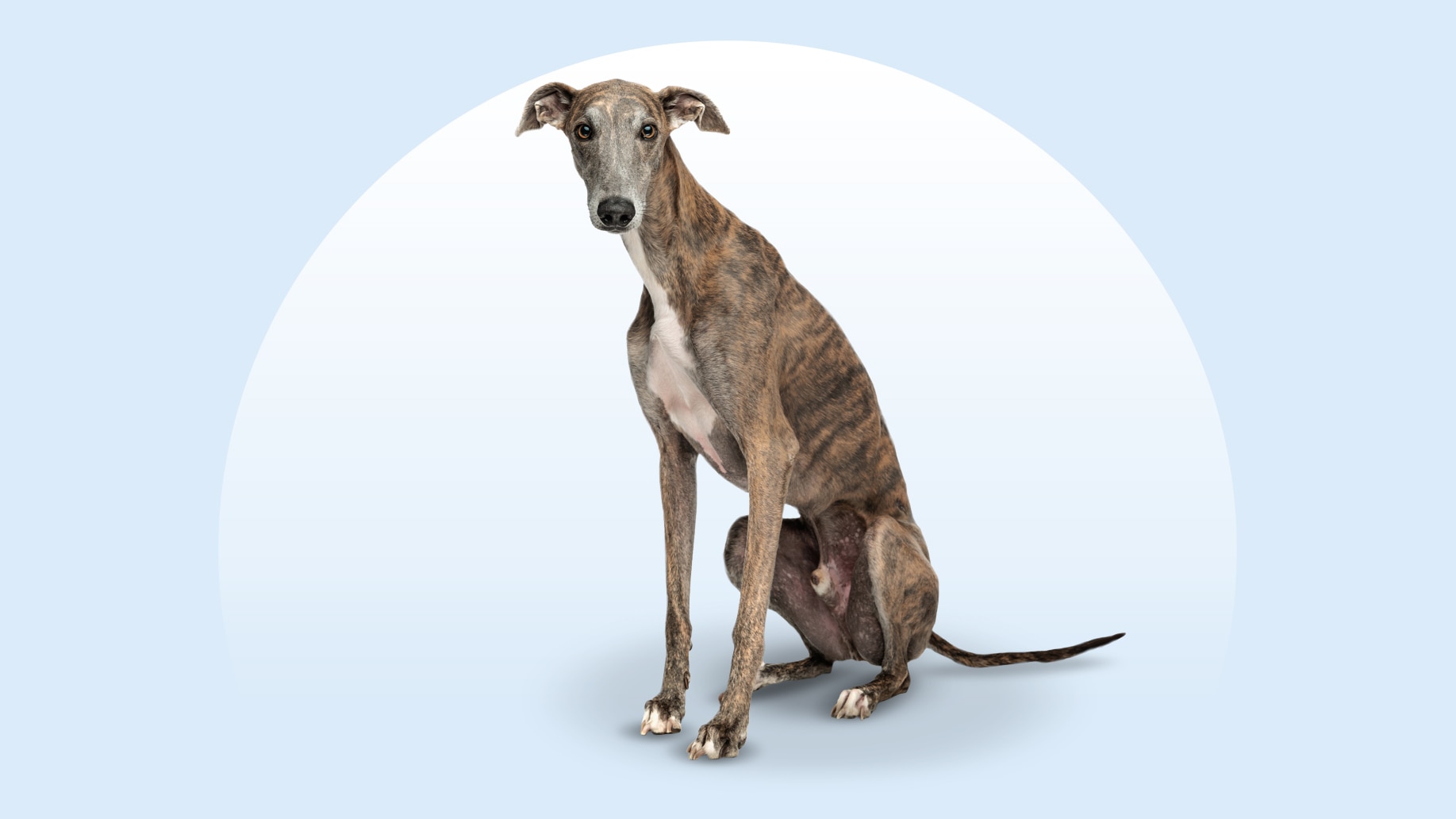
Large and sleek, Greyhounds have a small head, wider middle, and smaller backend, which was the perfect aerodynamic design for their hunting days. Their long tail acts like a rudder to guide them when they’re in hot pursuit of a Frisbee.

- Ears
Greyhound ears are fine-textured and rose-shaped (meaning the insides of the ear resemble a rose).
- Eyes
Greyhound eyes are dark, oval, and soulful.
- Nose
They have a long muzzle that tapers to the nose.
- Coat Length
Their coat is short, firm, and smooth.
- Coat Color
Greyhound colors run the spectrum: black, white, red, blue, blue fawn, and brindle (subtle tiger stripes). Some have spots or differently colored patches, while other dogs are a solid color.
- Tail
The Greyhound tail is long and thin with an upward curve.
Greyhound Temperament
Greyhounds aren’t trying to make speed their whole personality, but the fact is that they really love to run. As such, you’ll need to understand that your dog has spurts of energy that they need to get out on their own terms.
These gentle, friendly dogs (sometimes known as English Greyhounds, so as not to be confused with the Italian Greyhound) make great family pets, too.
When they’re done with their exercise for the day (again, let them go at their own pace, when they feel like it), they’ll be ready for snuggles. It’s kind of hard to imagine that that chill, calm dog lounging by your side in the evening is the same pup who couldn’t help but take an extra-energetic lap around the yard earlier.
These elegant pups belong to a group called sighthounds (dogs who were bred to hunt by sight instead of scent), so they also have an adorably independent streak. If they sometimes seem aloof, don’t worry; they’ll show you how much they missed you at the end of the day with cuddles.
Related Breeds






How to Care for a Greyhound
The typical Greyhound personality is pretty laid-back, and they have a maintenance routine to match. And while they have spurts of intense energy, they’re content to be a couch potato with you the rest of the day.
Grooming
Training
Diet
Exercise
Environment
Greyhound Health
The average Greyhound life expectancy is 10–13 years. Here are some health issues to be aware of.
- Anesthesia sensitivity: Greyhounds are sighthounds with lean muscle mass and low body fat. They absorb drugs more slowly, meaning that they’re slower to recover from general anesthesia or heavy sedation. Discuss any concerns with your vet.
- Arthritis: Although all Greyhounds (and all dogs!) can get arthritis, maintaining a high-quality diet and regular exercise can help prevent more severe joint issues and pain. Ask your vet about supplements to help prevent or alleviate them.
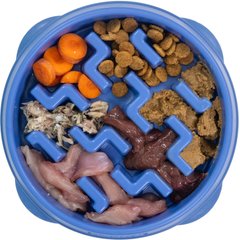
- Bloat and gastric dilatation-volvulus (GDV): Greyhounds, like many deep-chested breeds, are prone to a life-threatening condition called bloat. It occurs when the stomach gets distended with air and/or food. A serious complication of bloat is when the stomach twists on itself, cutting off blood supply to the organs. This is called GDV, and symptoms include abdominal distension, restlessness, and dry heaving. If you notice these signs, go to the vet immediately. To avoid bloat, use a slow feeder and feed your dog smaller meals throughout the day. Keep their food bowls on the ground (don’t elevate them) and don’t exercise one hour before or after meals.
- Blood-clotting issues: Some Greyhounds have problems with blood clotting that may appear after an injury, surgery, or dental work. If you notice intense bruising or prolonged bleeding after any of these instances, see a vet immediately fortreatment.
- Bone cancer: More formally known as osteosarcoma, bone cancer is common in Greyhounds. Treatment often includes surgery, chemotherapy, and radiation.
- Polyneuropathy: This inherited neurological condition can cause muscle weakness, fatigue, and a bunny-hop gait. See your vet if you notice symptoms.
Greyhound History
Their origins are rooted deep in ancient history—ancient Egypt, to be exact. Pharaohs reportedly used Greyhounds to hunt wild game, and pictures of Greyhounds are found in the Great Pyramids.
In more modern times, Greyhounds became a recognized sign of nobility in Europe during the Middle Ages (mere commoners couldn’t have them), and later, their high-class status was cemented in Renaissance paintings.
In the 16th century, lure coursing became a popular sport (unfortunately, real rabbits were used, though not always caught). Greyhounds were judged mainly on their speed, concentration, and agility. The rules of lure coursing are basically the same to this day (minus the live rabbits, of course).
Greyhounds were used in the 19th century to chase hares, foxes, and badgers from fields (which is why they might try to chase small critters in your backyard—it’s just instinct). Coursing races were popular with the wealthy, and Queen Victoria’s husband, Prince Albert, had one as a pet in the 1800s.
Greyhounds were brought to the U.S. from Ireland and England during the mid-1800s, and Greyhound racing eventually became a popular spectator sport. Unfortunately, there was a very dark side to this sport, and many Greyhounds were abused; it has fortunately mostly fallen out of favor in the United States.
Greyhounds were recognized by the American Kennel Club in 1885, and the Greyhound Club of America was formed in 1907.
Greyhound puppies can cost thousands of dollars. If you choose this route, pick a responsible breeder.
You can also consider Greyhound dog adoption, as there are many of these pups already looking for their forever families. There are also many Greyhounds who have been retired from racing, and they especially deserve a warm, kind place for retirement.
Look for a Greyhound rescue like Greyhound Rescue and Rehab, keep an eye out at your local shelter, or search Chewy’s database for adoptable dogs in your area.