Lymphoma in Dogs: Signs, Symptoms, and Treatment


Photo by Chewy
Lymphoma in dogs is a cancer that often starts in the lymph nodes and can spread to other parts of the body. The sooner lymphoma is diagnosed, the sooner treatment can begin—and early treatment often leads to better outcomes.
If your dog has swollen lymph nodes or other symptoms of lymphoma, schedule a veterinary appointment as soon as possible.
Key Takeaways
- Lymphoma in dogs is a common cancer that affects white blood cells and causes swollen lymph nodes.
- Early diagnosis and treatment are important and can improve outcomes and quality of life.
- Common signs include enlarged lymph nodes, weight loss, decreased appetite, lethargy, vomiting, and increased thirst or urination.
- Chemotherapy is the most effective treatment, with up to 90% of dogs achieving temporary remission.
- Although lymphoma is treatable, relapse is common, and treatment focuses on extending life and maintaining comfort.
What Is Lymphoma in Dogs?
Lymphoma in dogs is a type of cancer that affects their white blood cells, which are called lymphocytes. Normally these cells are healthy and functional, but in dogs with lymphoma, they mutate and grow out of control. This rapid growth results in tumors.
Lymphoma in dogs is common and may make up nearly one in four cases of cancer in dogs. Some dog breeds are predisposed to developing lymphoma, including Golden Retrievers, Labrador Retrievers, German Shepherds, and Boxers.
Dogs 5 to 10 years old are also more likely to be diagnosed with lymphoma.
Signs of Lymphoma in Dogs
The main sign of lymphoma in dogs is the sudden enlargement of one or more lymph nodes.
Lymph nodes are found throughout the body, including on the neck, under the jaw, and behind the knees. You might notice a lump while petting your dog—it will feel irregularly shaped and firm. Normally lymph nodes are about the size of a blueberry, but when they contain cancerous cells, they can grow much larger.
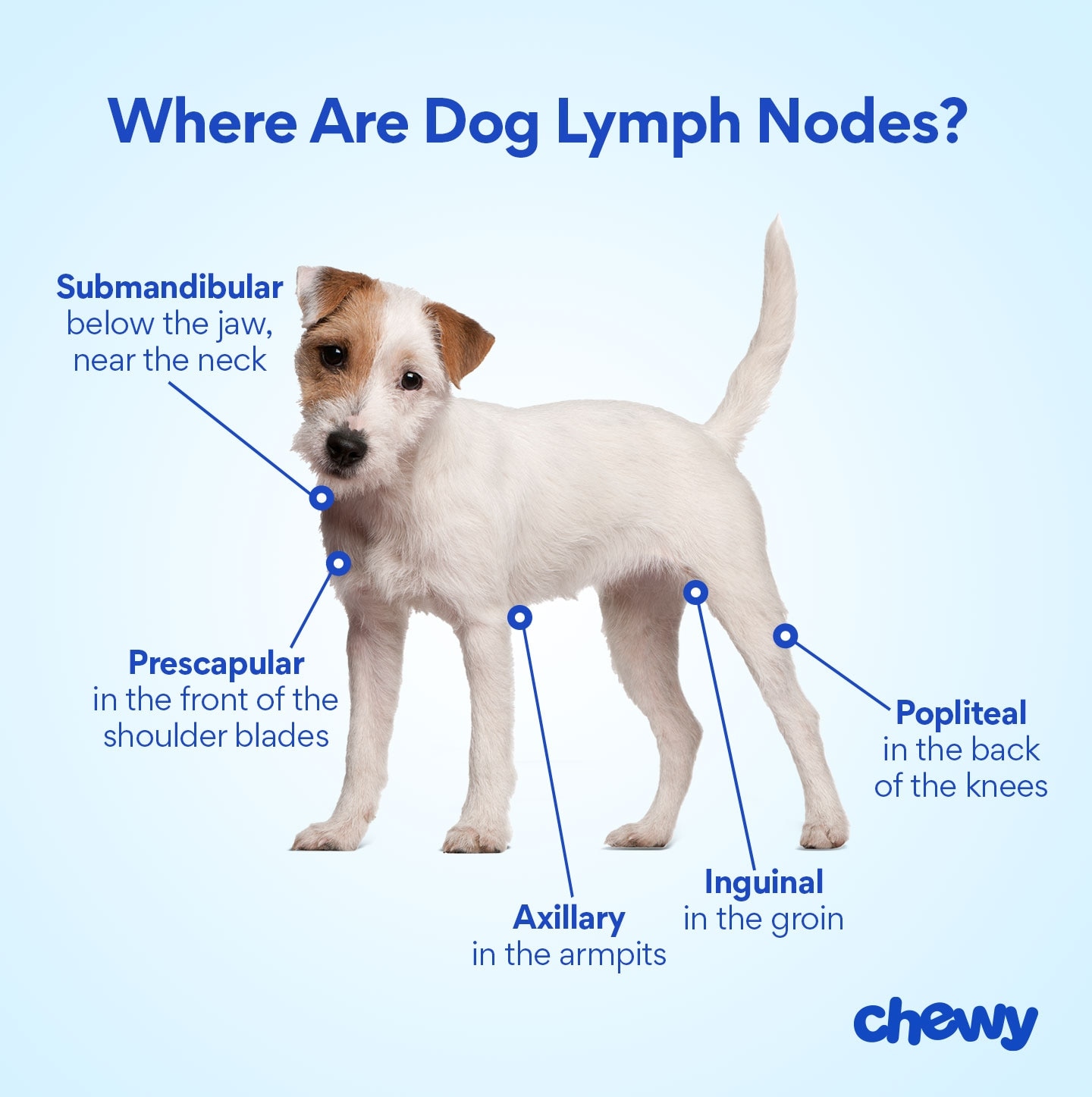
Photo by Chewy
Other symptoms of lymphoma in dogs may include:
- Decreased appetite
- Weight loss
- Lethargy
- Vomiting
- Diarrhea
- Increased drinking
- Increased urination
- Crusty, hairless skin bumps
- Coughing
Causes of Lymphoma in Dogs
The exact cause for lymphoma in dogs is unknown.
However, some components are thought to play a part in lymphoma in dogs:
- Genetics
- Toxin or chemical exposure
- Previous infections
- Immune system dysfunction
Diagnosis of Lymphoma in Dogs
If your dog’s lymph nodes are swollen or they have other worrisome symptoms, call your veterinarian for an appointment as soon as possible. The earlier that lymphoma is diagnosed, the better the outcome.
Your vet will examine your dog and check their lymph nodes. If they’re enlarged, diagnostic testing can help determine the underlying cause.
Your vet may order the following tests:
- Fine needle aspirate: Cells are collected from the enlarged lymph node and viewed under a microscope. They’re then sent to a special laboratory to confirm a diagnosis.
- Biopsy: Your vet will sedate your dog and remove a small sample of the affected lymph node. A laboratory will then examine the sample to determine whether the cells are cancerous.
- Imaging: A chest X-ray and abdominal ultrasound can help determine whether cancer has spread and inform treatment and prognosis.
- Blood work: This can check blood cell counts and organ function. It won’t diagnose lymphoma, but it gives your vet insight into your dog’s overall health and how they may handle treatment.
Treatment of Lymphoma in Dogs
Lymphoma in dogs is treatable in the short term if caught early, but even if it is cured, the majority of dogs eventually have a relapse.
So, remission is almost always temporary, and ultimately palliative care is necessary to keep your pup comfortable.
Initial treatment may include:
Chemotherapy
The most common treatment for canine lymphoma is chemotherapy—specifically a kind called the CHOP protocol—and your dog will receive it at the veterinary hospital on an outpatient basis.
Medications used in chemotherapy include:
- Vincristine
- Doxorubicin
- Cyclophosphamide
- Prednisone (a steroid)
Treatment takes 25 weeks, and up to 90% of dogs go into remission. Half of the dogs who receive this type of chemotherapy live a year or longer after their diagnosis.
Dogs generally tolerate chemotherapy better than people due to lower doses, and the majority of dogs do not experience side effects.
Prednisone
Sometimes chemotherapy isn’t an option due to cost or the advanced stage of cancer.
In that case, supportive care with steroids can support a dog’s quality of life and reduce discomfort.
Prednisone is an oral medication that you can give your dog at home, if your vet recommends it. It increases appetite, reduces inflammation, and reduces the size of tumors for a short time.
Unfortunately, dogs under supportive care generally live only one to three months after diagnosis.
How To Keep Your Dog Feeling Comfortable
Whether your dog is receiving chemotherapy or supportive care, they’re going through a lot. A comfortable home environment can go a long way toward giving them a sense of calm.
You can support your dog by:
- Providing a cozy orthopedic bed so they can get adequate rest.
Recommended Product

- Using a ramp if weakness or joint pain makes it harder to climb stairs or jump.
Recommended Product

- Encouraging hydration with fresh, clean water or a water fountain.
Recommended Product

- Talking to your veterinarian about a high-protein diet, like this one from Purina Pro Plan. Diets with lower carbs are thought to potentially starve cancer cells and slow their growth.

- Asking your veterinarian about an appetite stimulant, such as Entyce, if your dog isn’t eating well.
Recommended Product

How To Prevent Lymphoma in Dogs
Because the cause for lymphoma in dogs is unknown, there’s no way to prevent it.
Your best bet is to keep your dog healthy by:
- Scheduling regular vet visits for vaccines, checkups, and illnesses
- Avoiding exposure to chemicals and toxins
- Maintaining an optimal weight
- Eating a complete and balanced diet that is AAFCO compliant
FAQs About Lymphoma in Dogs
What is the life expectancy of a dog with lymphoma?
The life expectancy of a dog with lymphoma can be anywhere from a few weeks to a year or more. It depends on how advanced the cancer is at diagnosis as well as the chosen treatment.
What are the first signs of dog lymphoma?
The first sign of dog lymphoma is the sudden enlargement of lymph nodes, which are found in the neck, under the jaw, and behind the knees. Other signs may include weight loss and lethargy.
What is the final stage of lymphoma in dogs?
The final stage of lymphoma in dogs is when the cancer has spread to all lymph nodes and into other organs, the bloodstream, and the nervous system.
Is it worth treating lymphoma in dogs?
Yes, it’s often worth treating lymphoma in dogs. The disease is highly responsive to chemotherapy, which can put many dogs in remission for months. However, you should have this conversation with your veterinarian.