Baby Chicks Care Sheet


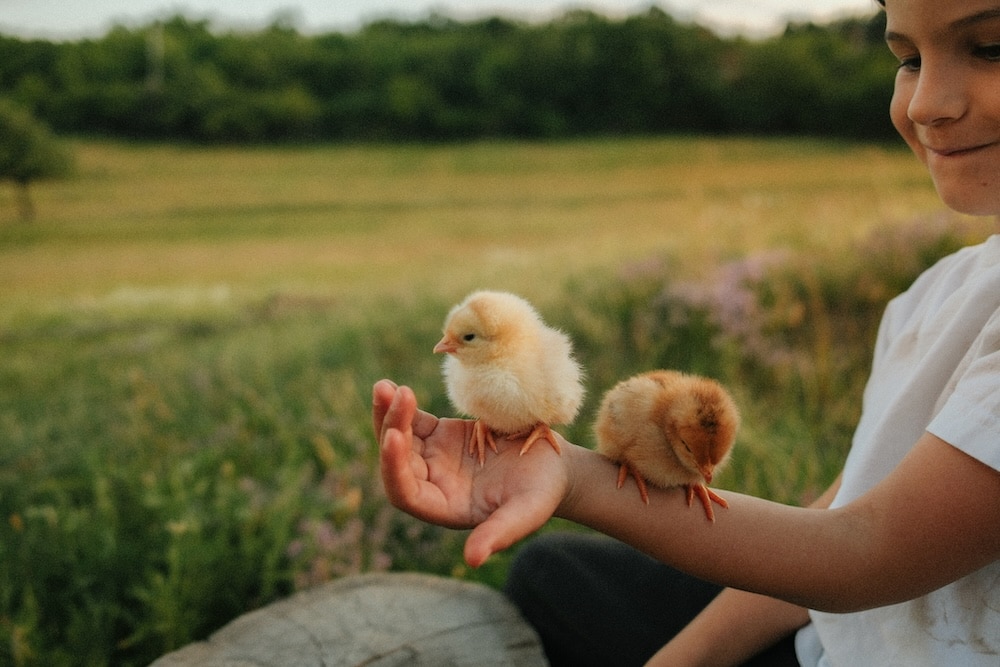
Photo by AleksandarNakic/E+
Having chickens can be a fun and exciting experience, even if you only have a little backyard space for them. And it’s super fun to raise baby chicks from the time they are small. Here’s what you need to give baby chicks a healthy and fulfilling life.
Baby Chicks Overview
- Many breeds of chickens vary in size, appearance, and temperament.
- Chicks need to stay in a brooder for a few weeks before moving to a coop.
- With proper care, chickens can live 7 years or more.
Fun Facts About Baby Chickens
- Baby chicks can’t regulate their body temperature, so they may need to live inside your house until outdoor temperatures are consistently warm enough.
- Chicks are very social. Living alone causes them stress and shorter lifespans, so it’s better to raise them in groups.
Baby Chick Incubators and Brooders
Incubator Setup
If you’ve got fertile eggs, you can set them up in an egg incubator.
Recommended Products
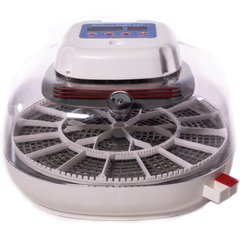

First, thoroughly wash the incubator with warm, soapy water, then rinse with a bleach solution and allow it to dry completely. Check the incubator’s temperature and humidity before placing eggs inside to ensure they remain in a consistent environment.
Set the incubator temperature to 100.5 F and ensure it stays within the 99–102 F range. Humidity should stay at 50–55% from the first day to day 17, then 70% from day 18 onward.
Add eggs to the incubator and turn them three to five times daily. Some incubators can automatically turn your eggs as well. This prevents sticking and developmental issues.
You can “candle” eggs—shine a bright light through the shell in a dark room—on day seven or eight to check growth. Remove broken or leaking eggs, since those aren’t viable.
Hatching Chicks
Chicks can start hatching as early as day 18, and that’s when you can stop egg rotation.
When the chicks start to hatch, don’t intervene. It could take five to seven hours, or even as long as 24 hours, for the chicks to fully hatch.
When one arrives, they may peep at the shells of other chicks to encourage hatching. Once all the chicks have hatched, move them to a brooder.
Brooder Setup
Baby chicks need to live in a brooder for the first few weeks of their lives.
Recommended Product
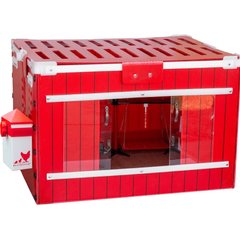
This draft-free, heated, escape-proof pen should be at least 2 feet high with good ventilation and walls.
Use a brooder kit or a large plastic bin with enough heat and ventilation. Give each chick at least 1/2 square foot at first, increasing to 3/4 of a square foot by 6 weeks of age.
Line the bottom of the brooder with 3–4 inches of bedding, like pine shavings, paper litter, or aspen shavings.
Recommended Product

Add perches and a few dangling toys, like ladders and platforms, as these are great for mental and physical stimulation.
Brooder Cleaning
Spot-clean the brooder daily by removing droppings, soiled material, and uneaten food. Replace with fresh bedding every day.
Wash and disinfect the brooder at least once a month with either a commercially available coop cleaner or a 3% bleach solution.
If you plan to house more chicks, thoroughly clean the brooder before welcoming in a new group.
Heat and Light
You might have to keep your baby chickens in a brooder that’s inside a heated garage, basement, or spare room in your home until they are old enough to move to a chicken coop outdoors.
Baby chickens can’t regulate their body temperature on their own. During the first week of life, the chicks need to be kept in an enclosure at 93–95 F. Every week after that, reduce the temperature by 5 degrees until the brooder reaches 65–70 F.
If you notice baby chicks huddled together and not roaming around, they might be too cold. If they are avoiding the heat, it might be too hot. Use a thermometer to check the brooder temperature multiple times a day to ensure it stays within the ideal range.
Use a heat plate or lamp to warm your brooder. You can also install an artificial LED light to promote healthy egg production when chicks reach adulthood at 4–6 months. However, exposure to natural light is always the ideal option.
Recommended Product
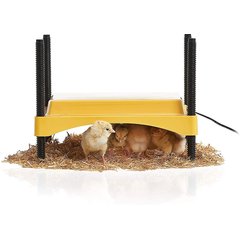
Baby chicks should have 8 hours of light exposure each day. Increase exposure time by 30 minutes each week until they are getting 14–16 hours a day. Chicks need light to get used to circadian rhythms of the day, and UVB helps in producing vitamin D3 for proper calcium absorption.
What To Feed Baby Chicks
Baby chicks should be given food and water in feeders and waterers designed for chicks.
Recommended Product
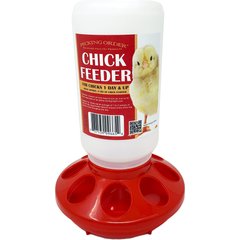
They should always have access to clean, fresh water. Do not use water bowls, as your chicks could drown. Water bowls are also more prone to contamination.
Feed your chicks daily with a commercial starter feed that’s fortified with protein, vitamins, and fat. They should have food and water available at all times.
Recommended Product

Starter feed is optimal for the first 4–8 weeks of life. Then they can transition to a grower feed that’s formulated for adolescent chicks.
Mix 1–2 tablespoons of insoluble grit into 1 quart of starter feed to help encourage their stomach to break down the feed.
Recommended Product

Chicks can enjoy some fruits, vegetables, and other treats, but these shouldn’t make up more than 5% of their daily diet. Cut cucumbers, tomatoes, strawberries, and leafy greens into tiny pieces before serving.
Dried or live bugs such as roaches or worms are also very good for chicks because they add good amounts of protein.
Baby Chick Health
Take your baby chicks to a veterinarian for an initial exam soon after hatching. You can transport them as a group or separately.
Healthy chicks have clean eyes, nostrils, and feet, with a strong appetite, social attitude, and regular chirping. They should have full range of motion in both wings and be full of energy.
Watch out for eye or nasal discharge, rapid breathing, or regurgitation. If you notice limping, holding a wing abnormally, beak fractures, or loss of appetite, contact your vet right away, as these could be signs of a bigger issue.
Make sure you’re prepared for when your baby chicks grow up into adult chickens, too.
Supply Checklist for Baby Chickens
- Appropriately sized incubator and brooder
- Chick feeder
- Chick waterer
- Thermometer
- Brooder heater (plate or red bulb) or heat lamp
- Bedding
- Appropriately sized perches for roosting
- High-quality chick starter feed
- Litter and/or shavings
- 25-watt LED light bulb
- Chick grit
- Treats
- Toys
- Chick-safe dust bath container and dust for bathing
- Outdoor pen for sunlight exposure
FAQs About Chicks
When can baby chicks go outside?
Once chicks have grown out their feathers, around 6 weeks of age, they can go outdoors to a traditional chicken coop.
How long does it take for a baby chick to hatch?
Chicken eggs usually take about 21 days to hatch.
What should I do when a chick first hatches?
After all chicks hatch, move them to a brooder with food and water.
How long after pipping should a chick hatch?
A chick can take up to 24 hours to fully hatch, but most take 5–7 hours.
When should you intervene in chick hatching?
If you haven’t noticed any movement or changes by day 23, candle the unhatched eggs to see if they are still alive. If there’s no movement inside, you can discard them.
When can you touch a newborn chick?
You can touch a baby chick right after they’re born to move them from the incubator to the brooder.
Click here for a printable PDF version of this care sheet!
Attributions