How To Care for Chicks


Dreaming of a flock of baby chicks in your home? Whether you’re new to raising baby chickens or simply need a refresh, we’re covering everything about how to raise chickens at the very beginning of their lives.
Key Takeaways
- Baby chicks need a warm, draft-free brooder with a consistent heat source to survive their first six to eight weeks.
- A chick starter feed and clean water must be available at all times to support healthy growth.
- Proper temperature management—starting at 95 F and decreasing weekly—is critical to prevent illness or death.
- Daily cleaning and health monitoring help prevent common diseases like coccidiosis.
How To Care for Chicks
Step 1: Set Up Their Brooder
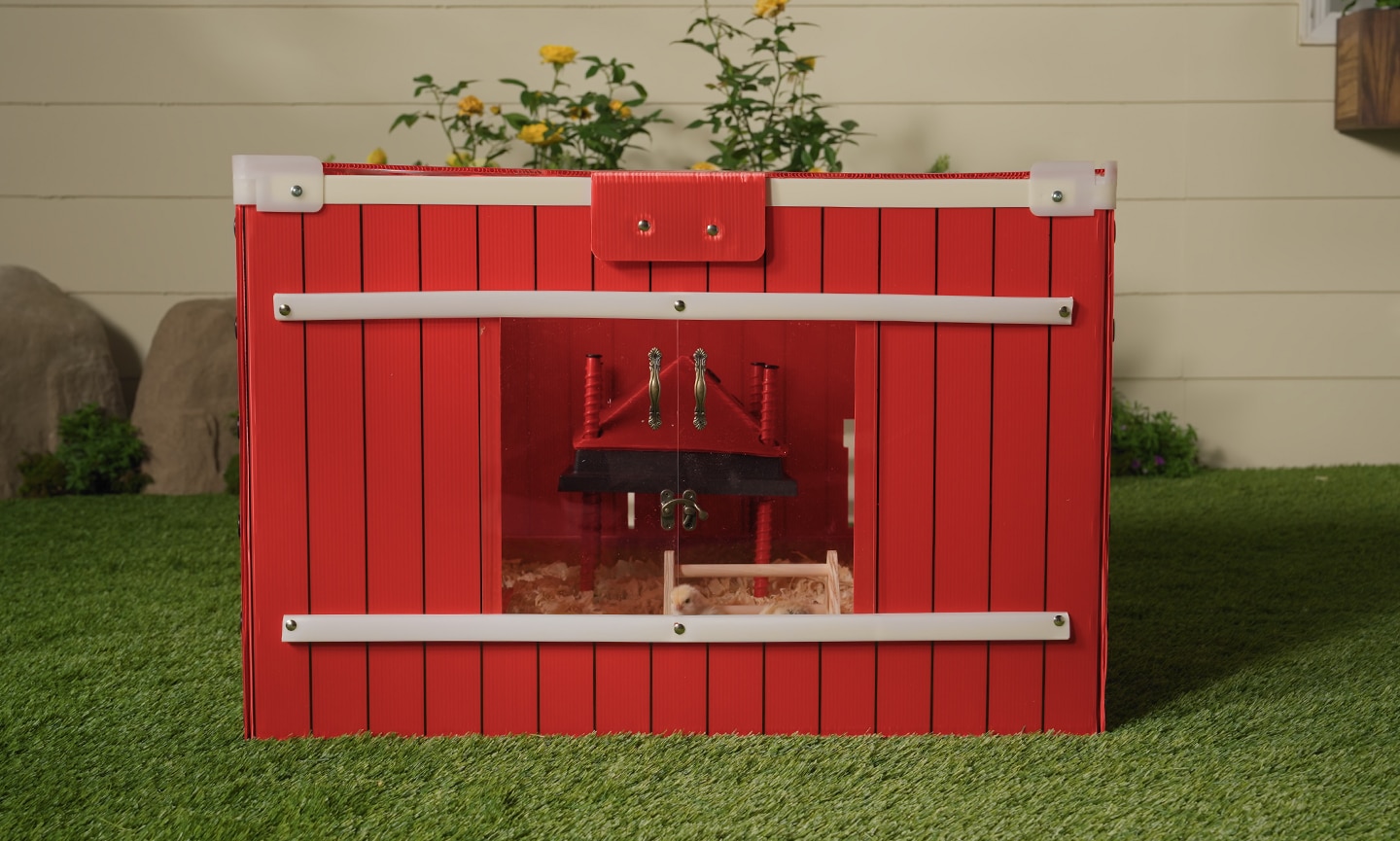
Photo by Chewy
Newborn chicks need a warm, safe place to grow up. This is called a brooder and can be as simple as a cardboard box, a puppy playpen, or a dog crate—with the sides covered with a tarp or cardboard to prevent drafts.
Recommended Product

“The brooder should be set up in a quiet spot in the house, away from kids and pets, and out of the direct sunlight, but in a fairly warm spot,” advises Lisa Steele, a fifth-generation chicken keeper in Maine and founder of Fresh Eggs Daily.
“Chicks do grow fast, but for the first week or two a large cardboard box usually will suffice,” she says. “As the chicks grow, moving them to a puppy playpen, plastic or metal water trough, or plastic kiddie pool with high sides can work.”
Baby Chick Brooder Checklist
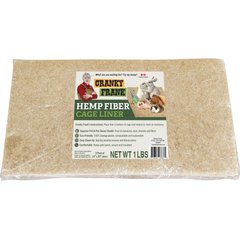
- Newspaper layer: Use a few layers of newspaper or cage liners to absorb moisture. (Steele says shavings can be dusty, so hemp is your best bet.)
Recommended Product
- Non-Slip Surface: Steele says the brooder should have a nonslip surface on the bottom so chicks can get a good grip. This goes on top of the absorbent liner. Without a grippy surface, they can develop a condition called splayed leg that affects their ability to walk later in life.
- Brooder lid: “You will need some sort of lid or top for the brooder—because in no time, the chicks will be able to flap and get over a low wall,” Steele says. Choose a lid that’s secure but breathable. Wire mesh or hardware cloth works best to keep chicks in while allowing for airflow.
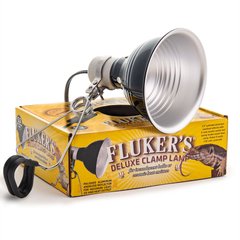
- Heat lamp: Baby chicks require a heat source. This can either be a heating pad or a heat lamp with a red bulb, such as Fluker’s Ceramic Clamp Lamp or the Brinsea EcoGlow.
Recommended Products
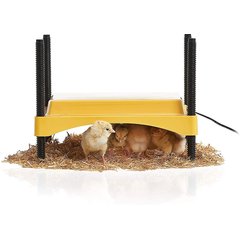
“The heat source should stay on at all times for the chicks to keep them warm,” Steele says. The heat lamp should be positioned at one end so the chicks can move closer or far away, depending on how warm they are.
Step 2: Keep Your Chicks Warm
For the first six to eight weeks of their life, baby chicks need to be kept under a heat lamp or other heat source. You’re essentially waiting for them to grow their feathers. Before that point, they’re unable to regulate their body temperature and are susceptible to chilling, which can kill them.
Here’s a chick temperature chart from Steele:
| Chick Age | Brooder Temperature |
|---|---|
| 0-1 week | 95 F |
| 1-2 week | 90 F |
| 2-3 week | 85 F |
| 3-4 week | 80 F |
| 4-5 week | 75 F |
| 5-6 week | 70 F |
| 6-7 week | 65 F |
| 7-8 week | 60 F |
Setting a small thermometer in the brooder about an inch from the floor helps regulate the temperature in the brooder. You can also tell just by looking at the chicks if they’re too warm or too cold.
“Happy, content chicks will be peeping quietly and moving around,” Steele says. “Cold chicks will start to peep loudly and cluster together for warmth. Chicks that are too warm will hold their wings away from their bodies. You can regulate the heat by moving the heat lamp higher or lower.”
Once the chicks hit six to eight weeks of age and are fully feathered, they can go outside to their adult coop.
Step 3: Feed and Water Your Chicks
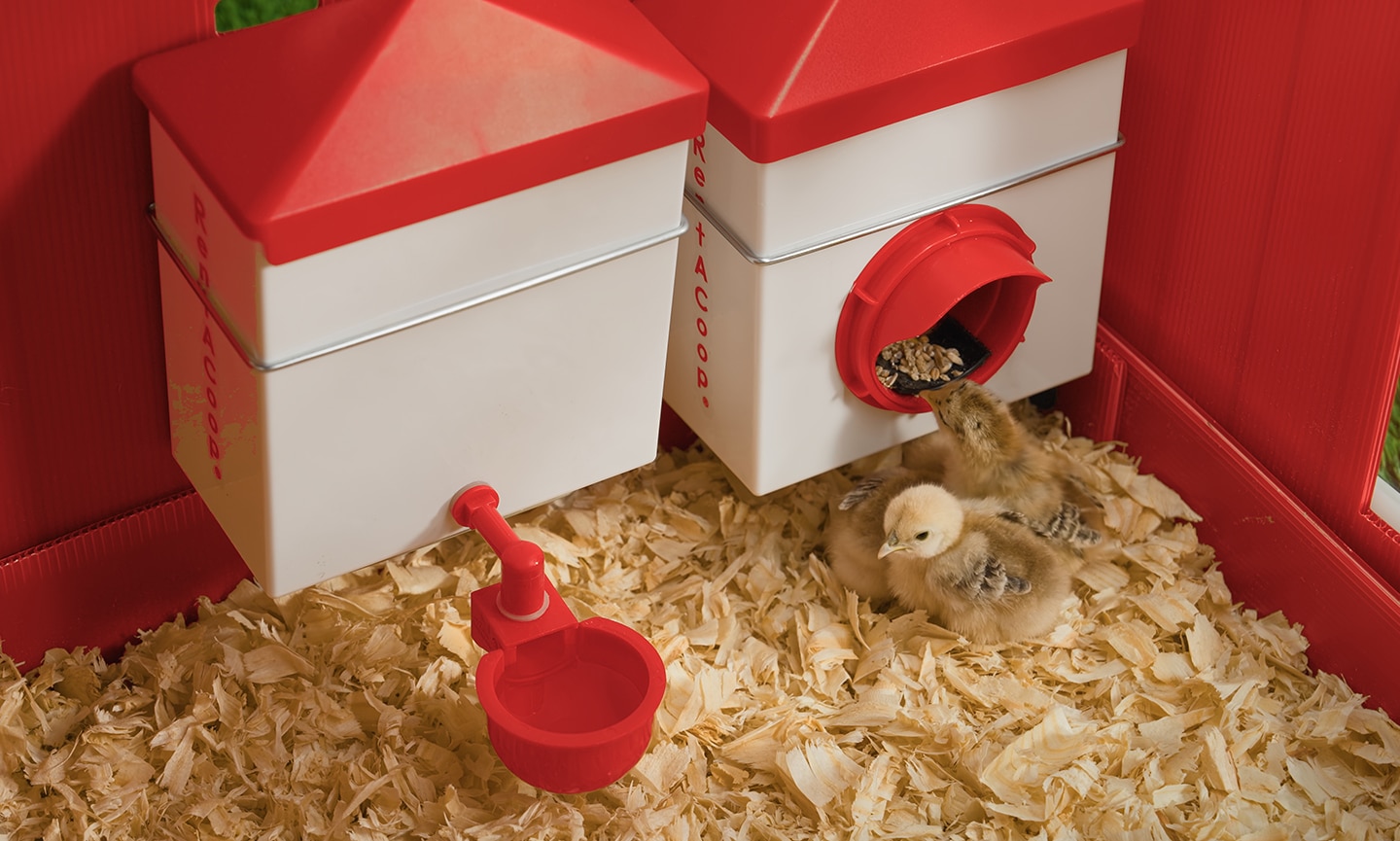
Photo by Chewy
Jared Zion, DVM, a veterinarian at Arizona Exotic Animal Hospital in Phoenix, says it’s important that baby chicks eat a chick-starter diet since they have nutritional needs different from older birds. Try Kalmbach Feeds All Natural 18% Protein Start Right Chick Feed or Manna Pro Chick Starter Grower Medicated Crumbles Chicken Food.
Recommended Products
“It’s important the dish is a shallow, wide, and clean feeder to allow access and prevent contamination of the feedstuff,” Dr. Zion says.
Recommended Product
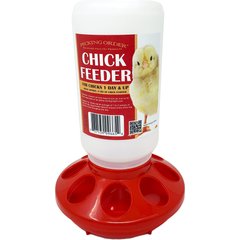
Your chicks’ water dish should be similar to their feed dishes in terms of width, shallowness, and ease of cleaning. These small, shallow sizes are important to prevent drowning.
Recommended Product

Clean, room-temperature water and food should be available 24/7.
Step 4: Clean Their Bedding Regularly
A sanitary space for your baby chicks keeps them clean, comfortable, warm, and dry. Wet bedding should be removed at least once a day, and you should also check the waterer and feeder to be sure they stay clean.
“Cleaning and refilling as needed is critical,” Steele says. “Other than that, use your eyes and nose to determine when to clean out the brooder. You don’t want the chicks walking around or laying on feces, because that can lead to illnesses like coccidiosis or aspergillosis.”
Soiled bedding can be composted or tossed in the trash.
Step 5: Monitor Their Health

Photo by Chewy
One of the most important steps of raising baby chicks is monitoring their health. A healthy chick should look bright-eyed, alert, and active.
“If you see a chick standing on unsteady legs or with their eyes closed, it’s likely there’s something wrong,” Steele says. “When chicks are small, they are pretty fragile, and if you notice one looking sick, there’s not much you can do besides separating it, keeping it warm and hydrated, and hoping it will pull through.”
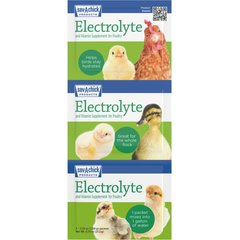
She says it’s a good idea to keep electrolytes on hand to add to the water of an ailing chick to give them a bit of extra energy. The Sav-A-Caf Sav-A-Chick Electrolyte & Vitamin Poultry Supplement is a great option.
Recommended Product
Step 6: Practice Safety When Handling Chicks
No doubt you’ll want to hold your little chicks, and it’s totally OK to do so. In fact, handling chicks from a young age can help socialize them so you have a friendly flock of adult birds.
Just make sure you’re handling them safely, and always teach children how to handle them before handing them chicks.
“Cradle chicks carefully with two hands,” Dr. Zion says. “Keep their wings tucked in with the tips of your fingers meeting over their chest, allowing them to expand their chest freely as they breathe.”
FAQs on Caring for Baby Chicks
What do baby chicks eat?
Baby chicks require starter feed to ensure proper nutrients. Occasional treats are OK but should be limited when chicks are young to things like rolled oats, dried grubs, or leafy greens.
What temperature do chicks need?
The temperature in their brooder should be 95 degrees for the first week. You can then drop the temperature 5 degrees a week until the chicks’ feathers come in.
What do you need for baby chicks?
Baby chicks require a warm brooder with a grippy bottom layer and heat source; 24/7 access to starter feed and fresh water; and consistent daily check-ins to ensure they’re growing, staying clean, and remaining healthy.
Do baby chicks need roosts?
No. Chicks sleep on the ground when they’re young, so they don’t need roosts. However, you can add items like a branch that they’ll enjoy hopping onto.
Attributions