Triggerfish Care Sheet


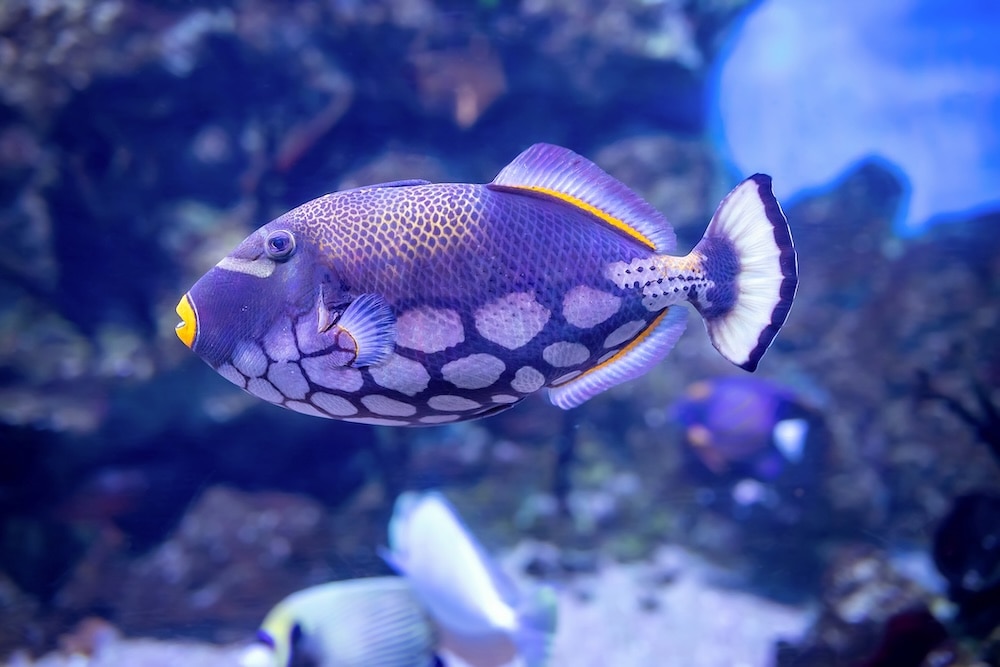
Photo by Anna Perfilova/iStock/Getty Images Plus
Triggerfish are tropical and subtropical fish with colorful, distinguishable markings. There are many species of triggerfish. This care sheet covers:
- Red-toothed trigger
- Picasso trigger
- Bluejaw trigger
- Clown trigger
- Pinktail trigger
- Undulated trigger
- Bursa trigger
- Red tail trigger
- Queen trigger
- Blueline trigger
- Assasi trigger
- Rectangle trigger
Triggerfish are best suited for seasoned fish keepers. If you plan to get a triggerfish or have recently gotten one, make sure you have everything you need to give them a long, healthy life.
Triggerfish have a reputation for being very aggressive in tanks, and this is well-deserved. Never mix them with smaller peaceful species. Ornamental shrimp, crabs, or any other invertebrates will quickly become a meal. Triggerfish are best-suited for a large fish-only system.
Triggerfish Overview
- Triggerfish are colorful with very distinctive patterns.
- These fish have strong jaws with sharp teeth.
- With proper care, triggerfish can live 20 years or more.
Fun Facts About Triggerfish
- These fish get their name from the spiky-looking projections along the top of their bodies.
- Triggerfish are exceptionally smart and communicate through grunting.
Triggerfish Aquarium
Get your triggerfish at least a 55-gallon tank for a juvenile and at least a 125-gallon aquarium for an adult. While often available as small juveniles, many triggerfish have an adult size of around 12 inches, some even bigger.
These fish are very active and territorial, and shouldn’t live with other triggerfish. But they can cohabitate with large angelfish, groupers, and puffers.
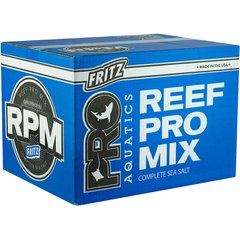
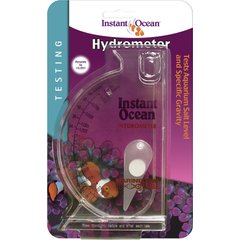
Add small amounts (roughly half a cup per gallon, but varies slightly by brand) of marine salt to your triggerfish tank until the water’s specific gravity is between 1.020 and 1.025. Use a hydrometer or refractometer to measure the salt concentration.
Recommended Products
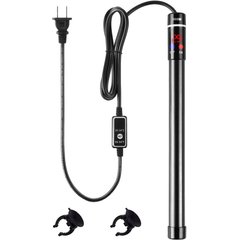
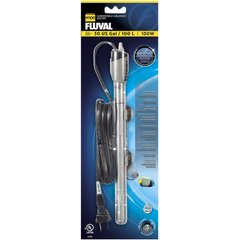
You’ll need to heat your aquarium, keeping the tank temperature around 72–78 F, ensuring it doesn’t fluctuate by more than 2 degrees within 24 hours.
Recommended Products
Line the bottom of your triggerfish’s tank with 1–2 inches of sand, crushed coral, or other marine tank substrate (about 1.5 pounds of substrate per gallon of water). For example, a 55-gallon tank would need 82.5 pounds of substrate. You may need to rinse the substrate, but if it’s a bioactive substrate, skip this step because you would harm the beneficial bacteria that come with a bioactive substrate.
Recommended Product

A high-volume hang-on-back power filter, canister filter, or sump-based filter (with a drilled tank or overflow box) are ideal for a tank with big fish. Choose a filter that will turn over the tank water between five and 10 times per hour.
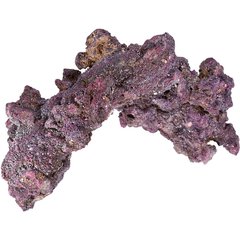
Add different types of decor for your triggerfish to swim around and through. Saltwater tank decor including live rock is ideal, and also provides additional biological filtration.
Recommended Products

Ensure all decor and accessories are secure and won’t fall over as your fish swim around them.
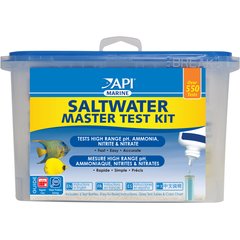
Test the aquarium water regularly to make sure pH, ammonia, and nitrate levels are within the recommended ranges. The pH should be in the 8.2–8.4 range. Ammonia and nitrite have no safe levels; if they are above zero it indicates a problem with the biological filter. Aquarium test kits make it easy to measure these levels.
Recommended Product
Keep your tank clean by doing routine water changes with a gravel vacuum every two to four weeks. Don’t drain the entire aquarium at once. Instead, change only 10–25% of the water at a time. When adding fresh water, make sure it’s the same temperature, pH,and salinity as the water in the tank.
Depending on your filter type, additional maintenance may include changing cartridges or chemical media, regularly cleaning filter socks or rollers, and wiping algae from the glass.
Triggerfish Diet
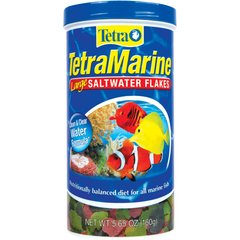
The triggerfish diet should consist of a wide variety of frozen and freeze-dried foods, as well as commercially available pellets and flakes.
Recommended Products


Feed your triggerfish once or twice a day. Well-fed adults can go longer between feedings if you’re not home, and a couple days of occasional fasting is safer than using a vacation feeder or using an untrained fish-sitter.
Give your triggerfish an occasional meal of mussels, clams, or similar hard-shelled mollusks to keep their teeth trimmed.
Triggerfish Health
A healthy triggerfish will exhibit bright colors and have a healthy appetite and intact fins with a full range of motion.
Call an aquatics expert if you notice:
- Discoloration of scales, lips, eyes, or fins
- Decreased appetite or activity (note that triggerfish commonly lay on their side when they’re not active; this isn’t necessarily a sign of a health problem)
- Fin tears and rips
- Abnormal swelling
- Labored breathing
Triggerfish Supply Checklist
- Appropriately sized aquarium
- Freeze-dried and frozen food
- Marine aquarium salt and substrate
- Filter and water conditioner
- Water test kit
- Decor
- Net and protein skimmer
- Thermometer and heater
- Refractometer or hydrometer
- Aquarium hood/cover
Triggerfish FAQs
What is a triggerfish?
Triggerfish are a family of fish including dozens of species throughout the world. Characteristics include a compressed body shape, locking dorsal fins, bright colors, and strong jaws. Many species are aggressive in tanks, and even in the wild toward divers.
What do triggerfish eat?
Feed triggerfish a variety of freeze-dried and frozen foods, along with commercially available flakes and pellets.
How long do triggerfish live?
With proper care, triggerfish can live 20 years or longer.
How big do triggerfish get?
Most common aquarium species reach 10–12 inches, but some species can get twice that size.
Are triggerfish good for beginner fish keepers?
No; triggerfish are best for intermediate or advanced fish keepers.
Click here for a printable PDF version of this care sheet!
Attributions