6 Tips for Getting Your Bird Feeder Ready for Spring

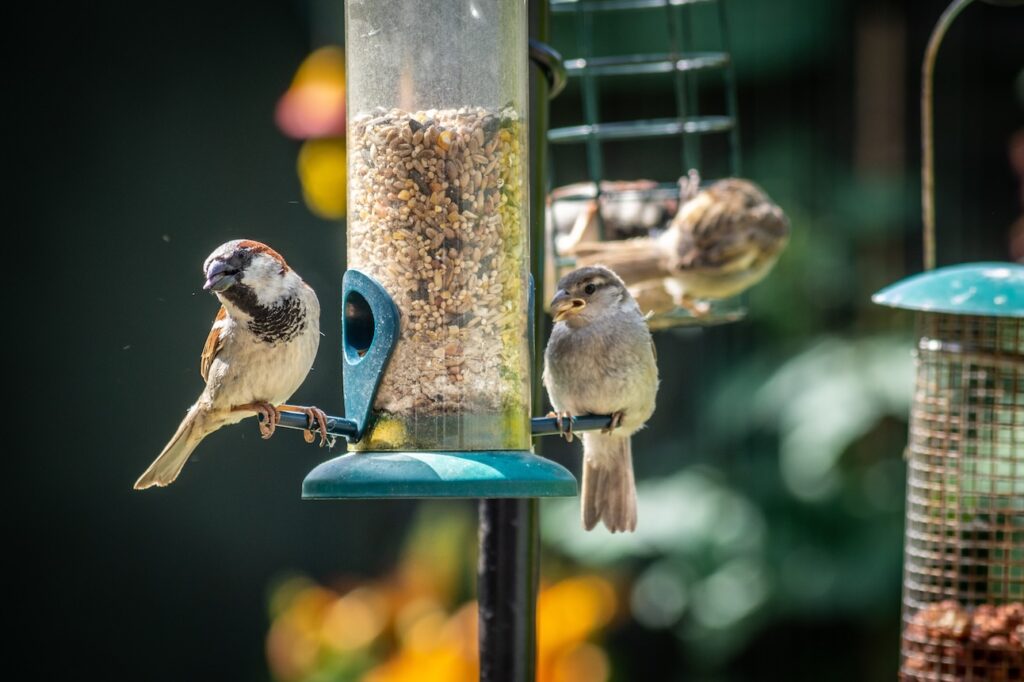
Photo by Kyaw Thiha/Adobe
When the season transitions from winter to spring, birds become more active to gear up for breeding. One way to help them thrive in the still-chilly weather is to put out bird feeders, or prepare the ones you’ve already had out all winter for the shift to warmer temps.
We spoke with three ornithology experts for their best tips on getting bird feeders ready for spring, and here are a few things to keep in mind.
Key Takeaways
- Clean your bird feeder often in the spring to prevent mold growth and reduce the spread of disease.
- Place feeders in a safe, quiet area near natural cover and far from windows.
- Offer a variety of feed and natural food resources.
1. Clean Old Feeders
Bird feeders and baths invite close contact between birds, says Jordan Rutter, ornithologist and communications director at American Bird Conservancy. This close contact can transmit diseases like conjunctivitis. Keeping areas where birds gather as clean as possible can reduce the spread of diseases.
Rutter says you should treat bird feeders the way we would our own homes.
“Bird feeders are basically the kitchens and dining rooms of our backyards. It would be hard for us to imagine not washing our dishes. We should think of bird feeders and bird baths in a similar way,” she says.
As the weather warms in spring and things start to defrost, if water has gotten down into the bottom of the feeder and the seed hasn’t been changed out, mold is likely growing. But you should clean your bird feeder regularly year-round, not just in the spring.
Olivia Sanderfoot, Ph.D., research scientist and project leader for FeederWatch with the Cornell Lab of Ornithology, says you should clean seed and suet feeders at least once every two weeks, and more often during wet weather.
Additionally, Anne Clark, a professor of biological sciences at Binghamton University in New York, recommends using a diluted Clorox solution to kill viruses and bacteria.
After cleaning your feeder, ensure it’s dry before placing it out for birds to use again.
2. Consider Placement
Knowing where to place your bird feeder can entice feathered visitors to your yard and keep them safe from potential hazards.
“As a general rule, when it comes to bird feeders, there’s no distance from windows that can truly be considered safe,” Rutter says. “Treating your windows with collision deterrents should go hand-in-hand with feeding birds.”
Clark recommends using Acadian blinds, paste-on lines set at 2-inch intervals, or screens on your windows to help deter birds from crashing into them.
She also says that certain types of hawks may fly at feeders to flush birds from your windows. So, try moving feeders where birds can flush in a different direction to escape predators like this.
Sanderfoot recommends looking for a quiet area near dense natural cover, such as trees and shrubs.
“Some birds prefer to forage on the ground, whereas others prefer to forage in bushes or trees,” she says. “In addition to height, it’s important to consider the surrounding environment.”
3. Get the Right Feed
The best type of bird feeder for your yard depends on your local climate and what species of birds you want to attract.
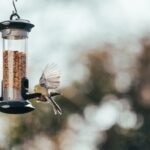
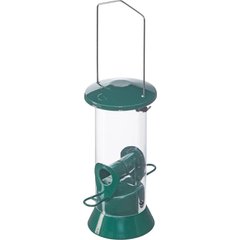
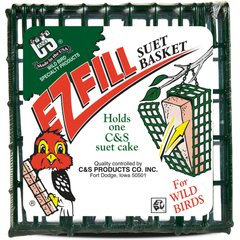
For example, tube feeders that hold seed will attract birds such as chickadees, finches, and cardinals, while suet feeders are more likely to attract woodpeckers, warblers, and wrens.
Recommended Products
However, diversifying your feed is a good idea, no matter which birds you hope to see.
“A variety of food not only helps attract a wider array of species but can also provide birds (and their young) with needed nutrients, proteins, and fats that birds’ bodies need depending on the season,” Rutter says.
4. Eliminate Threats Surrounding Bird Feeders
Pesticides, untreated windows, and free-roaming cats all pose a serious risk to birds. This danger is especially true for fledglings in spring, as domestic cats kill an estimated 1.3–4 billion birds each year in the U.S. alone. Keeping cats indoors can help avoid this.
As birds begin to breed in the spring, other animals are also becoming more active, Clark says. That means you’re potentially going to get backyard visitors like raccoons, squirrels, mice, rats, and even bears in some parts of the country.
She suggests placing bird feeders in a spot you can rake regularly so the ground underneath doesn’t build up a seed layer that attracts other animals. To do this, Clark recommends:
- Placing feeders on a high tree branch where you can raise or lower them as needed.
- Using suction cups to stick feeders on a second-floor window where animals that can’t fly can’t easily reach.
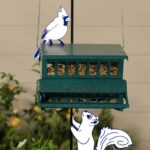
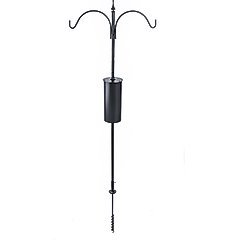
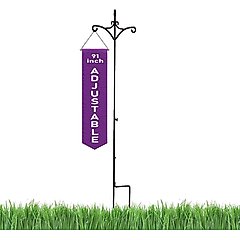
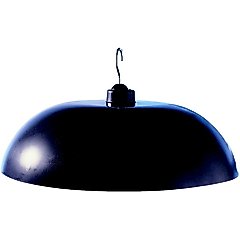
- Putting your feeder on a pole and using a baffle to keep mammals like squirrels and raccoons from climbing up to get the seed.
Recommended Products
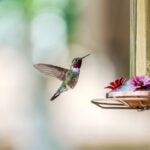
5. Supplement Feeders With Water Sources
Clark says having a water holder is great for birds, since water sources can be even scarcer than food. But make sure you keep it really clean.
“And as you get later in the season, it’s important that you do not let mosquitoes grow in it,” she warns. Mosquitoes can bite birds and spread diseases such as the West Nile virus. Change out the water regularly, and consider adding a bird bath or fountain to keep the water moving so it doesn’t become stagnant.
6. Support Wild Food Sources
Providing feeders is a great way to help birds get the nutrition they need, but if you’re going to feed birds past their breeding season, consider ways you can support them with other food sources, too.
“Wild birds do not need your seed, particularly in the late spring and summer. It’s more important for you to make your yard full of wild food,” Clark says. To keep wild food growing in your yard, avoid pesticides.
Rutter says you can maximize your food offerings by researching and planting native plant species that support the insects and birds that rely on them for food.
“During the breeding season, chicks need protein for rapid growth, while hardworking parent birds also benefit from a solid dose of insect- and spider-based protein,” Rutter explains. (She says bluebirds are known to eat up to 2,000 insects in just one day!)