Sort
Filter






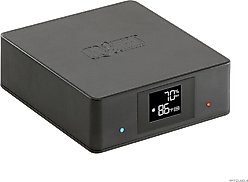
Reptile Thermometer & Hygrometers
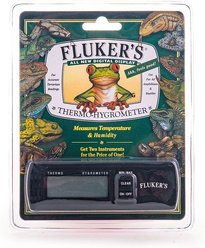
It's crucial for your reptile's health to maintain optimal heat and humidity in their cage. Though individual requirements vary by species, all reptiles rely on the conditions in their environment to regulate their body temperature and moisture balance. Reptile thermometers and hygrometers make it easy to monitor the temperature and humidity in your pet's cage. Chewy carries an array of tools for maintaining optimal temperature and humidity in your reptile cage, including:
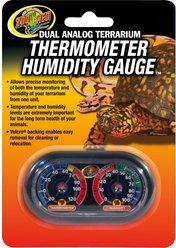
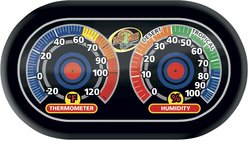
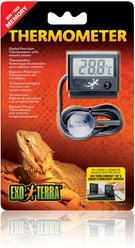
- Thermometers: Analog and digital gauges to monitor in-tank temperature
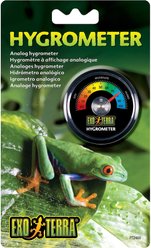
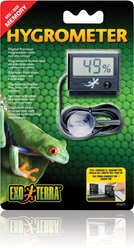
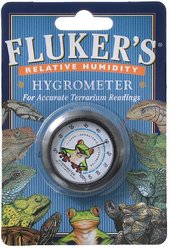
- Hygrometers: Tools to measure humidity, available as analog gauges or digital devices
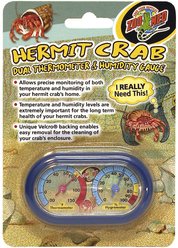
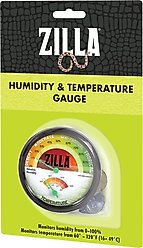
- Thermo-hygrometers: Digital tools that read both temperature and humidity
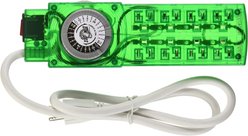
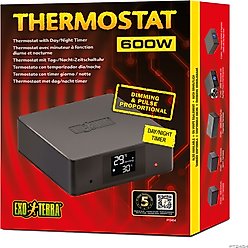
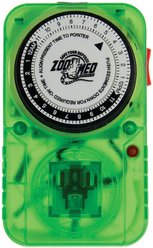
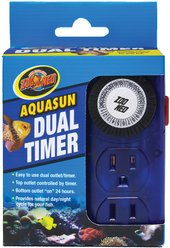
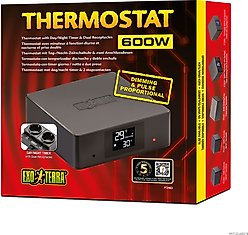
- Timers: Enable automatic operation of lighting and other equipment
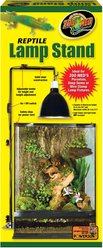
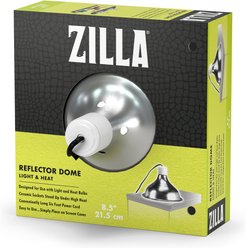
- Lamp fixtures: Brackets, cages, and mounting fixtures for reptile heat lamps
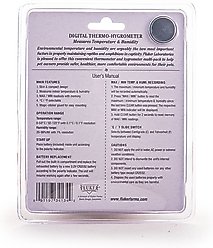
Most reptile thermometers and hygrometers are ready to use right out of the box with no need for calibration. It's wise to check the manufacturer's instructions just to be sure, and for guidance on placement of the instruments. If you want to be able to check the levels at a glance, analog thermometers and hygrometers are ideal. But if precision is your priority, a digital instrument may better suit your needs.
Frequently Asked Questions about Reptile Thermometer & Hygrometers
Do reptiles need thermometers?
Yes, reptiles need thermometers in their cage so you can easily monitor the temperature. Because reptiles are cold-blooded, they require a temperature gradient in their environment so they can warm up or cool down as needed.
What is the difference between a reptile thermo-hygrometer and a thermometer?
The difference between a thermometer and a thermo-hygrometer is that the first only measures temperature, while the second also measures humidity. Both are available as analog gauges and digital instruments.
Where should the hygrometer be placed on a reptile's cage?
Where you should place the hygrometer in a reptile's cage depends on the setup and your pet's needs. If there's a temperature gradient in the cage, place it on the cool side close to the substrate. In an arboreal setup, place the hygrometer about midway off the ground.
How do you calibrate a reptile hygrometer?
You may not need to calibrate a newly purchased reptile hygrometer. If you want to test it for accuracy, however, you can place it in plastic bag with a plastic soda cap filled with table salt. Wet the salt before sealing the bag and let it sit at room temperature for at least 6 hours before reading the hygrometer. If the hygrometer is properly calibrated, it should read 75% humidity.
Product Type
Reptile & Amphibian Type
Lighting Type
Brand
5 Brands are shown below