How To Tell If Your Macaw Is Male or Female


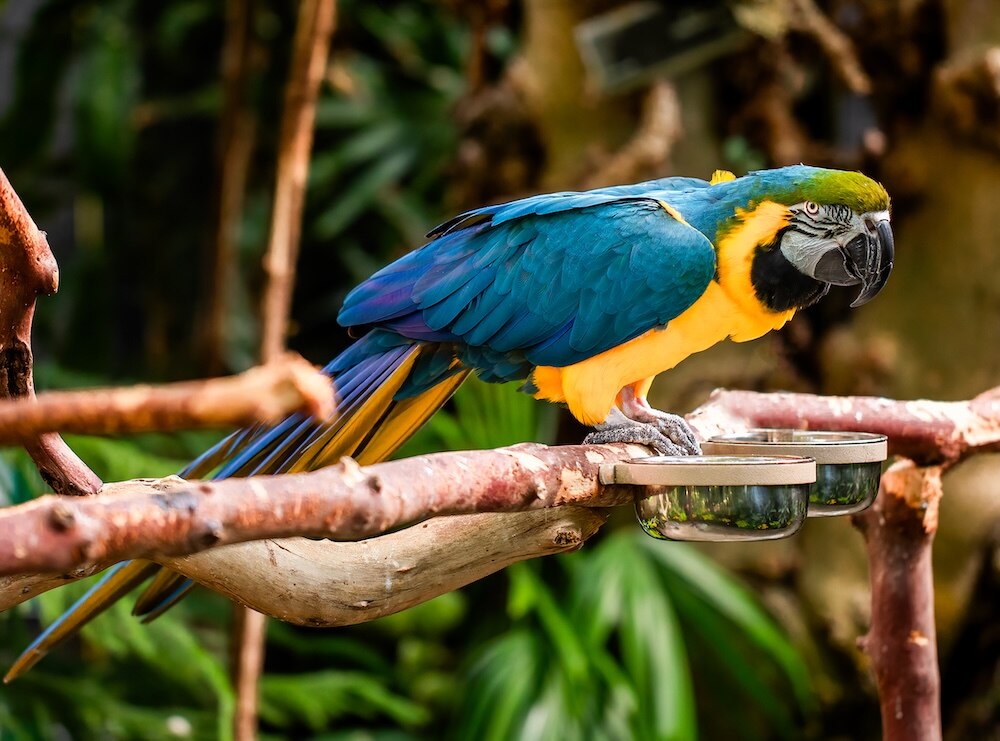
Photo by 1001slide/E+
If you’ve ever wondered whether your macaw is male or female, you’re not alone. Many bird owners are curious about their pet’s sex, especially when planning to breed, managing hormonal behaviors, or simply getting to know their feathered companion better.
The challenge is that most macaw species are sexually monomorphic, meaning males and females look nearly identical. Fortunately, there are reliable ways to determine your bird’s sex. Here’s what you need to know about how to tell if your macaw is male or female.
Key Takeaways
- Male and female macaws are visually very similar, so appearance alone isn't a reliable way to determine sex.
- A DNA test performed by an avian veterinarian or reputable lab is the safest and most accurate method.
- Courtship, vocalizations, and nesting behaviors can occur in both sexes and shouldn't be used as proof of gender.
- A macaw who lays an egg is female, even if the egg is unfertilized and no male is present.
Can You Tell a Macaw’s Sex by Looking?
Unlike some bird species, most macaws don’t have obvious physical differences between males and females. Their vibrant plumage, facial markings, and coloration are typically the same regardless of sex.
Some bird owners believe males have larger heads or beaks or that females have slimmer bodies, but these differences are subtle, inconsistent, and can vary based on age, genetics, and individual growth. Even experienced breeders generally cannot determine a macaw’s sex with certainty based on appearance alone.
For this reason, visual identification should never be considered a reliable method.
DNA Testing Is the Most Accurate Method
DNA testing is the easiest and most accurate way to determine whether your macaw is male or female. Most tests analyze a small blood sample or a few freshly plucked blood feathers (actively growing feathers that contain a living blood supply) to identify sex chromosomes.
When samples are collected properly, DNA testing is highly accurate—typically exceeding 99%. Many avian veterinarians offer this service, and reputable laboratories also provide mail-in test kits.
The process is quick, minimally invasive, and far safer than older methods such as surgical sexing.
Surgical Sexing
Before DNA testing became widely available, veterinarians often relied on surgical sexing to determine a bird’s sex.
This procedure involves examining a bird’s reproductive organs using a small endoscope while they are under anesthesia. Although it provides definitive results, it carries the risks associated with anesthesia and surgery.
Today, surgical sexing is generally reserved for specific medical situations when an avian veterinarian needs to examine the reproductive system for diagnostic purposes.
Behavioral Differences Between Male and Female Macaws
Some macaws display behaviors that owners associate with one sex or the other, but behavior alone cannot reliably identify gender.
During breeding season, both males and females may:
- Regurgitate food as a bonding behavior
- Become more vocal
- Display feathers or posture toward favored people or birds
- Show increased territorial behavior
Female macaws may also spend more time investigating enclosed or dark spaces that resemble nest sites, but males can also exhibit similar behaviors.
Because hormones, environment, and personality all influence behavior, these signs should be viewed as clues, not proof.
Can Egg Laying Confirm a Female?
Yes, if your macaw lays an egg, you know with certainty that your bird is female.
Also, female macaws can lay eggs even if they have never been housed with a male. Unfertilized eggs are common in companion birds.
Frequent egg laying can increase the risk of certain health issues, such as calcium depletion or egg binding. If your bird begins laying eggs regularly, consult an avian veterinarian for guidance on managing reproductive health. Your bird may have hormonal imbalances, or excess or improper nutrition.
Common Myths About Male vs. Female Macaws
Many myths circulate about identifying a macaw’s sex, but most lack scientific support.
Some common misconceptions include:
- Males always have larger beaks.
- Females are more affectionate.
- Males are louder.
- Feather color differs between sexes.
- Head shape reveals gender.
In reality, individual personality, species, age, and upbringing influence these traits far more than sex does.
When Should You Find Out Your Macaw’s Sex?
Knowing your macaw’s sex can be helpful in several situations, including:
- Planning responsible breeding
- Monitoring reproductive health
- Understanding hormonal behaviors
- Discussing preventive care with your avian veterinarian
- Introducing compatible companions
Even if breeding isn’t your goal, confirming your bird’s sex can help you provide more informed care throughout their life.
Learning how to tell if your macaw is male or female starts with understanding that appearance alone rarely provides the answer. While certain behaviors and reproductive signs may offer clues, DNA testing remains the most accurate, safe, and reliable method for determining your bird’s sex.
If you need confirmation for breeding, veterinary care, or peace of mind, consult an avian veterinarian about DNA sexing to ensure you have accurate information about your macaw.
Frequently Asked Questions
Are male macaws bigger than females?
Some species may show slight size differences, but these are generally too subtle to accurately determine sex.
Can personality reveal whether my macaw is male or female?
No. Personality varies widely among individual birds and isn’t a reliable indicator of sex.
How accurate is a DNA test?
When collected and processed correctly, DNA testing is typically more than 99% accurate.
At what age can a macaw be DNA–sexed?
Macaws can often be DNA–sexed at a very young age, even as chicks, making it a popular option for breeders and new owners.
Attributions
This article was created with assistance from AI tools. The content has been reviewed for accuracy and edited by a human.